
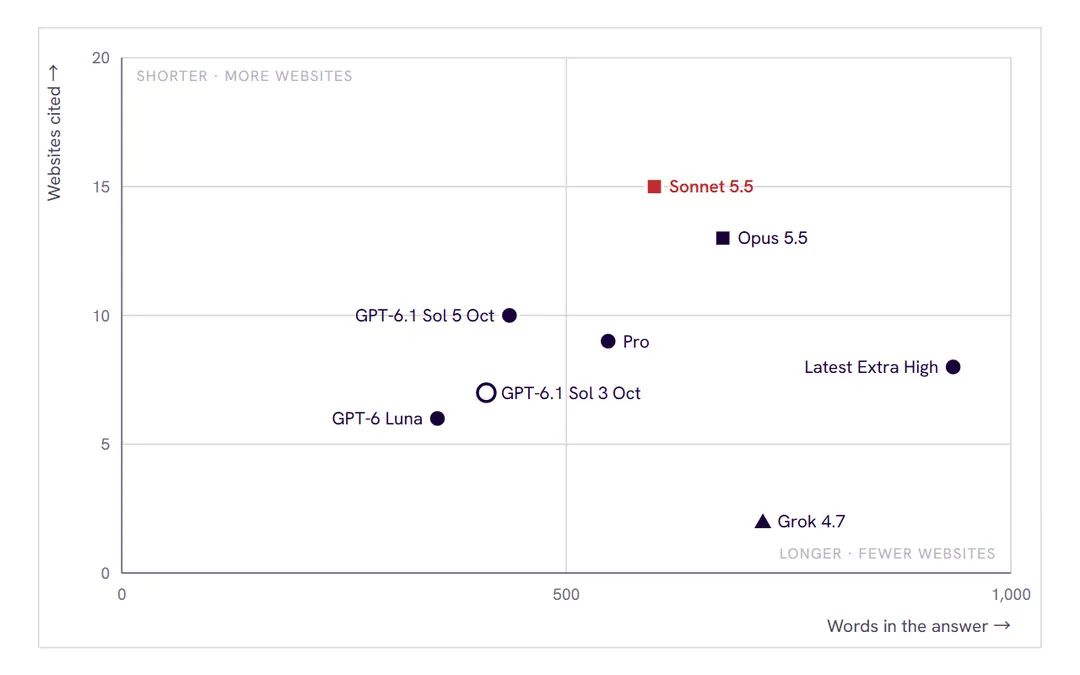
Latest at Extra High, asked 4 Oct 2026
One answer from the comparison, shown in full as the model produced it on 4 October 2026. Nothing is edited. Its 15 cited links have not been opened, so this page does not say whether the pages back what it wrote.
I treated “similar” as similarity of retail format and customer proposition, not simply company size: imported/specialty foods, discovery-oriented assortment, coffee/wine adjacency, proprietary products, and a multi-store Japanese retail network.
| Rank | Company / brand | Retail format & core assortment | Import / proprietary-product model | Japan footprint | Why it made the list |
|---|---|---|---|---|---|
| Reference | KALDI Coffee Farm — Camel Coffee Co., Ltd. | Specialty food retailer built around coffee + imported/world foods. KALDI describes its stores as market-like spaces filled with unusual ingredients from around the world and distinctive, reasonably priced products. カルディコーヒーファーム公式サイト | Coffee is unusually central: KALDI says stores normally carry about 30 coffee-bean varieties. Its current range also prominently includes KALDI Original and Moheji products. カルディコーヒーファーム公式サイト | 516 stores are currently returned by KALDI's official store finder. カルディコーヒーファーム公式サイト | Benchmark: combines coffee specialization, imported groceries, wine, proprietary products and a deliberate “treasure-hunt” shopping experience. カルディコーヒーファーム公式サイト |
| 1 | Jupiter | The closest direct analogue: a retailer centered on coffee beans and imported foods. Before its 2026 restructuring, it carried 6,000+ food and beverage items and sold coffee beans, confectionery, dried foods and other groceries. ジュピターコーヒー | Coffee is a core traffic/category anchor, rather than simply another supermarket category, much like KALDI. 株式会社東京商工リサーチ | It operated 91 stores as of March 2024. After filing for civil rehabilitation in January 2026, 47 stores were designated for transfer to the sponsor; the business transfer to Next Capital Partners was completed in March 2026. 株式会社東京商工リサーチ | Closest match by far: coffee beans + imported packaged food + compact shopping-center/station locations. The major caveat is its 2026 restructuring, so it is now a smaller/reorganized competitor. 株式会社東京商工リサーチ |
| 2 | Seijo Ishii | Premium “food lifestyle” supermarket selling wine, cheese, groceries, prepared foods and products sourced from Japan and overseas. Its historical positioning grew around wine, cheese, prepared foods and grocery products rather than conventional mass supermarket assortment alone. 西荻市 | Strong vertical integration: buyers source products globally, the company direct-imports through its subsidiary Tokyo Europe Trading, manufactures prepared foods itself, and develops proprietary products including desica. 西荻市 | A 200+ store chain: it operated 211 stores during its 2024 Thailand promotion, with additional openings subsequently appearing in the official store network. 西荻市 | Similar to KALDI in global food discovery, direct importing, strong buyer curation and exclusive products. Less similar because it is a fuller premium supermarket with fresh food and prepared food, while coffee is not the anchor category. |
| 3 | Kitano Ace — Ace Co., Ltd. | A food-specialty-store chain emphasizing unusual assortment and discovery. It sells everything from local Japanese specialties and daily foods to gifts and imported ingredients, with distinctive category displays such as its famous curry “bookshelves.” Site_Name | Particularly strong proprietary assortment: Kitano Selection comprises roughly 600 private-label products, developed with manufacturers across categories such as dressings, jams and rice accompaniments. Site_Name | 113 stores nationwide as of April 9, 2026. Site_Name | Very close to KALDI in the “discovery retail” experience, unusual foods, dense assortment, private label and shopping-mall locations. Less similar because its center of gravity is curated Japanese/specialty grocery rather than coffee and imported foods. |
| 4 | Meidi-Ya | Long-established premium grocery retailer offering gourmet foods and beverages from Japan and overseas. Its businesses include retail, food manufacturing and food/wine import-export. 明治屋 | Exceptionally strong direct-import capability: Meidi-Ya directly imports pasta, oils, sauces, chocolate, wines and spirits, while its long-running MY Brand has about 160 products. 明治屋 | 36 stores as of September 2026, including 21 in the Tokyo area. 明治屋 | Similar through direct importing + proprietary foods + wine + premium international assortment. Less similar in price positioning and shopping experience: Meidi-Ya is more traditional/upmarket supermarket retail than KALDI's compact treasure-hunt format. |
| 5 | Yamaya | A specialty retailer primarily centered on liquor, but also carrying beverages and foods. Its stores sell Japanese and international alcohol alongside imported food; Yamaya has specifically described its format as a liquor and imported-food specialty business. ヤマヤ | Its group procurement operation supplies liquor, beverages and food across the Yamaya network, and the chain has historically emphasized direct import and global sourcing. ヤマヤ | 347 Yamaya-brand stores as of March 2025 across Yamaya East Japan and Yamaya Kansai; the broader liquor business network was around 350 stores. ヤマヤ | Makes the list because the overlap in wine, imported foods, unusual international products and value pricing is substantial. The main difference is that alcohol, not coffee/food discovery, is the primary destination category. |
Bottom line
The competitive landscape is not perfectly symmetrical. Jupiter is the only company that closely replicates KALDI's basic formula of “coffee beans + imported food.” That makes it the clearest direct comparable, although its 2026 restructuring materially reduced its scale. 株式会社東京商工リサーチ
The next tier splits KALDI's proposition into different components. Seijo Ishii is closest on global sourcing and original products; Kitano Ace is closest on discovery-oriented merchandising and quirky specialty assortment; Meidi-Ya is closest on long-standing direct-import infrastructure; and Yamaya overlaps strongly in wine/imported-food retail but is fundamentally liquor-led.
If the purpose is competitive benchmarking for a food manufacturer trying to sell into Japan, I would prioritize them in this order: KALDI → Seijo Ishii → Kitano Ace → Jupiter → Meidi-Ya → Yamaya. That ordering differs slightly from pure consumer-format similarity because the buyer structure, private-label strategy and willingness to introduce differentiated food products matter more to a prospective supplier.
End of the answer. AI-generated, unverified. Asked 4 Oct 2026.
8 websites, 15 links.
The same count the comparison's density chart uses. A website is a distinct hostname. None of these pages has been opened and compared with its passage.
| Website | Links |
|---|---|
| kaldi.co.jp | 3 |
| tsr-net.co.jp | 3 |
| ace-group.co.jp | 2 |
| seijoishii.co.jp | 2 |
| yamaya.jp | 2 |
| jupiter-coffee.com | 1 |
| map.kaldi.co.jp | 1 |
| meidi-ya.co.jp | 1 |
Read another answer.
| Model | Setting | Asked | Words | Websites |
|---|---|---|---|---|
| Opus 5.5 | High | 3 Oct 2026 | 676 | 13 |
| Sonnet 5.5 | High | 3 Oct 2026 | 599 | 15 |
| GPT-6 Luna | High | 3 Oct 2026 | 355 | 6 |
| GPT-6.1 Sol | High | 5 Oct 2026 | 436 | 10 |
| GPT-6.1 Sol | High | 3 Oct 2026 | 410 | 7 |
| Latest | Pro | 4 Oct 2026 | 780 | – |
| Pro | Pro | 4 Oct 2026 | 547 | 9 |
| Grok 4.7 | Fast | 5 Oct 2026 | 721 | 2 |