
Gemini 3.6 at Thinking, asked 7 Oct 2026
One answer from the comparison, shown in full as the model produced it on 7 October 2026. Nothing is edited. Its 10 cited links have not been opened, so this page does not say whether the pages back what it wrote.
To transition a food product, condiment, or spice into a constant, long-tail staple in Japanese households, it must move past novel flavor appeal and integrate into daily cooking routines (jitan / time-saving, versatility, or functional utility). Japanese consumer data shows that while overall household food spending accounts for roughly 28.6% of total household budgets, spending on convenience-oriented and health-supporting staples remains resilient even during economic tightening [Japan Times Household Food Spending Ratio].
Case Studies: Transition from Fad/Regional Niche to Daily Household Staple
1. Taberu Rayu (Crunchy Chili Oil) — From 2009 Fad to Permanent Pantry Category
When Momoya introduced "Taberu Rayu" (chili oil with fried garlic and onion) in late 2009, it sparked an explosive nationwide fad and chronic stock shortages [Momoya Chili Oil Review]. Instead of fading away like typical food trends, Taberu Rayu settled into a permanent, multi-billion-yen category [The Turnaround Story of 'Taberu Rayu'].
- Key Adoption Driver: Brand marketing actively shifted the product's positioning from a "rice topping" to a universal seasoning for cold tofu (hiyayakko), ramen, pasta, steamed vegetables, and grilled meats [The Turnaround Story of 'Taberu Rayu'].
- Strategic Insight: Novelty items survive long-term only when consumers learn to apply them across 3 to 4 distinct meal categories.
2. Mentsuyu & Dashi Soy Sauce — The Structural Replacement of Traditional Soy Sauce
Pure soy sauce consumption in Japanese homes has experienced a multi-decade decline, while compound seasonings (Mentsuyu and Dashi Shoyu) have expanded significantly [Observations from the Survey into Regional Characteristics of Soy].
- Key Adoption Driver: Rising female labor participation and dual-income households created high demand for time-saving, all-in-one seasonings [Kikkoman Corporate Report]. Mentsuyu pre-blends soy sauce, dashi stock, mirin, and sugar, removing the need to measure four separate ingredients for everyday dishes like simmered vegetables (nimono), noodle dips, and rice bowls [A Guide to Japanese Flavors].
- Strategic Insight: Compound all-in-one bases replace raw single-ingredient seasonings because they minimize prep friction and decision fatigue.
3. Shio Koji (Salt Koji) — From Health Boom to Enzymatic Kitchen Utility
Shio Koji surged as a trendy health food in 2011–2012 [How to Make Shio Koji]. It secured permanent pantry status because it solves a fundamental cooking challenge: its natural protease and amylase enzymes break down proteins to tenderize cheap cuts of meat while adding deep umami without synthetic additives [Shio Koji Unlocked 2026].
- Key Adoption Driver: When major manufacturers like Hanamaruki developed Liquid Shio Koji (Ekitai Shio Koji), they eliminated the rustic, chunky texture, allowing home cooks to pour and use it as effortlessly as soy sauce [What Is Shio Koji?].
- Strategic Insight: Re-engineering the physical format (e.g., turning a paste or grain into a liquid) unlocks daily usability for functional ingredients.
4. Squeeze-Tube Yuzu Kosho — Regional Specialty to National Pantry Standard
Yuzu Kosho (a paste of citrus yuzu peel, chili, and salt) was originally a hyper-local condiment from Kyushu [Japanese Yuzu Kosho Market Size & Share]. The Japanese Yuzu Kosho market reached $143.1 million in 2025 and is expanding at an 8.1% CAGR as household consumption steadily climbs [Japanese Yuzu Kosho Market Size & Share].
- Key Adoption Driver: Spurred by major spice makers (S&B Foods, House Foods) packaging regional condiments into tube formats, Yuzu Kosho became easy to store, portion-control, and use for single-serve cooking alongside tubed wasabi, ginger, and garlic [Japanese Yuzu Kosho Market Size & Share].
- Strategic Insight: Zero-prep packaging lowers the trial threshold and converts regional or specialty flavors into low-barrier everyday habits.
Strategic Framework for Product Planning
| Pillar of Daily Demand | Core Mechanism | Japanese Market Example | Product Strategy Takeaway |
|---|---|---|---|
| Time-Saving All-in-One | Consolidates 3–4 prep steps into 1 pour/scoop | Mentsuyu, Dashi Soy Sauce | Pre-blend flavor + salt + umami into a single ready-to-use base. |
| Functional Utility | Solves a chemical cooking problem (tenderizing, browning) | Shio Koji, Liquid Koji | Market the functional benefit (e.g., juicy meat, fast marinating), not just flavor. |
| Format Innovation | Eliminates mess, spoilage, and measuring prep | Tube condiments (Yuzu Kosho, Garlic paste) | Adopt zero-mess, single-hand, or portion-controlled packaging. |
| Multi-Dish Versatility | Fits seamlessly across multiple cooking styles | Taberu Rayu (Crunchy Chili Oil) | Provide explicit recipe suggestions for everyday staples (eggs, tofu, noodles, meat). |
When planning product strategy for constant demand, focus on reducing household labor and integrating functional culinary benefits rather than relying purely on flavor novelty.
End of the answer. AI-generated, unverified. Asked 7 Oct 2026.
9 websites, 10 links.
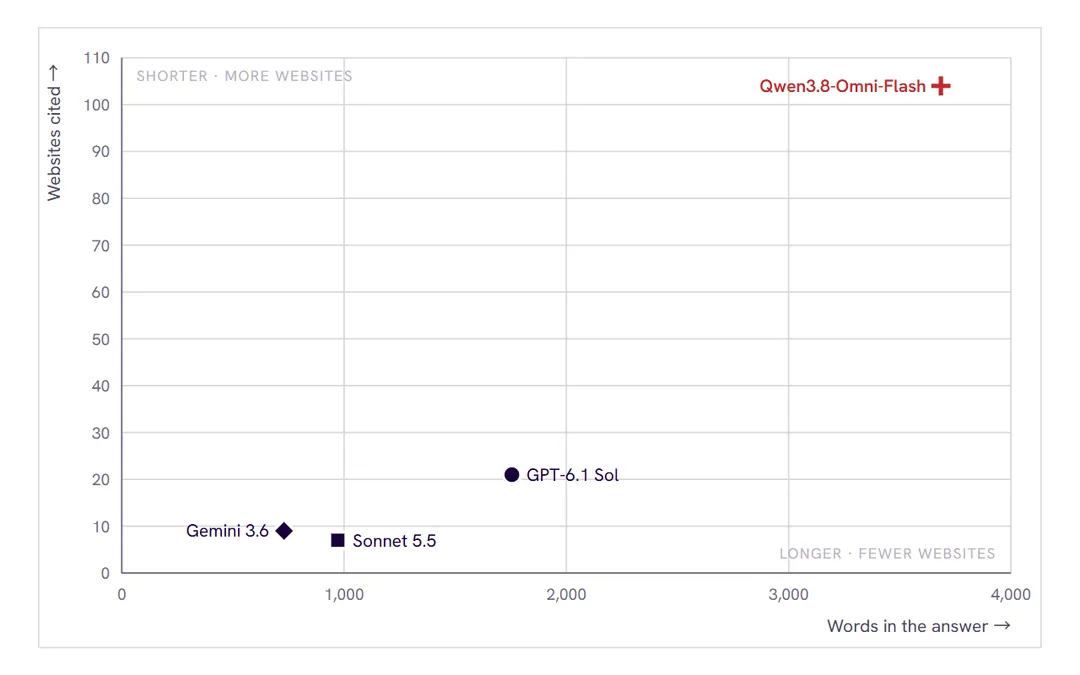
The same count the comparison's density chart uses. A website is a distinct hostname. None of these pages has been opened and compared with its passage.
| Website | Links |
|---|---|
| kikkoman.com | 2 |
| chefshop.com | 1 |
| flavorindexlab.com | 1 |
| google.com | 1 |
| growthmarketreports.com | 1 |
| hawaiibevguide.com | 1 |
| japantimes.co.jp | 1 |
| note.com | 1 |
| tomatostoreus.com | 1 |
Read another answer.
| Model | Setting | Asked | Words | Websites |
|---|---|---|---|---|
| Sonnet 5.5 | Medium | 7 Oct 2026 | 972 | 7 |
| GPT-6.1 Sol | Max | 7 Oct 2026 | 1,755 | 21 |
| Grok 4.7 | Fast | 7 Oct 2026 | 914 | – |
| Qwen3.8-Omni-Flash | Thinking | 7 Oct 2026 | 3,685 | 104 |