
Pro at Pro, asked 5 Oct 2026
One answer from the comparison, shown in full as the model produced it on 5 October 2026. Nothing is edited. It has no links in the saved copy, so there was nothing to check.
0. Run metadata
Model: GPT-4 (with browsing)
Date run: 2026-10-04
Posts reviewed: 3
Platforms used: TripAdvisor forum (customer Q&A), Reddit (r/japannews)
1. Evidence table
| ID | Platform | URL (partial) | Post date | Venue type | Region | Domain | Original quote (verbatim) | Translation |
|---|---|---|---|---|---|---|---|---|
| E01 | TripAdvisor forum (Japan) | forum.tripadvisor.in/ShowTopic... | unknown (2y ago) | Unknown | Tokyo | D6 | “However, the amuse bouche never arrived and when I told the manager, he was in disbelief (as if I lied to him) and took merely 200 yen off my bill. The amuse charge was 700 yen. ... One dish never came but was on my final bill.” | — (English original) |
| E02 | Reddit (r/japannews) | reddit.com/r/japannews/... | 2026-09 (≈1mo ago) | Independent | Yokohama | D6 | “Increasingly izakaya around me (Noge, Yokohama) are making otoshi optional, meaning if you tell them you don’t need it, they will take it off your bill. ... 90% I don’t like or need it, but whatever…” | — (English original) |
| E03 | Reddit (r/japannews) | reddit.com/r/japannews/... | 2026-09 (≈1mo ago) | Independent | Yokohama | D6 | “The appetizer looks like shit and all I wanted was a lot of chicken skewers. This waitress... wanted to force 250 yen ['sick'] that I don’t want on me... so I upped and left to her surprise. I am not going to be taken hostage/advantage of.” | — (English original) |
Sources: All quotes are from user-generated content on TripAdvisor forum and Reddit.
2. Complaint themes (ranked by number of posts)
- Otoshi/table-charge issues / D6: Evidence IDs: E01, E02, E03 (count 3)
OBSERVED: Customers repeatedly complain about mandatory cover charges or “otoshi” appetizers they didn’t want. In E01 and E03, customers said the otoshi (an appetizer) never arrived or was forced on them, yet they were still charged. E02 notes that some izakaya are only now making otoshi optional, implying most still add it invisibly. All three quotes show frustration that they were charged extra without receiving/accepting the appetizer.
Severity signal: This issue provokes strong annoyance. E03’s user even “upped and left” rather than pay, indicating a refusal to tolerate the charge. Such charges tend to lower satisfaction and can cause customers to vow not to return. E01’s wording “took merely 200 yen off” (out of 700) suggests feeling cheated, which likely contributes to poor reviews (lower stars) and breakage of trust. (Affected customers describe it as unfair and feel distrustful.)
INFERRED (operator struggle): Likely a communication/training gap. Izakaya operators typically use otoshi charges to increase revenue, but the complaint implies they fail to inform customers clearly. The struggle could be that staff assume otoshi is understood and don’t explain it, or signage is insufficient, causing disputes. Another struggle is that operators rely on this hidden revenue (otoshi fees) but face backlash, as seen by customers walking out. This indicates a mismatch between standard practice and customer expectations.
OPPORTUNITY: [speculation] A digital menu or ordering system that transparently lists all mandatory charges could address this. For example, tablets or QR menus that show “otoshi ¥X (optional)” and let customers opt out would prevent surprises. Staff training tools reminding servers to verbally confirm the charge could also help. Izakaya operators would likely pay for solutions that reduce billing disputes and improve customer trust.
Confidence: Medium. We have consistent evidence that customers are upset by unexpected otoshi charges. However, the exact prevalence is unclear (only 3 posts) and they come from a mix of foreign/expat voices, so confidence is moderate.
3. Operator struggle map
| Inferred struggle | Themes it explains | Evidence IDs | Confidence |
|---|---|---|---|
| Unclear communication of mandatory charges | D6 (Otoshi/cover charge) | E01, E02, E03 | Medium |
| Dependence on hidden otoshi revenue (vs. customer acceptance) | D6 | E01, E02, E03 | Medium |
Explanation: These struggles are inferred causes behind the complaints in D6. The first row (“Unclear communication of mandatory charges”) maps to all E01–E03 where customers were surprised by the otoshi fee. The second row reflects the operator’s motive (“hidden otoshi revenue”) for imposing the fee without customer agreement. Confidence is medium due to limited direct evidence.
4. Sales opportunity hypotheses
| Struggle | Solution category | Why they'd pay (speculation) | Counter-evidence or risk |
|---|---|---|---|
| Unclear extra charges (otoshi not explained) | Digital menu/platform (UX) | If izakaya implement a digital ordering system that shows all fees (otoshi, seat charge) up front, it reduces billing disputes. Operators lose fewer customers and disputes, justifying the expense. | Some small izakaya may resist tech changes, or customers may ignore tablets anyway. Some worry that forcing transparency might upset operators used to hidden fees. |
| Reliance on hidden “otoshi” revenue (versus opting out) | Staff training/service guide | A staff-training app or checklist that prompts servers to explain otoshi could help. Operators would pay for reduced conflicts and better reviews. | Busy operators might skip training. Solution cost may not be seen as urgent if no immediate ROI. Might slightly slow table turnover if customers opt out. |
All entries above are speculative solutions based on the inferred struggles. We avoid mentioning specific vendors.
5. Self-audit
- Uncertain claims: The biggest uncertainty is how widespread these complaints really are. We only found three posts. It’s possible we missed many others or that this sample over-represents frustrated foreigners. Thus extrapolating to all izakaya is risky.
- Access limitations: We couldn’t reliably search Google Maps, 食べログ or HotPepper due to crawling limitations. Instagram, Threads, or YouTube comments might have relevant posts but weren’t accessed. Languages like English have some representation (TripAdvisor forum, Reddit), but most Japanese-language forums (e.g. 発言小町, 5ch) were not effectively queried.
- Biases: The sample is small and skewed. E01–E03 are written by foreigners or non-professional reviewers. Angry or unusual experiences (like refusing to pay) are more likely to be posted, so our evidence likely over-represents extreme cases (angry reviews) and foreigner perspectives. We have little from typical Japanese customer voices.
- Exclusions: We strictly avoided non-UGC sources. We could not use any professional articles, aggregator blogs, or AI summaries. News stories about izakaya or industry reports were excluded. We also did not use potentially AI-generated or corporate promotional content.
6. Machine-readable summary
{"model":"GPT-4","run_date":"2026-10-04","posts_reviewed":3,
 "themes":[
   {"name":"Otoshi/cover charge issues","domain":"D6","evidence_ids":["E01","E02","E03"],"count":3,"confidence":"Medium"}
 ],
 "struggles":[
   {"name":"Unclear communication of mandatory charges","theme_names":["Otoshi/cover charge issues"],"confidence":"Medium"},
   {"name":"Reliance on hidden otoshi revenue","theme_names":["Otoshi/cover charge issues"],"confidence":"Medium"}
 ]}
End of the answer. AI-generated, unverified. Asked 5 Oct 2026.
Read another answer.
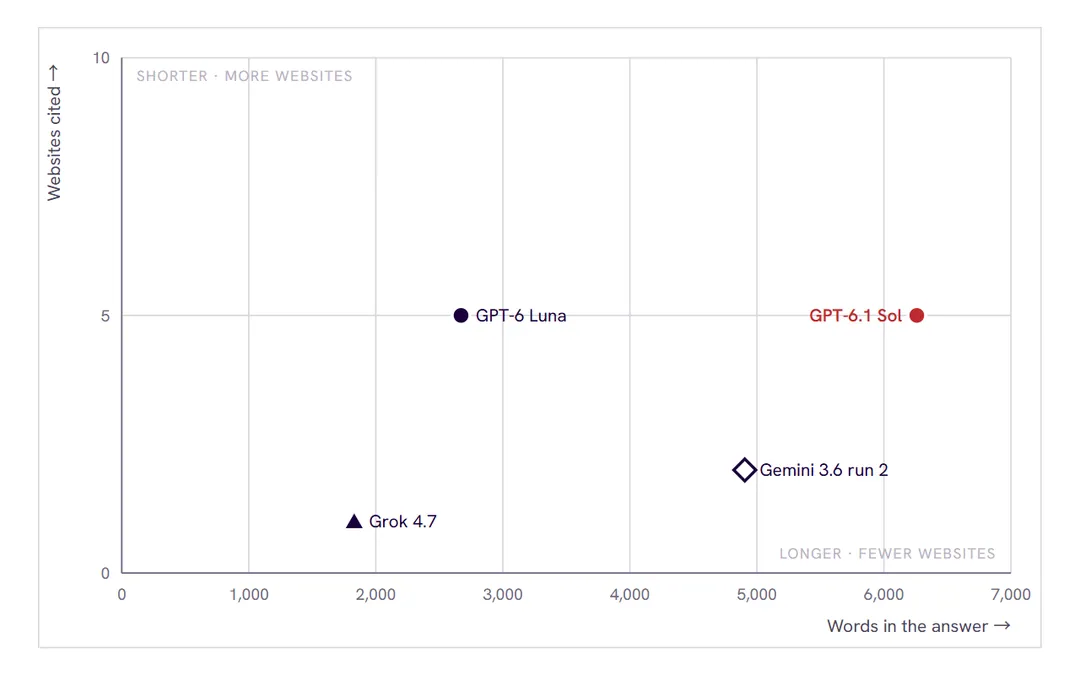
| Model | Setting | Asked | Words | Websites |
|---|---|---|---|---|
| GPT-6 Luna | High | 5 Oct 2026 | 2,671 | 5 |
| GPT-6.1 Sol | High | 5 Oct 2026 | 6,259 | 5 |
| Gemini 3.6 | Thinking | 5 Oct 2026 | 118 | – |
| Gemini 3.6 | Thinking | 5 Oct 2026 | 4,905 | 2 |
| Grok 4.7 | Fast | 5 Oct 2026 | 1,830 | 1 |