
Qwen3.8-Max at Thinking, asked 6 Oct 2026
One answer from the comparison, shown in full as the model produced it on 6 October 2026. Nothing is edited. It has no links in the saved copy, so there was nothing to check.
Communication Gaps in the B2B Food Industry
The B2B food industry operates under immense pressure due to razor-thin margins, strict safety regulations, and the perishable nature of its products. Despite technological advancements, persistent communication gaps between buyers (retailers, restaurants, manufacturers) and suppliers (farmers, processors, distributors) continue to cause massive inefficiencies.
1. What are the Communication Gaps?
- Quality and Specification Mismatches: Buyers and suppliers frequently experience disconnects regarding product specifications, food safety compliance, and ingredient sourcing requirements (ScienceDirect, 2024-11-14). When unexpected quality issues arise at the receiving dock, it is often too late to salvage the perishable goods, leading to disputes and waste.
- Logistics and Traceability Blind Spots: A lack of real-time visibility into cold chain conditions, delivery schedules, and transit environments creates severe communication lags (Folio3, 2025-01-07). If a refrigeration unit fails during transit, suppliers and buyers often do not discover the temperature breach until the product has already spoiled.
- Demand Forecasting and Inventory Disconnects: Fragmented communication regarding actual point-of-sale demand versus supplier production capacity causes either severe stockouts or massive food waste (Flow, 2022-11-15). Buyers often withhold actual sales data, while suppliers hide real-time inventory buffers, leading to a classic "bullwhip effect" in the supply chain.
- Unfair Trading and Pricing Opacity: Discrepancies in pricing, payment terms, and promotional allowances often stem from poor documentation and asymmetrical power dynamics between large retail buyers and smaller agricultural suppliers (European Union, 2014-07-15).
2. Why Do These Gaps Keep Happening?
- Extreme Industry Fragmentation: The B2B food supply chain is highly fragmented, involving millions of small-to-medium farms, distributors, and foodservice buyers, making standardized communication difficult to enforce (SPS Commerce, 2025-01-22).
- Reliance on Legacy Systems: Many mid-sized food manufacturers and distributors still rely on manual processes, spreadsheets, emails, and even faxes to transmit critical purchase orders and compliance documents (TrueCommerce, 2025-06-11).
- Information Silos and Lack of Integration: Most companies operate in operational silos, hoarding proprietary data rather than sharing it strategically with partners, which prevents proactive collaboration (Springer, 2024-10-24).
- Perishability and Market Volatility: The fast-paced nature of perishable goods, exacerbated by extreme weather and geopolitical conflicts, means market data becomes obsolete quickly, outpacing traditional, slow-moving communication channels (NetSuite, 2024-12-12).
3. Solutions That Have Actually Worked (Fact-Based Case Studies)
- Digital Supplier Management Platforms: Finnebrogue, a major UK food producer, previously managed over 250 suppliers using disjointed spreadsheets and manual email chains (Foods Connected, 2024-07-18). By adopting a centralized digital supplier management platform, they digitized key processes like supplier compliance and quality management, which eliminated manual errors and drastically improved communication regarding product specifications (Foods Connected, 2024-07-18).
- Blockchain for End-to-End Traceability: To close the massive communication gap regarding food provenance and safety, Walmart partnered with IBM to launch the Food Trust blockchain network (World Economic Forum, 2019-01-23). In their landmark mango and pork pilots, the time it took to trace a product from farm to store shelf dropped from around seven days of manual email inquiries to just 2.2 seconds of automated, shared data retrieval (ResearchGate, 2026-05-05).
- Holistic Supply Chain Reinvention with AI/ERP: Ajinomoto Foods North America partnered with EY and BlueYonder to undergo a holistic digital transformation to break down internal and external data silos (EY Consulting, 2024). By reinventing their operating model and integrating advanced planning systems, they aligned their procurement teams directly with supplier capacities, resulting in significant cost savings and improved service levels (EY Global, 2025-05-27).
- Automated Electronic Data Interchange (EDI): Implementing modern, API-driven EDI systems ensures that purchase orders, invoices, and compliance documents are exchanged in a standardized digital format without human intervention (TrueCommerce, 2025-06-11). This automation drastically reduces order fulfillment errors and ensures continuous GS1 and FDA traceability compliance across the entire B2B network (FoodTech Folio3, 2025-01-07).
Downloadable Markdown File
You can copy the content below and save it as a .md file (e.g., B2B_Food_Communication_Gaps_Report.md). It contains the full report along with a comprehensive list of source links and URLs.
# B2B Food Industry: Communication Gaps and Solutions Report

## Executive Summary
The B2B food industry operates under immense pressure due to razor-thin margins, strict safety regulations, and the perishable nature of its products. Despite technological advancements, persistent communication gaps between buyers (retailers, restaurants, manufacturers) and suppliers (farmers, processors, distributors) continue to cause massive inefficiencies.

## 1. What are the Communication Gaps?
- **Quality and Specification Mismatches:** Buyers and suppliers frequently experience disconnects regarding product specifications, food safety compliance, and ingredient sourcing requirements (ScienceDirect, 2024-11-14).
- **Logistics and Traceability Blind Spots:** A lack of real-time visibility into cold chain conditions, delivery schedules, and transit environments creates severe communication lags (Folio3, 2025-01-07).
- **Demand Forecasting and Inventory Disconnects:** Fragmented communication regarding actual point-of-sale demand versus supplier production capacity causes either severe stockouts or massive food waste (Flow, 2022-11-15).
- **Unfair Trading and Pricing Opacity:** Discrepancies in pricing, payment terms, and promotional allowances often stem from poor documentation and asymmetrical power dynamics between large retail buyers and smaller agricultural suppliers (European Union, 2014-07-15).

## 2. Why Do These Gaps Keep Happening?
- **Extreme Industry Fragmentation:** The B2B food supply chain is highly fragmented, involving millions of small-to-medium farms, distributors, and foodservice buyers, making standardized communication difficult to enforce (SPS Commerce, 2025-01-22).
- **Reliance on Legacy Systems:** Many mid-sized food manufacturers and distributors still rely on manual processes, spreadsheets, emails, and even faxes to transmit critical purchase orders and compliance documents (TrueCommerce, 2025-06-11).
- **Information Silos and Lack of Integration:** Most companies operate in operational silos, hoarding proprietary data rather than sharing it strategically with partners, which prevents proactive collaboration (Springer, 2024-10-24).
- **Perishability and Market Volatility:** The fast-paced nature of perishable goods, exacerbated by extreme weather and geopolitical conflicts, means market data becomes obsolete quickly, outpacing traditional communication channels (NetSuite, 2024-12-12).

## 3. Solutions That Have Actually Worked (Case Studies)
- **Digital Supplier Management Platforms:** Finnebrogue, a major UK food producer, previously managed over 250 suppliers using disjointed spreadsheets and manual email chains (Foods Connected, 2024-07-18). By adopting a centralized digital platform, they digitized compliance and quality management, drastically improving communication regarding product specifications (Foods Connected, 2024-07-18).
- **Blockchain for End-to-End Traceability:** Walmart partnered with IBM to launch the Food Trust blockchain network to close massive communication gaps regarding food provenance (World Economic Forum, 2019-01-23). In their pilots, trace-back time from farm to shelf dropped from seven days to 2.2 seconds via automated data retrieval (ResearchGate, 2026-05-05).
- **Holistic Supply Chain Reinvention:** Ajinomoto Foods North America partnered with EY and BlueYonder to undergo a digital transformation to break down external data silos (EY Consulting, 2024). By reinventing their operating model, they aligned procurement directly with supplier capacities, resulting in significant cost savings (EY Global, 2025-05-27).
- **Automated Electronic Data Interchange (EDI):** Modern, API-driven EDI systems ensure that purchase orders and compliance documents are exchanged in a standardized digital format without human intervention (TrueCommerce, 2025-06-11). This automation drastically reduces fulfillment errors and ensures FDA traceability compliance across the network (FoodTech Folio3, 2025-01-07).

---

## Reference Links & URLs

1. **ScienceDirect** (2024-11-14) - *Disruptions in the food supply chain: A literature review*
   [https://www.sciencedirect.com/science/article/pii/S240584402410761X](https://www.sciencedirect.com/science/article/pii/S240584402410761X)

2. **Folio3** (2025-01-07) - *What Is Food Supply Chain Management?*
   [https://foodtech.folio3.com/blog/what-is-food-supply-chain-management/](https://foodtech.folio3.com/blog/what-is-food-supply-chain-management/)

3. **Flow** (2022-11-15) - *The Top 8 Food & Beverage Supply Chain Challenges*
   [https://flow.space/blog/food-and-beverage-supply-chain](https://flow.space/blog/food-and-beverage-supply-chain)

4. **European Union** (2014-07-15) - *Tackling unfair trading practices in the B2B food supply chain*
   [https://webgate.ec.europa.eu/circabc-ewpp/rest/download/f513b3cd-e3d9-4a55-8dc2-e25cd43a3ac9](https://webgate.ec.europa.eu/circabc-ewpp/rest/download/f513b3cd-e3d9-4a55-8dc2-e25cd43a3ac9)

5. **SPS Commerce** (2025-01-22) - *Grocery Supply Chain Issues: 3 Pressures Reshaping 2026*
   [https://www.spscommerce.com/community/articles/grocery-supply-chain-issues-3-pressures-reshaping-2026](https://www.spscommerce.com/community/articles/grocery-supply-chain-issues-3-pressures-reshaping-2026)

6. **TrueCommerce** (2025-06-11) - *What Is EDI? A Guide to Electronic Data Interchange*
   [https://www.truecommerce.com/blog/what-is-edi-a-beginners-guide/](https://www.truecommerce.com/blog/what-is-edi-a-beginners-guide/)

7. **Springer** (2024-10-24) - *Understanding collaboration in short food supply chains*
   [https://link.springer.com/article/10.1186/s40100-024-00344-4](https://link.springer.com/article/10.1186/s40100-024-00344-4)

8. **NetSuite** (2024-12-12) - *How Supply Chain Challenges Affect the Restaurant Industry*
   [https://www.netsuite.com/portal/resource/articles/erp/restaurant-supply-chain-issues.shtml](https://www.netsuite.com/portal/resource/articles/erp/restaurant-supply-chain-issues.shtml)

9. **Foods Connected** (2024-07-18) - *Unlocking efficiency for Finnebrogue with digital supplier management*
   [https://blog.foodsconnected.com/supplier-management-case-study](https://blog.foodsconnected.com/supplier-management-case-study)

10. **World Economic Forum** (2019-01-23) - *This is how blockchain can keep your food safe*
    [https://www.weforum.org/stories/emerging-technologies/walmart-is-betting-on-the-blockchain-to-improve-food-safety/](https://www.weforum.org/stories/emerging-technologies/walmart-is-betting-on-the-blockchain-to-improve-food-safety/)

11. **ResearchGate** (2026-05-05) - *Food Traceability on Blockchain: Walmart's Pork and Mango Pilots with IBM*
    [https://www.researchgate.net/publication/326188675_Food_Traceability_on_Blockchain_Walmart's_Pork_and_Mango_Pilots_with_IBM](https://www.researchgate.net/publication/326188675_Food_Traceability_on_Blockchain_Walmart's_Pork_and_Mango_Pilots_with_IBM)

12. **EY Consulting** (2024) - *Case study: Supply chain reinvention delivers for food customers*
    [https://www.ey.com/en_us/insights/consulting/ey-consulting-case-studies/supply-chain-reinvention-delivers-for-food-customers](https://www.ey.com/en_us/insights/consulting/ey-consulting-case-studies/supply-chain-reinvention-delivers-for-food-customers)

13. **EY Global** (2025-05-27) - *Consumer Products: creating new relationships*
    [https://www.ey.com/en_cv/industries/consumer-products](https://www.ey.com/en_cv/industries/consumer-products)

14. **FoodTech Folio3** (2025-01-07) - *Food EDI Integration That Moves Data Before You Blink*
    [https://foodtech.folio3.com/integrations/food-edi/](https://foodtech.folio3.com/integrations/food-edi/)
End of the answer. AI-generated, unverified. Asked 6 Oct 2026.
Read another answer.
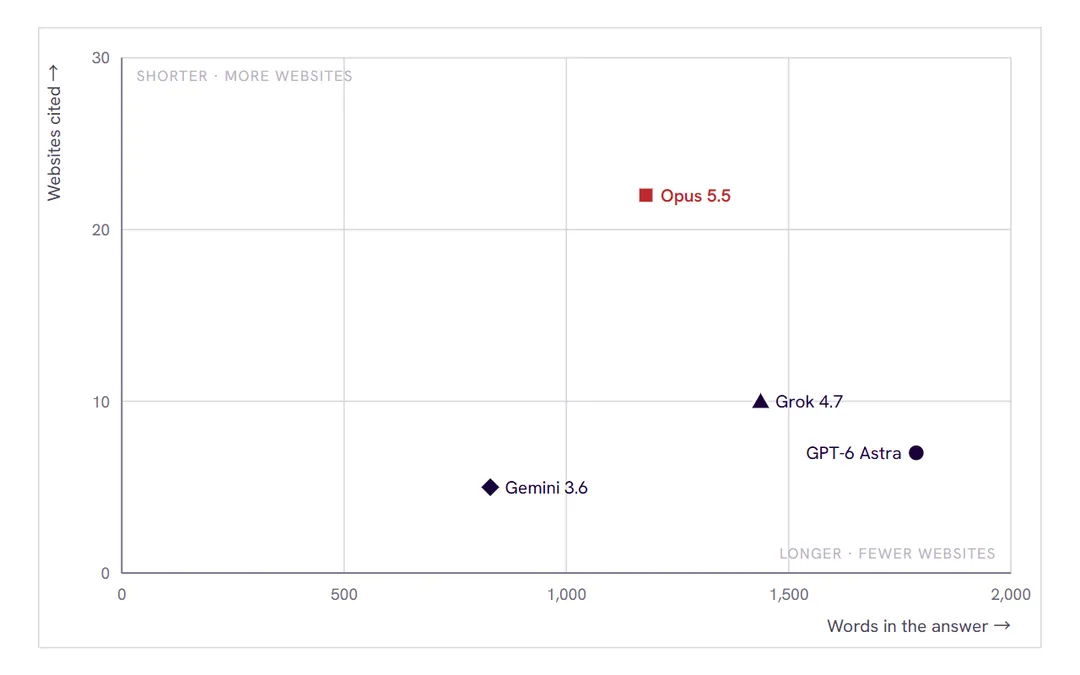
| Model | Setting | Asked | Words | Websites |
|---|---|---|---|---|
| Opus 5.5 | High | 6 Oct 2026 | 1,179 | 22 |
| GPT-6 Astra | High | 6 Oct 2026 | 1,787 | 7 |
| Gemini 3.6 | Thinking | 6 Oct 2026 | 829 | 5 |
| Grok 4.7 | Fast | 6 Oct 2026 | 1,437 | 10 |
| K3 | High | 6 Oct 2026 | 988 | – |