
GPT-6.1 Sol at Light, asked 11 Oct 2026
One answer from the comparison, shown in full as the model produced it on 11 October 2026. Nothing is edited. Its 5 cited links have not been opened, so this page does not say whether the pages back what it wrote.
The buyer journey is a series of linked decisions: product fit, commercial feasibility, supplier qualification, launch, and repeat orders. For Japan, establish the supply route early: supermarkets commonly transact through wholesalers, so retailer interest and permission to supply directly are separate matters. (SMRJ / J-Net21, 2020-01-14) J-Net21[中小企業ビジネス支援サイト]
:chatgpt-content-reference{index="6"}Download Japan_Food_Buyer_Journey.md
The file includes the detailed preparation guide, stakeholder map, RFQ questions, and source URLs.
The table below is a practical synthesis, rather than a fixed procedure followed by every Japanese buyer. Steps can overlap, and private-label development involves additional requirements.
| Phase | What the buyer needs to decide | What you should prepare | Useful sign of progress |
|---|---|---|---|
| 1. Assortment fit | Does this product serve our shoppers or customers? | Relevant shelf comparison, use occasion, proposed price and pack size | A named category and buying purpose |
| 2. Initial screening | Is it worth evaluating? | Japanese product sheet, photos, company profile and basic supply terms | A purposeful sample or meeting request |
| 3. Sample evaluation | Do taste, packaging, portion and price work? | Commercial pack, tasting sample, serving instructions and specific feedback questions | Acceptance, requested changes, or a clear rejection |
| 4. Commercial feasibility | Can the price, margin and supply route work? | Delivered-price breakdown, order quantities, lead times and responsibility allocation | Agreement on commercial assumptions |
| 5. Quality qualification | Can we manage safety and product risk? | Specification, label, factory evidence, shelf-life validation and traceability | Required documents accepted |
| 6. Listing decision | Trial, promotion, seasonal range, or regular assortment? | Launch scope, quantities, dates and review criteria | Explicit approval for a defined scope |
| 7. Onboarding | Can we order, receive and pay correctly? | Product master, barcodes, case data, ordering and invoicing arrangements | Item setup complete and first-order instructions |
| 8. Launch | Did delivery and store execution work? | Shipment checks, lot/date records, display material and contacts | Accepted delivery and confirmed shelf availability |
| 9. Review and reorder | Should we retain or expand the product? | Sales, inventory, waste, complaints and delivery performance | Repeat order or an expansion decision |
For retailers, prepare the case for the shelf. For wholesalers, also prepare the case for selling and supplying the product to their customers. Kokubu explicitly describes product discovery, buyer matching, and regional market development as wholesale functions. (Kokubu, accessed 2026-10-11) kokubu.co.jp
Three details deserve attention ahead of the quotation:
- The initial information package: Japan’s Ministry of Agriculture, Forestry and Fisheries provides the Food Communication Project business-meeting sheet to align supplier information with buyer questions. The current download lists version 3.4, updated August 4, 2026. Use it as a checklist, then follow the buyer’s own format. (MAFF, 2026-08-04) maff.go.jp
- Receiving shelf life: the traditional one-third rule is not universal. MAFF survey materials show differing deadlines, including one-half, one-third, and no agreed deadline. Confirm the exact requirement at each receiving point. (MAFF, accessed 2026-10-11) maff.go.jp
- Quality approval: having production in Japan does not establish buyer approval. For example, Topvalu’s private-label process includes factory assessment, specification agreement, product inspection and post-launch controls. That is an account-specific example, not a universal requirement for branded foods. (Topvalu, accessed 2026-10-11) イオンのプライベートブランド TOPVALU(トップバリュ)
For your existing request for quotation, I recommend establishing these five points before treating it as a launch opportunity:
- Purpose: is the quotation for an identified listing or preliminary evaluation?
- Route: who buys from you, pays you, and receives the goods?
- Outstanding approvals: have the sample, specification and quality documents been accepted?
- Commitment: are quantities forecasts or committed orders, and which stores or customers are included?
- Dates: when are the decision, first delivery and performance review?
Then submit the quotation alongside a product sheet, quality-document index, delivery plan and proposed trial scope. This gives the buyer the information needed to move the opportunity through the next decision.
End of the answer. AI-generated, unverified. Asked 11 Oct 2026.
4 websites, 5 links.
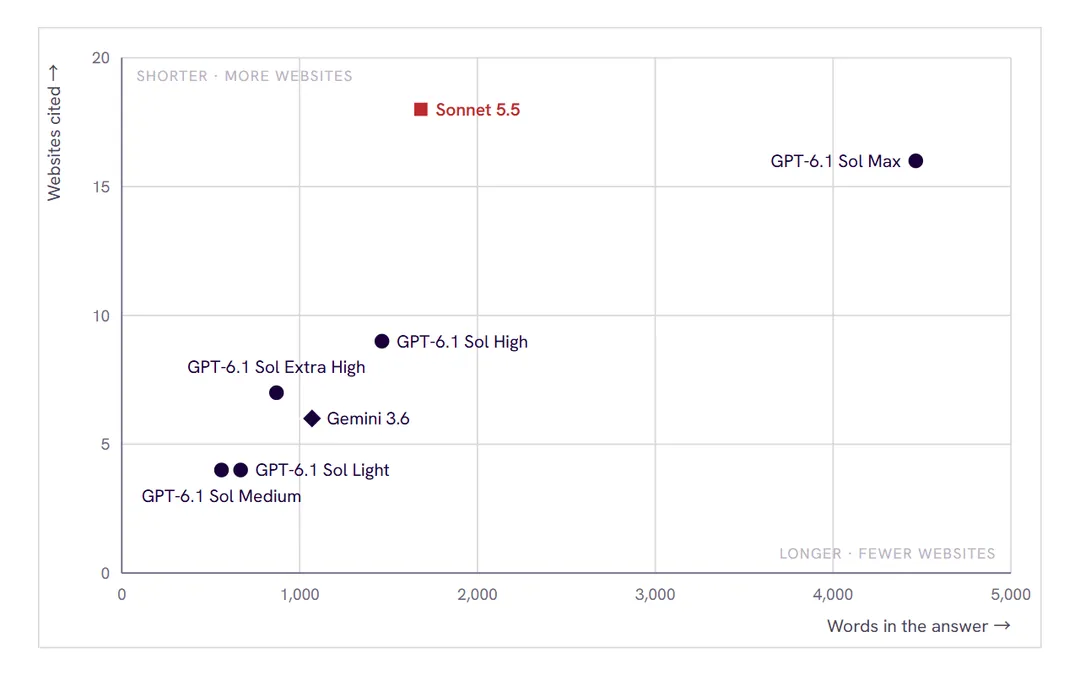
The same count the comparison's density chart uses. A website is a distinct hostname. None of these pages has been opened and compared with its passage.
| Website | Links |
|---|---|
| maff.go.jp | 2 |
| j-net21.smrj.go.jp | 1 |
| kokubu.co.jp | 1 |
| topvalu.net | 1 |
Read another answer.
| Model | Setting | Asked | Words | Websites |
|---|---|---|---|---|
| Sonnet 5.5 | Medium | 11 Oct 2026 | 1,682 | 18 |
| GPT-6.1 Sol | Medium | 11 Oct 2026 | 591 | 4 |
| GPT-6.1 Sol | High | 11 Oct 2026 | 1,463 | 9 |
| GPT-6.1 Sol | Extra High | 11 Oct 2026 | 870 | 7 |
| GPT-6.1 Sol | Max | 11 Oct 2026 | 4,465 | 16 |
| Gemini 3.6 | Thinking | 11 Oct 2026 | 1,070 | 6 |