
GPT-6.1 Sol at Medium, asked 11 Oct 2026
One answer from the comparison, shown in full as the model produced it on 11 October 2026. Nothing is edited. Its 5 cited links have not been opened, so this page does not say whether the pages back what it wrote.
The journey usually involves three decisions: “Should we sell this?”, “Can we source it reliably?”, and “Do sales justify keeping it?” Prepare for each separately.
The clearest retailer example is OK: buyer evaluation → internal product meeting → approval → product registration. A buyer liking your product therefore does not establish that it is ready to order. (OK, accessed 2026-10-11) スーパーマーケット オーケー株式会社
Japan_Food_Buyer_Journey.mdDownload the full Markdown report, including source links, preparation checklists, wholesaler routes and questions for each phase.
The following is a practical synthesis for packaged foods sold through supermarkets, specialty retailers and wholesalers. Steps can overlap; individual buyers have different procedures.
| Phase | What the buyer is deciding | What you should prepare |
|---|---|---|
| 1. Category planning | What customer need or assortment gap should we address? | Target-store audit, competing products, price position and purchase occasion |
| 2. Discovery and screening | Is this product worth reviewing? | Japanese product summary, company profile and clear category fit |
| 3. Sampling and quotation | Does the taste, package and commercial proposition work? | Finished samples, comparison, packaging dimensions and quotation assumptions |
| 4. Transaction route | Who supplies, invoices and delivers? | Direct/wholesale options, delivery scope and responsibility allocation |
| 5. Quality and supplier review | Can we accept this product and supplier? | Specifications, label information, manufacturing evidence and issue contacts |
| 6. Internal approval | Shall we introduce it, and where? | A short decision brief the buyer can circulate internally |
| 7. Account and product registration | Can our systems order and receive it? | Product codes, case data, account details and ordering/receiving arrangements |
| 8. First order and introduction | Can the agreed launch be delivered? | Production allocation, confirmed order, delivery plan and promotional materials |
| 9. Performance review | Is it selling well enough? | Sales, availability, inventory and promotion results |
| 10. Continuation or expansion | Should it remain or reach more stores? | Replenishment plan, improvements and subsequent category proposals |
The retailer and wholesaler journeys can intersect after product selection. SME Support Japan describes retailers directing suppliers to designated wholesalers, requiring account opening and pricing coordination. Its guidance dates from 2020, so treat this as a documented route to confirm with your buyer, rather than a universal requirement. (SME Support Japan, 2020-01-14) J-Net21[中小企業ビジネス支援サイト]
A wholesaler also needs a credible way to sell your product onward. Kato Sangyo describes retailer-facing product and shelf proposals separately from purchasing and inventory management. Ask whether a retailer already wants your product, or whether the wholesaler would first need to propose it to customers. (Kato Sangyo, accessed 2026-10-11) 加藤産業株式会社 採用情報2027
Two preparation priorities deserve particular attention:
- Prepare for the shelf economics. Buyer considerations include profitability, turnover, shelf fit, packaging durability and promotional support. Your proposition should explain why the product deserves space alongside existing choices. (SME Support Japan, 2020-02-05) J-Net21[中小企業ビジネス支援サイト]
- Prepare for the buyer’s calendar. Japan Access uses category and point-of-sale data in half-year merchandising, promotion and shelf-layout planning. Ask for the actual consideration window and work backward from the first delivery date. (Japan Access, accessed 2026-10-11) 株式会社日本アクセス
For your next buyer conversation, I recommend establishing five things:
- Listing type: regular assortment, seasonal promotion, trial or private label?
- Approval: who makes the decision, and what evidence do they need?
- Route: direct supply or a named wholesaler?
- Readiness: what must be completed before the first order?
- Continuation: what results determine whether the product stays?
These answers let you prepare the next deliverable precisely and distinguish interest from approval, approval from ordering, and first shipment from continuing business.
End of the answer. AI-generated, unverified. Asked 11 Oct 2026.
4 websites, 5 links.
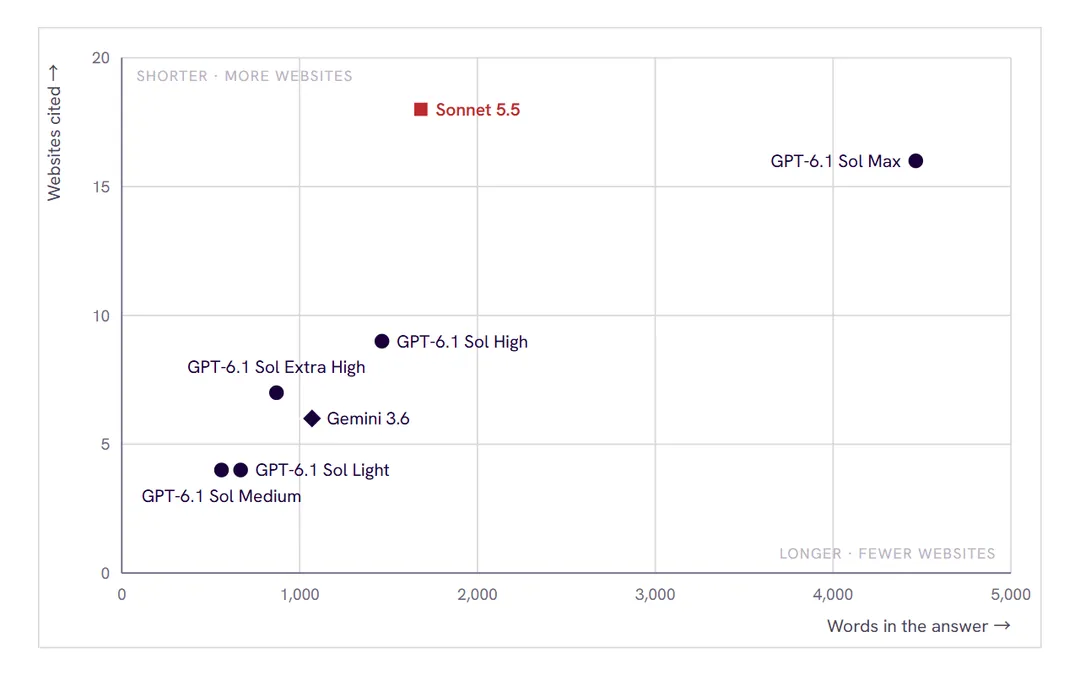
The same count the comparison's density chart uses. A website is a distinct hostname. None of these pages has been opened and compared with its passage.
| Website | Links |
|---|---|
| j-net21.smrj.go.jp | 2 |
| katosangyo.co.jp | 1 |
| nippon-access.co.jp | 1 |
| s.recruit.ok-corporation.jp | 1 |
Read another answer.
| Model | Setting | Asked | Words | Websites |
|---|---|---|---|---|
| Sonnet 5.5 | Medium | 11 Oct 2026 | 1,682 | 18 |
| GPT-6.1 Sol | Light | 11 Oct 2026 | 638 | 4 |
| GPT-6.1 Sol | High | 11 Oct 2026 | 1,463 | 9 |
| GPT-6.1 Sol | Extra High | 11 Oct 2026 | 870 | 7 |
| GPT-6.1 Sol | Max | 11 Oct 2026 | 4,465 | 16 |
| Gemini 3.6 | Thinking | 11 Oct 2026 | 1,070 | 6 |