
Which AI model searches the web better on a Japan food-buyer journey question?
We gave three AI models the same question about how Japanese food retail and wholesale buyers work. GPT-6.1 Sol answered at five effort settings, so there are seven answers. This page measures how far each answer searched. Its cited links are not checked yet, so it does not say whether the pages back what the models wrote. It compares the models, not their advice.
As asked, word for word.
What does the buyers journey look like in the food retail/wholesales space in Japan? My goal here is to understand the actual process, so that I can prepare ahead of each process/phase
Output condition
- Include fact links after the paragraph or sentence like (source, yyyy-mm-dd)
- create a downloadable markdown file with source links and urls
The question asks for a process, and few buyers publish theirs. It asks for a date with every source. It tests whether a model finds pages that show how a Japanese retail or wholesale buyer works, and whether it dates them.
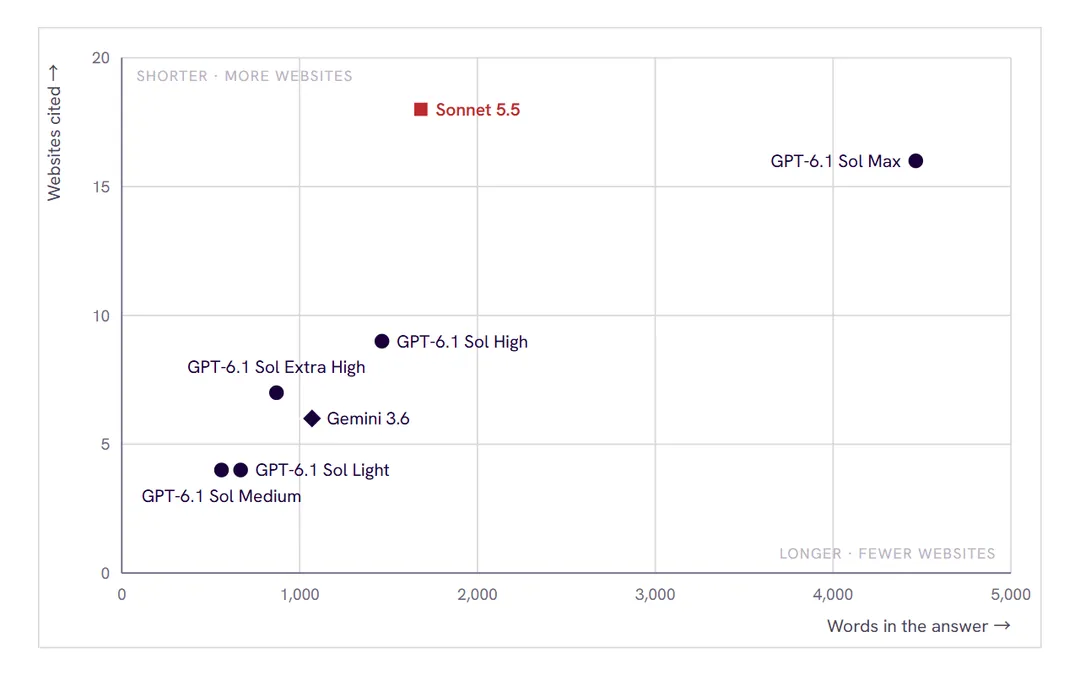
Which model researched further?
Show as a table
| Answer | Words | Websites cited |
|---|
More websites means the model looked further. It does not mean the answer is right. That needs the link check below, which has not run for this question.
Do the cited pages back what the models wrote? Not checked yet.
In a checked comparison, we open every cited link and compare the page with the passage that cites it. For this question that has not happened. The numbers below say how much there is to check.
Cited links · one square per link, none opened yet
Until then, treat every figure in these answers as a lead, not a fact. Open the page before a number goes into your plan. To see what a finished check looks like, read the comparison How effective are interpreters and translation tools at trade-show booths in Japan?.
What this means when you pick a model for research.
More effort did not raise the count in steps.
GPT-6.1 Sol at Extra High wrote 870 words and cited 7 websites. At High it wrote 1,463 words and cited 9. At Max it wrote 4,465 words and cited 16.
Sol described buyers from recruiting pages.
At Medium, Extra High and Max, GPT-6.1 Sol cites recruiting pages of Japanese retailers and wholesalers, such as OK, Nippon Access and Sato Foods, to describe what a buyer does. A recruiting page describes one employer's practice, not the market.
Sonnet 5.5 reached furthest, and some of its sources are old.
It cites 18 websites, including an Alberta Agriculture buyer study that its own source list dates 1999-06-29. The question asks for a date with every source, and Sonnet 5.5 gives one.
Every answer, with its numbers.
| Model | Setting | Asked | Words | Websites | Links |
|---|---|---|---|---|---|
| Sonnet 5.5 | Medium | 11 Oct 2026 | 1,682 | 18 | 22 |
| GPT-6.1 Sol | Light | 11 Oct 2026 | 638 | 4 | 5 |
| GPT-6.1 Sol | Medium | 11 Oct 2026 | 591 | 4 | 5 |
| GPT-6.1 Sol | High | 11 Oct 2026 | 1,463 | 9 | 13 |
| GPT-6.1 Sol | Extra High | 11 Oct 2026 | 870 | 7 | 9 |
| GPT-6.1 Sol | Max | 11 Oct 2026 | 4,465 | 16 | 22 |
| Gemini 3.6 | Thinking | 11 Oct 2026 | 1,070 | 6 | 6 |
More model comparisons
- Model comparisonFood quotations for Japanese retailers and wholesalers: business culture and competitive offers
- Model comparisonTaiwan-to-Japan alcohol export pricing: work backward from Japanese market prices to preserve profit
- Model comparisonTop 10 e-commerce channels in Japan for overseas food providers: 6–12 month total project costs
- Model comparisonTop 5 locations in Japan for food manufacturing, including subsidies