
GPT-6.1 Sol at Max, asked 6 Oct 2026
One answer from the comparison, shown in full as the model produced it on 6 October 2026. Nothing is edited. Its 14 cited links have not been opened, so this page does not say whether the pages back what it wrote.
My strongest recommendation is to build your Japan line around removing kitchen work, preventing waste, and keeping supply reliable. The first opportunities I would test are finished bakery and desserts, shelf-stable food or beverage bases, and prepared ingredients for Japanese kitchens.
The evidence points to commercial pressure. Japan’s 2025 supermarket industry survey puts profitability at 86.3% and staff recruitment and development at 73.0% among the three most important management priorities. Yet quality remains the leading differentiation strategy, at 49.1%, versus 11.5% for price. My interpretation: buyers need products that improve their economics while preserving quality. Simply making the cheapest product is an incomplete strategy. Fact link: supermarket industry survey, pp. 5–7. super.or.jp
Foodservice has a similar constraint. In Teikoku Databank’s July 2026 survey, 57.7% of responding restaurant businesses reported shortages of non-regular employees. That figure improved from the previous year, but staffing remained a problem for a majority of restaurant respondents. Fact link: TDB, August 2026. tdb.co.jp
The ranking below is my judgment about where to start testing. Your manufacturing capabilities could change the order. Documented purchases establish a real need, but they do not establish that the named buyer currently needs another supplier.
| Starting priority | Opportunity | Buyer’s underlying need | Main obstacle to winning |
|---|---|---|---|
| 1 | Finished bakery and desserts | Keep selling despite limited production staff; control small-volume waste | Delivered cost, freezer space, existing suppliers |
| 2 | Shelf-stable soup, sauce and beverage bases | Reduce preparation, storage burden and variation between staff | Strong incumbents; quality after processing and opening |
| 3 | Prepared vegetables, fruit and other ingredients | Maintain reliable production with predictable yield and less preparation | Exact specifications and price competition |
| 4 | Retailer private-label products | Offer affordable products while protecting retailer profit | Cost targets, volume requirements and approval process |
| 5 | Fully prepared care-food components | Keep meal service operating with fewer kitchen workers | Nutrition, texture and service requirements |
| 6 | School desserts meeting specific allergy requirements | Provide an acceptable substitute within an established meal programme | Exact requirements, budget and procurement access |
1. Finished bakery and desserts: the clearest first test if you already make these products.
A January 2026 survey of 218 Nagomiya wholesale-platform member shops found that 85 respondents identified price increases making gross profit difficult as their biggest problem. More specifically, its report identifies confectionery shops purchasing finished goods to cover production they cannot handle with available staff. Cafés and food trucks use small orders to limit the risk of introducing menu items. This is evidence from an existing purchasing channel, although the sample represents that platform’s members. Fact link: Nagomiya’s February 2026 report. 株式会社ナゴミヤ
There is also a named adoption case. Kyoto’s Kyohotel Kishotei Gosho-Minami adopted individually wrapped frozen bread because its limited staff and equipment constrained breakfast provision. The hotel cited natural or refrigerated thawing, individual packaging, taste and variety as reasons for adopting the product. This is a supplier-published customer case. Fact link: hotel adoption, May 2025. 株式会社パンフォーユーのプレスリリース
Product brief I would test: a fully finished, portioned product that fits an existing breakfast or dessert menu, with validated thawing quality and an order quantity matching the buyer’s weekly usage.
The commercial proposition should be measurable: “You can serve this item with fewer preparation steps, without a pastry specialist, and with less discard.” Target confectionery wholesalers, small café chains and hotels with limited kitchens. Compare against the buyer’s current supplier, including frozen delivery cost.
2. Shelf-stable bases: particularly promising if your capabilities are tea, beverages, sauces or processed foods.
Heinz Japan’s September 2026 bisque launch followed hotel-chef interviews identifying insufficient freezer space, a need for ingredients usable across several dishes, and difficulty maintaining quality with fewer staff. Its response was an ambient retort pouch containing a concentrated base usable in soup, pasta sauce, pizza sauce and gratin. The product has a stated 15-month shelf life. This documents buyer problems and a supplier’s response; the announcement does not disclose adoption or sales results. Fact link: Heinz Japan, September 2026. ハインツ日本株式会社のプレスリリース
Beverages have adoption evidence too. In a June 2026 interview, AGF reported its commercial powdered drinks being used in business-hotel breakfast buffets. The company described repeat use associated with quick preparation, compact storage, adjustable concentration and acceptable taste. These are company-reported results, without a disclosed numerical repeat rate. Fact link: AGF interview, June 2026. 食品新聞 WEB版(食品新聞社)
Product brief I would test: one base that fits several existing uses and requires little equipment or preparation.
Depending on your factory, that could be a tea base, fruit beverage concentrate, soup concentrate or sauce base. Size the pack around actual consumption after opening. Demonstrate the yield, preparation time, storage space and cost per serving.
The opportunity is strongest where an incumbent fails a particular buyer on pack size, flavour, equipment requirements or delivered economics. Processing must also preserve the quality that makes your product competitive.
3. Prepared ingredients for Japanese kitchens: a practical route to local customization.
Seijo Ishii reported that its prepared side-dish category achieved approximately 20% growth in sales value during May–July 2026, compared with approximately 7% for its complete one-plate meal category. Customers described cooking the main dish themselves and buying sides, including dishes that take effort to prepare. This is one premium retailer’s result, measured in sales value rather than units. Fact link: Seijo Ishii, September 2026. 株式会社成城石井のプレスリリース
Supply continuity also produces actual import demand. ALIC’s report on December 2025 vegetable imports attributes increased onion imports, particularly for processing and commercial use, to a poor Hokkaido harvest. It also links increased frozen taro imports to constrained domestic production. These are dated examples of buyers importing to cover supply problems. Fact link: ALIC vegetable import report. vegetable.alic.go.jp
For fruit processors, Seijo Ishii provides another useful model: in April 2026 it announced nine locally developed products using its imported pink-guava purée, spanning desserts, baked goods and drinks. This demonstrates an imported ingredient being adapted through Japanese product development. Fact link: Seijo Ishii, April 2026. 株式会社成城石井のプレスリリース
Product brief I would test: an ingredient that arrives ready for the buyer’s next production step, with consistent usable yield.
Possible applications include peeled and portioned vegetables, cooked vegetable components, fruit purées and dessert fillings. Specify cut size, drainage, reheating behaviour, flavour consistency and batch variation.
Target ingredient distributors, deli manufacturers and central kitchens. Let their developers define the finished Japanese application. These examples support the supply route; they do not prove those particular companies have an open supplier gap.
4. Private-label retail products: move this higher if you already have strong cost and volume capabilities.
AEON’s April 2026 results presentation says it accelerated private-label development in response to customers’ inflation-driven budget pressure. Group Topvalu sales reached 110% of the previous year’s level, approximately 10% growth, and contributed to increased gross profit amount. The disclosure covers the broader Topvalu business, so it should not be treated as a growth forecast for any individual food category. Fact link: AEON results presentation, p. 4. irwebcasting.com
Product brief I would test: a retailer-exclusive specification and pack that meets a defined selling-price position while leaving both parties an acceptable contribution.
For an existing snack, confectionery or ambient-food line, test entry pack size, portion economics and private-label production. Obtain the retailer’s target economics before changing the recipe. Regional retailers and their product-development partners would be my proposed starting channel.
The tradeoff is that exclusive development, smaller production runs and packaging changes can consume your margin. Calculate those costs before accepting the brief.
5. Care-food components: a strong operating need, with demanding entry conditions.
A March 2026 CookDeli customer interview describes a Kumamoto care facility switching to fully prepared frozen foods. One facility reported approximately 9% lower total cost despite higher food cost, because labour cost fell. The roughly 20% reduction mentioned elsewhere in the case was a forecast for another facility, not an achieved result. This is a supplier-published interview rather than an independent cost audit. Fact link: care-facility adoption case. クックデリ(株)施設向け完全調理済み冷凍食品
Product brief I would test: a fully prepared component supplied to an established Japanese meal-service provider, following its precise nutrition, texture, portion and handling specifications.
This route deserves priority only if your factory can meet those specifications consistently. I would begin with components that fit an existing meal programme, supported by the Japanese provider’s professional evaluation.
6. School desserts meeting specific allergy requirements: a narrow, concrete need.
Higashiosaka City’s school-meal guidance, updated October 2026, states that desserts containing egg or dairy, such as yogurt, pudding and cake, are replaced with alternatives such as fruit jelly. Its substitution programme covers desserts specifically. This is an existing provision requirement, although the page does not disclose an open purchasing contract. Fact link: Higashiosaka school-meal guidance. 東大阪市
Product brief I would test: a portioned dessert developed to the purchaser’s exact ingredient, cross-contact, nutrition, packaging and price requirements.
If you already manufacture fruit jelly or similar products, approach school-meal wholesalers with a complete specification. The value comes from meeting an established substitution requirement reliably.
One additional lead is worth pursuing only if you already manufacture starch or starch blends. ALIC’s July 2026 manufacturer report found more than 40% of relevant respondents dissatisfied or somewhat dissatisfied with potato- and sweet-potato-starch procurement, citing shortages. It also explains that their particular viscosity and gel properties make full replacement difficult. A buyer-specific replacement formulation could address a real problem, but generic substitution cannot be assumed. Fact link: ALIC starch procurement research. alic.go.jp
For your Japan-only product line, I would customize the following before expanding flavours. These are my proposed development priorities, based on the purchasing problems above.
| Development choice | What to customize | Evidence to collect from the buyer |
|---|---|---|
| Preparation level | Fully cooked, fully baked, thaw-and-serve or ready for one final step | Preparation minutes and required staff skills |
| Pack and case size | Match one batch, one service period or practical weekly consumption | Usage rate and discarded quantity |
| Economics | Quote delivered yen per usable portion | Current purchase cost, yield, labour and waste |
| Storage and shelf life | Fit available space and the buyer’s delivery deadline | Storage capacity, required remaining life and validated opened life |
| Flavour and texture | Match the intended menu and processing conditions | Comparison against the product currently used |
| Repeat supply | Establish a workable domestic replenishment arrangement | Required order frequency and acceptable lead time |
Shelf life needs particular attention. MAFF documents the commercial practice of requiring retail delivery within the first third of a product’s total shelf life. Some retailers have relaxed it, so it is not a universal requirement. Nevertheless, a product can retain substantial shelf life and still miss a buyer’s delivery cutoff. Your promise should specify remaining shelf life at delivery, alongside validated storage and use conditions after opening. Fact link: MAFF’s commercial-practice guidance. maff.go.jp
The hill climb I would run is one buyer segment, one operating problem, and one measurable replacement.
- Choose the route closest to your existing production. Bakery capability points to opportunity 1; tea, drinks and sauces to 2; processed fruit and vegetables to 3. Minimize the new manufacturing work needed to reach a paid trial.
- Interview 10–15 buyers in that segment. Ask what they currently buy, weekly volume, delivered price, usable yield, preparation time, discarded quantity and the reason they would change suppliers. Ask to see specifications and actual purchasing figures where possible.
- Select a problem buyers are already spending money to solve. Give priority to production they cannot complete, supply they cannot obtain reliably, or a recurring cost they can quantify.
- Change one variable at a time. Test preparation level, pack size or formulation against the current product. Keep the other variables stable enough to identify what caused the improvement.
- Run paid trials through a normal replenishment cycle. Measure buyer cost per usable portion, preparation time, waste and your own contribution after domestic delivery.
- Expand after paid reorders. Use repeated orders and profitable delivery as the evidence for adding products to the Japan line.
My first commercial brief would be: “Replace one item you already purchase or prepare, meet its quality requirement, and improve a specific operating result.” That gives you a concrete basis for Japan customization and a repeat-order test for deciding where to invest next.
End of the answer. AI-generated, unverified. Asked 6 Oct 2026.
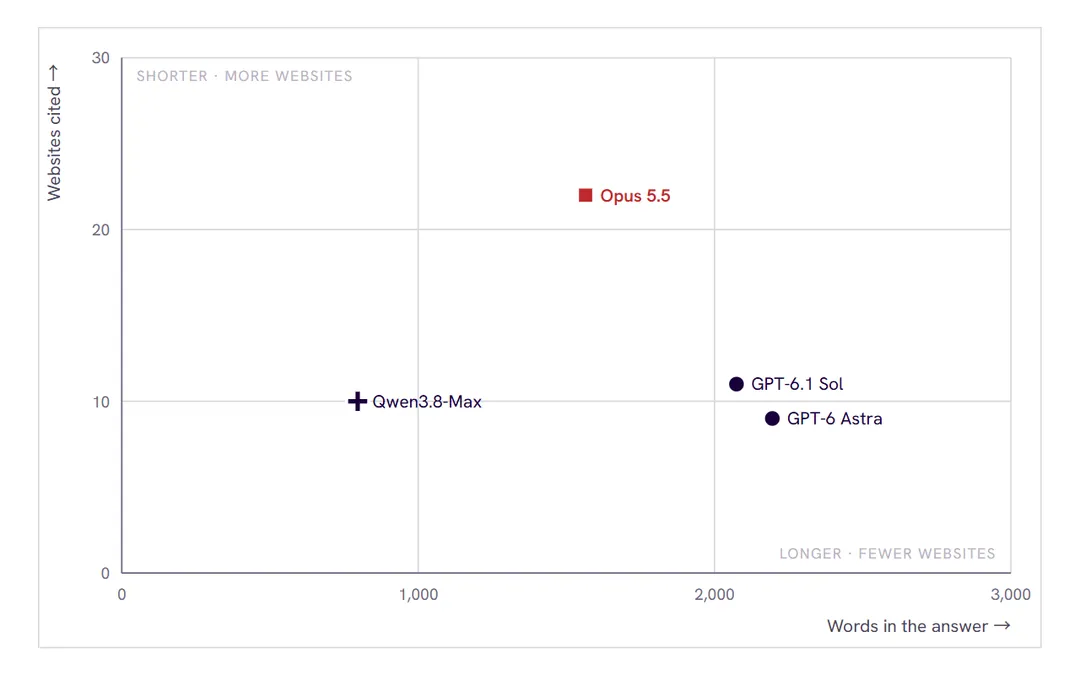
11 websites, 14 links.
The same count the comparison's density chart uses. A website is a distinct hostname. None of these pages has been opened and compared with its passage.
| Website | Links |
|---|---|
| prtimes.jp | 4 |
| alic.go.jp | 1 |
| atpress.ne.jp | 1 |
| city.higashiosaka.lg.jp | 1 |
| cookdeli.com | 1 |
| irwebcasting.com | 1 |
| maff.go.jp | 1 |
| shokuhin.net | 1 |
| super.or.jp | 1 |
| tdb.co.jp | 1 |
| vegetable.alic.go.jp | 1 |
Read another answer.
| Model | Setting | Asked | Words | Websites |
|---|---|---|---|---|
| Opus 5.5 | Extra | 6 Oct 2026 | 1,565 | 22 |
| GPT-6 Astra | Max | 6 Oct 2026 | 2,195 | 9 |
| Qwen3.8-Max | Thinking | 6 Oct 2026 | 796 | 10 |