
Which AI model searches the web better on a Japan food-buyer needs question?
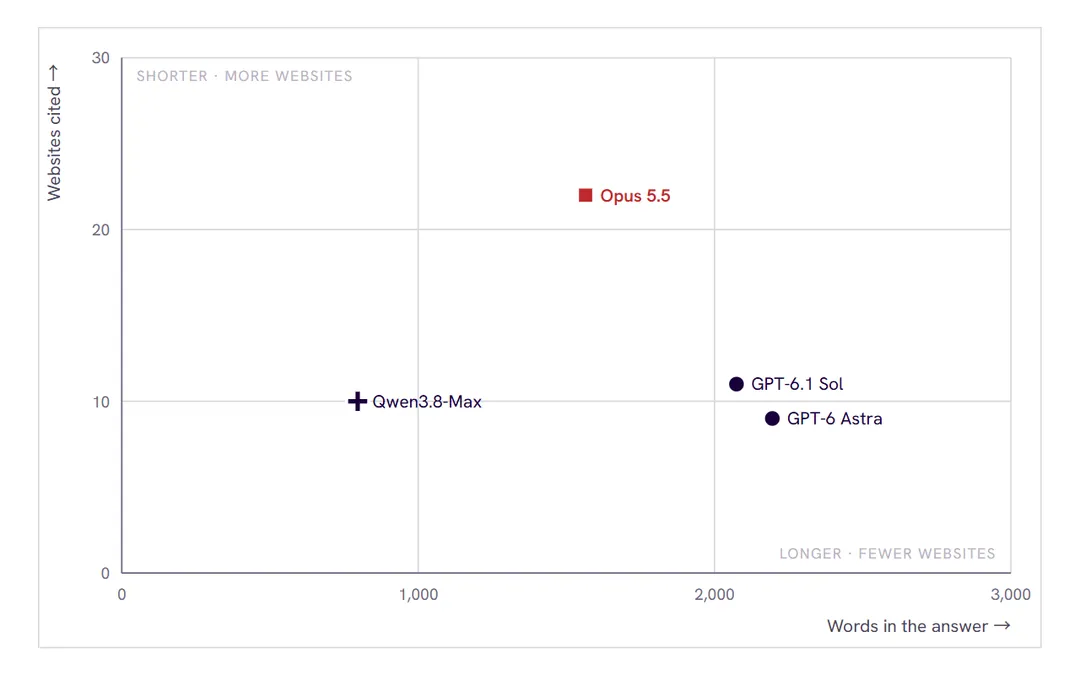
We asked four AI models the same question, with web search on, and kept one answer from each. This page counts the websites each answer cites. It does not open the links, so it cannot say whether the pages back what the answers wrote. It compares the models, not their advice.
As asked, word for word.
Search extensively about what the Japanese food buyers need. Not want or simply looking for with curiosity.
We are stuck in Japan, so let's do a refresh. what can we hill climb on, where's the best chances,
The goal is to identify what they need, and customize our food product line solely to Japan.
I want ideas based on facts
Output condition
- Include fact links after the paragraph or sentence
The question asks what buyers need, not what they want, and asks for ideas based on facts with a link after each paragraph or sentence. Buyer surveys, retailer reports, and trade press are mostly in Japanese. It tests whether a model finds current sources and ties each idea to one.
Which model researched further?
Show as a table
| Answer | Words | Websites cited |
|---|
More websites means the model looked further. It does not mean the answer is right. That needs the link check below, which has not run for this question.
Do the cited pages back what the models wrote? Not checked yet.
In a checked comparison, we open every cited link and compare the page with the passage that cites it. For this question that has not happened. The numbers below say how much there is to check.
Cited links · one square per link, none opened yet
Until then, treat every figure in these answers as a lead, not a fact. Open the page before a number goes into your plan. To see what a finished check looks like, read the comparison How effective are interpreters and translation tools at trade-show booths in Japan?.
What this means when you pick a model for research.
All four tie a need to labor in kitchens.
Opus 5.5 and GPT-6 Astra list labor first. Qwen3.8-Max lists it third, and GPT-6.1 Sol opens with removing kitchen work. Each proposes prepared or portioned ingredients: frozen components, prepared side dishes, bulk frozen vegetable mixes, and prepared ingredients for Japanese kitchens.
Two answers separate a buyer's problem from an open market.
GPT-6 Astra and GPT-6.1 Sol each say that evidence of a buyer's problem does not show that existing suppliers fall short. Astra calls its ranking its commercial judgment. Sol calls its ranking a judgment about where to start testing.
Qwen3.8-Max repeats itself and cites a different kind of source.
Its four needs appear twice, in the reply and again in a code block headed 'Downloadable Markdown File'. Its ten sites include facebook.com, openpr.com, and two market-research vendors, imarcgroup.com and marketdataforecast.com. It cites no Japanese government site. The other three answers each cite maff.go.jp.
Every answer, with its numbers.
| Model | Setting | Asked | Words | Websites | Links |
|---|---|---|---|---|---|
| Opus 5.5 | Extra | 6 Oct 2026 | 1,565 | 22 | 26 |
| GPT-6.1 Sol | Max | 6 Oct 2026 | 2,074 | 11 | 14 |
| GPT-6 Astra | Max | 6 Oct 2026 | 2,195 | 9 | 14 |
| Qwen3.8-Max | Thinking | 6 Oct 2026 | 796 | 10 | 10 |