Sonnet 5.5 at Medium, asked 8 Oct 2026
One answer from the comparison, shown in full as the model produced it on 8 October 2026. Nothing is edited. Its 17 cited links have not been opened, so this page does not say whether the pages back what it wrote.
I'll research current fee structures, overseas-seller eligibility, and typical campaign costs for the main Japan crowdfunding channels, then build the 6-12 month total cost comparison.
Top 5 crowdfunding channels for overseas food providers in Japan: 6-12 month total cost
I ranked these for a small-budget overseas food brand that wants a real market entry, not only a test. Commission rates come from sources. The creative and ad budgets are my own estimates, because I found no reliable published benchmarks for them, and I flag where that applies.
Channel facts (sourced)
1. Makuake (best overall fit)
- Makuake's legal page lists the commission as 20%. An optional ad-support program is charged separately. Check whether consumption tax is added on top. Makuake legal notice, undated, current page
- A 2026 fee comparison also shows 20% with payment fees included. onamae.com, June 2026
- Makuake had the highest campaign success rate of the big three, at 66%, and GourmetPro calls it one of the best platforms for food and beverage. It lists a foreign whisky launch as an example. GourmetPro, Aug 4, 2024 (data from May 2022)
- Makuake took 44.2% of the value raised in January to May 2026, the top share. craco via PR TIMES, 2026
- Food needs evidence documents such as food inspection results and business licenses. The same source gives a typical timeline of about 2 months for preparation and review, about 2 weeks of pre-announcement ads, and 1.5 to 2 months of campaign. commercepick, undated
- Post-campaign sales channels exist: Makuake STORE for e-commerce and SHOP for physical retail, both on a sales-based commission. Makuake business summary, undated
- Risk for an overseas entity: a Taiwanese source says Makuake pays 70% after the campaign and the remaining 30% after delivery is proven. That matters for cash flow. I could not confirm the date or whether it still applies. INSIDE, undated
2. CAMPFIRE (best for volume, lowest barrier)
- The commission is 17%, made up of a 12% service fee plus 5% payment fee. onamae.com, June 2026
- The platform has a minimal review process. CAMPFIRE service deck, 2024
- It is known for supporting entrepreneurs entering from abroad, and has a 36% success rate in the same dataset. GourmetPro, Aug 4, 2024
- It had 6,380 projects in January to May 2026, about 65% of all projects. This means more competition per page. craco via PR TIMES, 2026
3. Kibidango (lowest commission, with a program for overseas products)
- The commission is 10%, All-or-Nothing only, with about an 80% success rate. sogyotecho, 2025 edition
- A separate comparison also lists 10%. gooddo.jp, undated
- The company runs a business line for overseas startups and creators entering Japan, plus a Kibidango Store for post-campaign sales. Its store focuses on gadgets and outdoor items, so food fit is unproven. initial.inc, updated Mar 2026
4. GREEN FUNDING (retail link, but gadget-centric)
- The Standard plan is 18.2%. Older reports mention a self-service plan around 9% and full-support plans around 13 to 20%. gooddo.jp, undated and The Crowd Space, undated
- It is tied to the TSUTAYA retail network of more than 1,450 stores and reported a 92% success rate in 2024. It focuses on consumer products and gadgets, so food is a weaker fit. The Crowd Space, undated
5. Kickstarter Japan (only if you have a Japanese entity)
- Japan creators launch with a Japanese bank account and ID. Kickstarter launch coverage, Sep 13, 2017
- Kickstarter requires an address, bank account and government ID in the launch country. Crowdfund Insider, Aug 2017
- A US-based review lists a 5% platform fee plus 3% and $0.20 per pledge for payment. Japan-specific rates may differ and these sources are old, so verify before relying on them. Merchant Maverick, undated
Excluded: READYFOR. Its fee is low (12% simple plan), but it favors ethical or social projects and often asks for a proven friend and family base in Japan. GourmetPro, Aug 4, 2024
6-12 month total cost model (my estimates)
Assumptions: ¥3M gross raised, an All-in or successful All-or-Nothing campaign, and one campaign plus 3 to 6 months of follow-on sales.
- Creatives, estimated at ¥0.4M to ¥1.0M: page copy and design, photos and video. Video alone ranges from ¥50,000 to ¥1.5M by supplier type. atsoho, 2026 The rest of my range is an assumption.
- Ads, estimated at ¥0.6M to ¥1.2M: pre-launch and during-campaign social ads and influencer seeding. This is purely my assumption.
| Channel | Commission on ¥3M | Creatives + ads | Total cost before shipping and import | Share of gross |
|---|---|---|---|---|
| Makuake | ¥600k | ¥1.0M to ¥2.2M | ¥1.6M to ¥2.8M | 53% to 93% |
| CAMPFIRE | ¥510k | ¥1.0M to ¥2.2M | ¥1.5M to ¥2.7M | 50% to 90% |
| Kibidango | ¥300k | ¥1.0M to ¥2.2M | ¥1.3M to ¥2.5M | 43% to 83% |
| GREEN FUNDING | ¥546k | ¥1.0M to ¥2.2M | ¥1.5M to ¥2.7M | 52% to 92% |
| Kickstarter | about ¥240k to ¥300k | ¥1.0M to ¥2.2M | ¥1.2M to ¥2.5M | 41% to 83% |
Not included in the table, and the same on every channel: product cost, shipping and cold chain, import duties and consumption tax, customs agent fees, and Japanese-compliant labeling.
What this means for you
- Fixed costs dominate, so the platform's traffic matters more than its commission. Creatives and ads cost the same on every channel, while commission scales with what you raise. A 10-point lower commission saves ¥300k on ¥3M. A platform that raises 50% more with the same creatives is worth far more. That favors Makuake for premium or story-driven food, though I have no source proving higher yield per campaign for foreign food specifically.
- A failed campaign costs the same as a successful one. Creatives and ads are sunk. A 36% success rate (CAMPFIRE) versus 66% (Makuake) changes your expected cost per successful campaign significantly. GourmetPro, Aug 4, 2024
- Localization is non-negotiable. Japanese consumers hesitate over unknown foreign brands, and successful overseas products localize their brand and story. GourmetPro, Aug 4, 2024
- Import setup is a hidden cost center. A foreign company importing under its own name needs a customs agent in Japan and must handle import consumption tax. Shiodome, Mar 18, 2026
Suggested approach for a limited budget: Run one Makuake campaign as the main bet, with CAMPFIRE as the fallback if review is rejected. Use Kibidango if you want the lowest commission and are happy with a smaller audience. I would avoid GREEN FUNDING and Kickstarter unless you have a Japanese entity or a gadget-like product.
One thing would sharpen this: your product category, shelf-life, and whether you have a Japanese importer of record. These change the shipping and compliance costs more than any platform fee.
Sources:
- Makuake legal notice (undated)
- onamae.com fee comparison (June 2026)
- GourmetPro (Aug 4, 2024)
- craco via PR TIMES (2026)
- atsoho video costs (2026)
- Shiodome on customs agents (Mar 18, 2026)
- initial.inc on Kibidango (Mar 2026)
- sogyotecho (2025)
- gooddo.jp, The Crowd Space, commercepick, INSIDE (all undated)
- Kickstarter Japan launch and Crowdfund Insider (2017)
End of the answer. AI-generated, unverified. Asked 8 Oct 2026.
17 websites, 17 links.
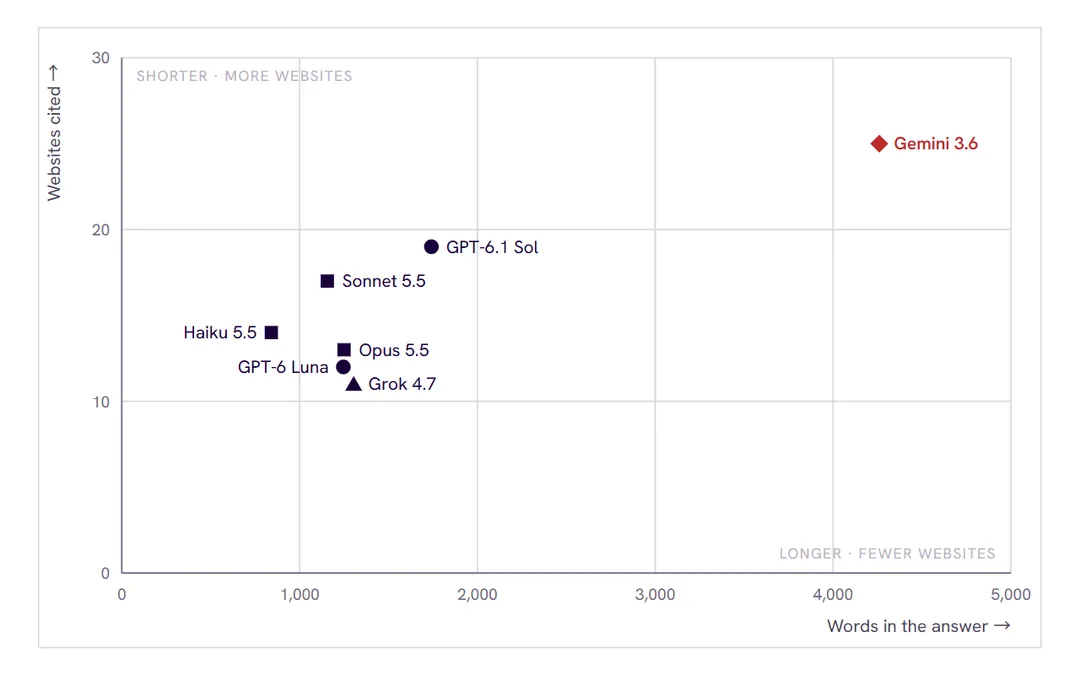
The same count the comparison's density chart uses. A website is a distinct hostname. None of these pages has been opened and compared with its passage.
| Website | Links |
|---|---|
| atsoho.com | 1 |
| commercepick.com | 1 |
| crowdfundinsider.com | 1 |
| gooddo.jp | 1 |
| gourmetpro.co | 1 |
| initial.inc | 1 |
| inside.com.tw | 1 |
| kitaishihon.com | 1 |
| lp.camp-fire.jp | 1 |
| makuake.com | 1 |
| merchantmaverick.com | 1 |
| mp1st.com | 1 |
| onamae.com | 1 |
| prtimes.jp | 1 |
| shiodome.co.jp | 1 |
| sogyotecho.jp | 1 |
| thecrowdspace.com | 1 |
Read another answer.
| Model | Setting | Asked | Words | Websites |
|---|---|---|---|---|
| Opus 5.5 | Medium | 8 Oct 2026 | 1,250 | 13 |
| GPT-6 Luna | Max | 8 Oct 2026 | 1,246 | 12 |
| GPT-6.1 Sol | Max | 8 Oct 2026 | 1,741 | 19 |
| Gemini 3.6 | Thinking | 8 Oct 2026 | 4,260 | 25 |
| Grok 4.7 | Fast | 8 Oct 2026 | 1,304 | 11 |
| Qwen3.8-Max | Thinking | 8 Oct 2026 | 1,134 | – |
| Qwen3.8-Omni-Flash | Thinking | 8 Oct 2026 | 1,661 | – |
| Haiku 5.5 | Extra | 8 Oct 2026 | 841 | 14 |