
GPT-6.1 Sol at Max, asked 28 Oct 2026
One answer from the comparison, shown in full as the model produced it on 28 October 2026. Nothing is edited. Its 6 cited links were opened and graded on 28 and 31 October 2026: 14 of 14 cited passages are fully backed. The comparison explains the check.
Human interpreters at trade-show booths in Japan
Research date: 2026-10-28. Scope: hired human interpreters for English-speaking exhibitors communicating with Japanese visitors. Product category and show are unspecified. The recommendations below are operating judgments, not measured effectiveness scores.
Main findings
- A prepared interpreter can support a substantial buyer conversation. The practical arrangement is an interpreter who knows the approved product explanation, with a company representative available for unfamiliar questions and decisions. Japan Finance Corporation describes that division of work in its guidance for Japanese companies exhibiting overseas. Applying it to overseas companies exhibiting in Japan is a reasoned recommendation. Japan Finance Corporation, sections 4.1 and 4.2, undated, accessed 2026-10-28.
- English-to-Japanese interpretation covers your explanations. Smooth two-way discussion also requires Japanese-to-English interpretation of visitor questions, objections, and requirements. AIIC distinguishes languages an interpreter works into from languages they only interpret from, so confirm both directions with the individual. AIIC Asia-Pacific, FAQ on working languages, undated, accessed 2026-10-28.
- An interpreter can learn enough to explain standard product facts independently when the role and training allow it. A first-person account by an interpreter trainee at a Portuguese textile manufacturer's booth in Tokyo describes both that ability and difficulty with an unfamiliar industry term. This is one person's experience, not a measured success rate. ISS Institute, account of the 4 to 6 June 2014 Interior Lifestyle exhibition, sections on duties and difficulties, undated, accessed 2026-10-28.
- The main limit is the source of the answer. An interpreter can convey an expert's answer to a difficult question, but the exhibitor must supply that answer and decide any commitment. Treat product expertise, interpreting skill, and decision authority as separate hiring requirements. This is the recommended operating boundary, based on the division of work above.
- This focused review found no controlled Japan-booth study that establishes a reliable percentage of questions answered, visitor comprehension, or sales improvement from hiring an interpreter. Evaluate the actual interpreter with your product rather than relying on a general effectiveness percentage.
How far the arrangement can go
The table is a proposed division of work. It describes what to test and agree with the interpreter, rather than a universal job description.
| Visitor interaction | What the interpreter can handle | Where the exhibitor is still needed |
|---|---|---|
| Greeting and understanding the visitor's interest | Greet in Japanese and convey what the visitor wants to discuss, if reception is part of the agreement. | Define the target visitors and the questions that establish relevance. |
| Standard product introduction | Give an approved explanation directly in Japanese, if trained and hired to do so. | Supply accurate facts, a demonstration, and agreed wording. |
| Routine product questions | Answer from an approved list when the question matches the agreed facts. | Resolve questions that fall outside the list or change its conditions. |
| Detailed technical discussion | Interpret the visitor's question and the product expert's answer. Ask for clarification when a term or meaning is unclear. | Supply the technical explanation, evidence, and limits. Technical complexity does not make interpretation impossible, but it raises the preparation requirement. |
| Price, order quantity, delivery, or customization | Interpret the conditions and relay approved terms. | Approve a quotation, discount, specification change, delivery promise, or exception. An interpreter may also have this authority, but hiring for interpretation alone does not establish it. |
| Next step | Confirm the agreed action and record it, if note-taking is included. | Own the follow-up and deliver the promised answer, quotation, or sample. |
For a simple, stable product with repeated questions, it is reasonable to train the interpreter to handle more conversations independently. For a configurable or technical product, plan for the representative to join earlier. These are planning inferences. No fixed preparation duration or product-complexity threshold emerged from the checked evidence.
The language barrier becomes manageable, but takes time
In consecutive interpretation, the speaker and interpreter take turns. AIIC says this takes about twice as long as simultaneous interpretation in its conference context. That comparison is not a measured multiplier for short booth conversations. AIIC Asia-Pacific, FAQ on consecutive interpretation, undated, accessed 2026-10-28.
The practical implication is to shorten the initial explanation and make room for the visitor's questions. Use short, complete thoughts rather than a long speech. Address the visitor directly and pause for interpretation. Confirm important numbers, units, conditions, and the next step in writing. These are recommended controls, not findings from a Japan-booth experiment.
Language skill does not eliminate unclear source speech. A vague product claim or an unexplained abbreviation still needs clarification before the interpreter can convey it accurately. Include accents, interruptions, an ambiguous question, and an unfamiliar term in the rehearsal. Test whether the interpreter asks for clarification instead of guessing. These are proposed selection criteria.
Do not use Japanese cultural stereotypes as a substitute for checking meaning. When a visitor gives an unclear answer, ask a neutral follow-up through the interpreter. Record the visitor's stated interest separately from the booth team's assessment of commercial potential. This is a recommendation for accurate, respectful communication.
Product knowledge limits independent answers
JETRO advises exhibitors to send company and product brochures or videos in advance so interpreters can study terminology. The same section warns that an interpretation-only contract normally excludes reception and brochure distribution. Its guide addresses Japanese exhibitors at overseas shows, so it supports preparation and contract checks rather than a Japan-specific performance claim. JETRO, September 2024, section II.9(3), PDF page 26, printed page 23.
A glossary needs meanings, not just word pairs. As a practical recommendation, give the interpreter the product, a demonstration, the intended buyer, the reason each feature matters, and the conditions attached to every claim. Distinguish approved answers from unanswered questions. Agree when the interpreter may answer directly and when the representative must respond.
The ISS account gives a useful counterexample to the idea that interpreters can only repeat sentences. The interpreter trainee sometimes explained the textile company's products directly to another visitor while the exhibitor was busy. The same account describes difficulty with a specialist term despite advance research. ISS Institute, June 2014 event account, duties, preparation, and difficulties sections, undated, accessed 2026-10-28.
An online survey conducted on 8 and 9 April 2026 asked 1,089 employees who had attended a trade show for work in the previous year about their booth experiences. In a multiple-response question about disappointing booths, 40.1% selected not receiving a precise answer to a question. In a separate question about booths that exceeded expectations, 49.1% selected hearing directly from a developer or engineer. These are reported visitor experiences, not measurements of interpreting quality. The publisher cautions that its online sample may not represent Japanese businesses. Exhibition Sales Marketing, survey fielded April 2026, sections 5-1 and 5-4, accessed 2026-10-28.
My inference is that language access alone is an incomplete staffing objective. Keep someone available who can answer product questions beyond the prepared explanation. The survey does not show that an interpreter caused any disappointing experience.
The service label does not establish the duties
Health & Wellness Japan's 2026 application form says booth interpreters study product and company information beforehand. It separates that service from presentation interpretation. The form also includes a one-hour lunch break and a 15-minute short break. These are the terms of one show's service, not a market-wide standard. Health & Wellness Japan 2026, interpreter application form, page 1, accessed 2026-10-28.
Before booking, confirm the actual person's experience and the agreed duties. The relevant distinctions are interpreting a discussion, greeting visitors, explaining the product independently, demonstrating it, recording requirements, and making commercial decisions. A provider may combine these duties, but do not infer them from the word "interpreter."
One interpreter cannot interpret two separate conversations at once. Plan coverage for simultaneous arrivals and breaks. If the product representative leaves the booth, make the interpreter's remaining permitted scope clear. These are capacity and role recommendations, not a prescribed staff ratio.
A rehearsal gives a more useful answer than a generic rating
My recommendation is a paid rehearsal with the proposed interpreter, the actual product representative, and a bilingual reviewer. Use your real materials and likely visitor questions. The following checks are proposed acceptance criteria, not a validated benchmark.
| Test | What a successful rehearsal shows |
|---|---|
| A short product introduction | The Japanese version preserves the benefit, conditions, and product facts without added claims. |
| A Japanese visitor's question | The English version preserves the visitor's intent, including uncertainty or an objection. |
| A technical term or question | The interpreter understands the concept or asks a useful clarification. The representative supplies missing knowledge. |
| Numbers and conditions | Price, currency, units, quantities, dates, and qualifications survive interpretation correctly. |
| A question outside the brief | The interpreter identifies the limit and involves the representative instead of inventing an answer. |
| A next step | Both parties understand the same action, owner, and timing. |
Score two things separately: whether the interpreter conveyed the meaning accurately, and whether the company supplied a correct, useful answer. A poor answer is not necessarily an interpreting error. A fluent answer is not necessarily a correct product claim. Record clarification requests, repetitions, time used, and unresolved questions so you can identify the actual constraint.
The preparation pack should contain an approved short introduction, a demonstration, a glossary with definitions, and likely questions. Add verified specifications and commercial conditions. Name the person who can answer technical questions and approve commitments. Mark unknowns openly. The recommendation is to expand the interpreter's independent scope only after the rehearsal shows that the person can handle it.
Evidence strength and remaining uncertainty
The strongest Japan-specific evidence checked here is the organizer's service form, which establishes duties and preparation terms. The ISS account shows what one interpreter actually did at a Japanese show, but it cannot establish average performance. JFC and JETRO provide operating guidance for the reverse exhibition direction. AIIC explains interpretation mechanics, rather than booth outcomes.
The product category, technical complexity, visitor type, interpreter experience, and staffing plan remain unknown. Those details could change how much the interpreter can handle alone. The checked evidence supports a prepared interpreter plus access to product expertise. It does not support a universal percentage, a sales guarantee, or a claim that every interpreter needs constant sentence-by-sentence supervision.
The focused research stopped once the role boundary, preparation requirement, and main operational limits were supported. More generic articles would not establish the proposed interpreter's ability with the user's product.
Source anchors
These short passages record the supporting locations. English translations follow retained Japanese text. Each passage must be read with its context above.
- Japan Finance Corporation, section 4.1, undated, accessed 2026-10-28. "ひと通りの説明は通訳に任せ". English translation: "Leave the routine explanation to the interpreter." The surrounding sentence says the exhibitor supplies answers to deeper questions. Section 4.2 assigns commercial negotiation to someone with authority. Source.
- JETRO, September 2024, section II.9(3), PDF page 26, printed page 23. "用語等を勉強しておいてもらう". English translation: "Have them study the terminology and related material beforehand." The surrounding guidance specifies advance brochures or videos and separate contract checks. Source.
- ISS Institute, account of June 2014 event, duties section, undated, accessed 2026-10-28. "状況によっては直接説明させていただき". English translation: "Depending on the situation, I explained it directly." The difficulties section describes an unfamiliar specialist term and the limits of learning an industry in a short assignment. Source.
- Health & Wellness Japan 2026, page 1, booth service condition 3, accessed 2026-10-28. "will study your product and company information beforehand" and "their skills do not extend to presentations". The form offers a separate presentation service. Source.
- AIIC Asia-Pacific, FAQ, undated, accessed 2026-10-28. "the speaker and interpreter take turns to speak". The page separately defines active and passive working languages. Source.
- Exhibition Sales Marketing, survey fielded 8 and 9 April 2026, section 5-4, figure 5-10, accessed 2026-10-28. "質問しても的確な回答が得られなかった". English translation: "I did not receive a precise answer even when I asked a question." The displayed share is 40.1%. Section 5-1 gives the sample and method. Source.
End of the answer. AI-generated, unverified. Asked 28 Oct 2026.
6 websites, 6 links.
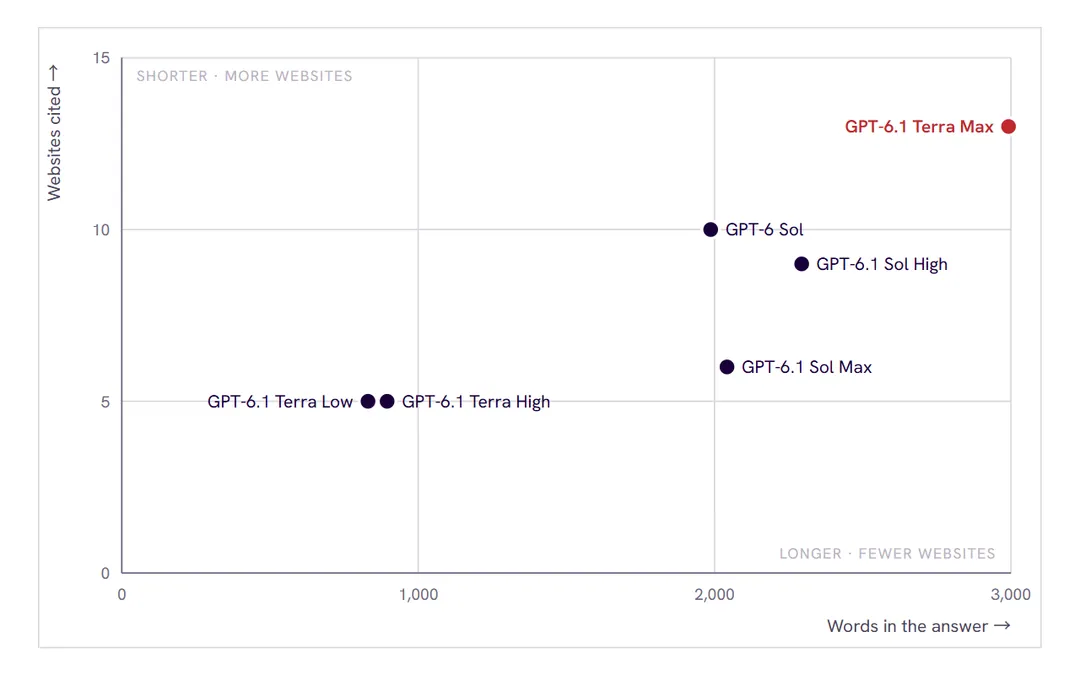
The same count the comparison's density chart uses. A website is a distinct hostname.
| Website | Links |
|---|---|
| aiic.asia | 1 |
| issnet.co.jp | 1 |
| jetro.go.jp | 1 |
| jfc.go.jp | 1 |
| tenjikaieigyo.com | 1 |
| this.ne.jp | 1 |
Read another answer.
| Model | Setting | Asked | Words | Websites |
|---|---|---|---|---|
| GPT-6.1 Sol | High | 28 Oct 2026 | 2,294 | 9 |
| GPT-6 Sol | Max | 28 Oct 2026 | 1,987 | 10 |
| GPT-6.1 Terra | Low | 28 Oct 2026 | 857 | 5 |
| GPT-6.1 Terra | High | 28 Oct 2026 | 869 | 5 |
| GPT-6.1 Terra | Max | 28 Oct 2026 | 2,992 | 13 |