GPT-6.1 Terra at Max, asked 28 Oct 2026
One answer from the comparison, shown in full as the model produced it on 28 October 2026. Nothing is edited. Its 16 cited links were opened and graded on 28 and 31 October 2026: 29 of 31 cited passages are fully backed. The comparison explains the check.
Interpreters and translation tools at trade-show booths in Japan
Research date: 2026-10-28. The product, languages, and show are not yet specified. The examples assume a foreign exhibitor speaking with Japanese visitors. The user wants to consider both human interpreters and translation tools. Oral communication is called interpretation; translation usually refers to written material.
Decision
A prepared business interpreter can help an exhibitor and a visitor discuss the product, ask questions, and identify a possible next step. A practical arrangement is a product representative working with an interpreter, with a translation tool as backup for short, non-confidential exchanges. A bilingual sales or product specialist can also do both jobs if they can demonstrate both skills. These are practical judgments, not measured conversion rates.
The interpreter does not automatically know the product or have authority to quote prices, make technical claims, or negotiate terms. A briefing can improve understanding, but the exhibitor must supply the facts and decide what the interpreter may say independently. JETRO recommends providing product materials in advance and notes that an interpreting-only contract normally does not include reception or distributing brochures. Its guide concerns Japanese companies exhibiting abroad, so applying the contract warning to a show in Japan is an inference. Confirm the actual contract. JETRO trade-fair guide, 2024, PDF p. 26.
No reliable study was found in this focused search that compares visitor satisfaction, qualified leads, sales, or interpretation error rates at Japanese trade-show booths with and without interpreters. The examples and studies below support a practical approach, not a percentage improvement or guarantee.
What Japanese booth evidence shows
At Tokyo Big Sight in January 2025, a Wakayama business-support foundation arranged an English, Chinese, and Japanese interpreter for a group booth with five exhibitors. The foundation reported that the interpreter helped business-card exchanges and, through experience in business meetings and presentation, helped obtain business discussions. It introduced other support at the same time and did not compare the result with an otherwise equivalent booth without an interpreter. The report attributes a contribution to the interpreter, but it cannot quantify the effect. Immediately after the show, results for business discussions and contracts were below the exhibitors' targets. The foundation attributed the timing partly to the fact that follow-up had not yet begun. Wakayama group exhibit report, pp. 2-3, accessed 2026-10-28.
In an account of a 2014 Tokyo show, an interpreter trainee said she prepared for a Portuguese home-textile exhibitor by reviewing its materials and videos. When the exhibitor was occupied with another visitor, she sometimes explained the product directly and reported back afterwards. An unfamiliar textile term remained difficult despite preparation. This is one person's account and does not establish how often this problem occurs. ISS Institute, Interior Lifestyle booth account, 2014 event, accessed 2026-10-28.
A 2026 internet survey of 1,089 company employees who had attended an exhibition for work in the previous year asked separate multiple-response questions about booth experiences. When asked what made booths disappointing, 40.1% selected not receiving a precise answer to a question. When asked about booths that exceeded expectations, 49.1% selected hearing directly from a developer or engineer. The survey did not ask whether an interpreter was present. The publisher also cautions that the online sample may not represent the distribution of Japanese businesses. Exhibition Sales Marketing, April 2026 survey, section 5-4 and figures 5-9 and 5-10.
How far an interpreter can take the conversation
| Booth task | Reasonable expectation | Limit to plan for |
|---|---|---|
| Welcome a visitor and ask what they are looking for | A booth interpreter can convey the question and answer between the visitor and the exhibitor. | Confirm whether greeting visitors, approaching passersby, and keeping notes are part of the assignment. One person cannot interpret separate simultaneous conversations. |
| Explain a familiar product or demonstration | An interpreter can convey the exhibitor's explanation and the visitor's follow-up questions. Product documents and a glossary make a useful briefing. | Interpretation skill alone does not establish product knowledge. The interpreter should ask the product representative when the answer is not in the approved material. |
| Discuss price, minimum order, delivery, customization, or distribution | The interpreter can relay offers and questions. A written, approved price and conditions sheet gives both parties a reference. | The exhibitor must decide prices and terms. The interpreter cannot invent terms or make an unapproved commitment. |
| Answer an unfamiliar technical, safety, certification, or import question | The interpreter can convey the question to a specialist and relay the answer. | If no one knows the answer, record it for follow-up. Do not treat fluency as evidence of technical or regulatory expertise. |
| Work alone as a booth salesperson | A separately hired and trained bilingual representative may be able to greet, explain approved facts, qualify visitors, and record next steps. | This is a broader role than interpretation. Verify product competence, authority, coverage, and pay in advance. A sales-capable interpreter is possible but must be selected and contracted for that role. |
The table's role boundaries and staffing advice are recommendations, not measured success rates.
How far translation tools can go
The following is a practical assessment. It is not a head-to-head booth test.
For generative question-answering tools, a 2024 study found that model responses can contain unsupported or contradictory claims even when the model retrieves reference material. The study did not test a trade-show product assistant. Niu and colleagues, August 2024, abstract.
| Booth task | Possible use | Limit to plan for |
|---|---|---|
| Greeting and simple questions | An app can help two people exchange short, clear sentences. A reviewed bilingual product card can support the conversation. | Speech recognition, translation, connectivity, and the time needed to take turns can interrupt the conversation. Test the particular language pair and device in noise. |
| Product explanation and common questions | The representative can give an answer, then use a tool to translate it. A prepared FAQ can help the team find an approved answer. | Translating words does not establish whether the answer is true or complete. A tool given product material may still misread it, omit qualifications, or generate an unsupported answer. A representative must check the answer. |
| Unfamiliar technical questions or commercial terms | A tool may help capture the visitor's question or translate a draft response. | Bring in the product representative. Confirm figures and commitments in checked bilingual writing before either party relies on them. |
NICT's VoiceTra is one example, not a tested recommendation for commercial booth use. Its FAQ says it is designed for travel conversations, one sentence at a time. It needs an internet connection, users cannot register unrecognized words themselves, and not all proper names are recognized. NICT VoiceTra FAQ, accessed 2026-10-28.
NICT says VoiceTra inputs and translations are recorded for research and improvement. Its terms instruct users not to input personally identifiable information or commercially confidential information. Check a tool's data handling and permitted use before using it for visitor or product discussions. NICT VoiceTra iOS terms, 15 November 2022.
VoiceTra offers a back-translation display to help users inspect the result. NICT VoiceTra features, accessed 2026-10-28. A 2021 experiment with English-to-Czech and English-to-Estonian written translations found that back-translation feedback increased user confidence but did not significantly change translation quality. It is a useful prompt to rephrase, not proof that a Japanese translation is correct. Zouhar and colleagues, 2021, abstract and conclusion.
Machine translation can perform well on specialized material under particular conditions. In a 2026 study, eight interpreters rated 40 selected Chinese-to-Japanese utterances from outpatient consultations. GPT-4o received a median accuracy rating of 5 out of 5. The researchers fed it manually transcribed text with context labels. They selected examples for evaluation, and excluded exchanges where all three tools had identical output. The other tools were not all tested with the same input method. The result does not measure speech recognition in a noisy booth or predict a tool's current performance on the exhibitor's product. Chao and colleagues, 18 June 2026, methods and table 2.
Product knowledge and preparation
An interpreter does not need to be the product inventor to interpret a discussion. The person must understand enough of the product and terminology to follow both sides. In a 2018 interview study, 10 professional Chinese-English conference interpreters described preparing unfamiliar topics with documents and glossaries. That study concerns conferences in Taiwan, not Japanese trade shows. Chang and Wu, 2018, abstract.
In a separate 2015 experiment, seven professional interpreters and 16 students interpreted specialized English scientific presentations into Spanish. Both groups performed more accurately after receiving preparatory materials 30 minutes beforehand than without preparation. The study tested simultaneous interpretation, not booth conversations, Japanese, sales outcomes, or long-term product training. Díaz-Galaz, Padilla, and Bajo, 2015, abstract.
Before the show, provide the interpreter with these materials. This is a recommended briefing pack, not a tested minimum:
- A short company and product overview, the intended visitor, a 30-second explanation, and a product sample or demonstration.
- A Japanese and exhibitor-language glossary with meanings, not just translations. Include product names, technical terms, measurements, units, and common buyer questions.
- Approved answers on specifications, pricing and currency, minimum order quantities, lead times, customization, and available certifications. Mark unknown or pending items clearly.
- A list of statements and concessions the interpreter may make, questions that require the product representative, and the person who can authorize an answer.
- The visitor greeting, note-taking, contact collection, follow-up responsibilities, priority meeting times, and breaks specified in the agreement.
JETRO's food-export seminar checklist recommends explaining the product's selling points and features to the interpreter in advance. It also recommends being able to explain the product's appeal in 30 seconds. The checklist was written for Japanese food exporters, so the exact product materials should be adapted to the exhibitor and audience. JETRO food-export seminar, March 2020, PDF p. 52.
How to keep conversations clear
Use short turns. Address the visitor directly, pause for interpretation, and let the interpreter ask for clarification. The Australian Northern Territory government's guidance for on-site interpreted interviews recommends these practices and asks the parties to check understanding. Applying them to trade-show conversations is a practical inference, not a measured booth result. Northern Territory Government, interpreting process, accessed 2026-10-28.
For important facts, show the figures in writing and confirm them in both languages. For example, distinguish unit price from case price, specify the currency and quantity, and identify whether freight and tax are included. Treat any quotation as provisional until the authorized person confirms it. This is a recommended safeguard.
Consecutive interpretation requires both parties to pause, so a conversation can take longer than direct discussion. Allow time for questions and for other visitors to wait or return. Do not assume a specific delay without a test at the booth.
In a 2018 qualitative Japanese business-interpreting study, one interviewed client said they used an interpreter in business because being misunderstood would be a problem. The study interviewed six business clients, mostly in information technology or finance, plus business interpreters. It was not a survey of Japanese trade-show visitors, and it does not show that all Japanese buyers prefer interpreters. Takahashi and Kimura, 2018, pp. 93 and 96.
Hiring and budget
Ask providers for the actual language pair, experience interpreting business discussions in the product sector, and the proposed person's experience at exhibitions. Ask whether they can handle short product explanations or only interpret between two speakers. Make visitor reception, independent product explanations, qualification, note-taking, confidentiality, breaks, overtime, preparation time, and fee responsibilities explicit in the agreement.
Before hiring, run a short role-play using the real sample and briefing pack. Ask a bilingual reviewer to check both directions. Include routine product questions, a price question with numbers, and a question whose answer is not supplied. Check whether the interpreter preserves the meaning and asks instead of guessing. This is a recommended selection test, not a published certification standard.
To compare a human interpreter with a translation tool, use the same product representative in both tests. Give each arrangement a set of 10 to 15 comparable visitor questions in the actual language pair and a noisy setting. Include an unscripted follow-up, a number, a negative statement, and an unknown product detail. Have an independent bilingual reviewer check the visitor's question and the answer. Separately record translation accuracy and whether the answer matches the approved product facts. Also record the time, need for repetition, and the mock visitor's assessment of ease of conversation. Test a prepared interpreter working alone separately if that broader role is being considered. A small rehearsal is a screen for obvious problems, not a guarantee of live performance.
As one event-specific price reference, the Inter BEE 2026 exhibitor manual lists English-Japanese interpreting at ¥66,000 including tax for up to eight hours per day. Its stated price includes meals and transport. The manual offers separate estimates for other languages. This is not a market average, and the manual's application deadline was October 9. Inter BEE 2026 exhibitor manual, section 05-4-4, PDF p. 129.
Assess the result at the show
After a pilot, record the number of visitor conversations, visitors who request a next step, unanswered questions, and missed or delayed conversations during peak periods. Log the agreed follow-up and who owns it. Review the notes with the interpreter each day, then correct the product briefing. These are proposed operating measures; their values are not benchmarks.
If comparing staffing arrangements across days, record traffic and timing too. Differences in visitor volume or visitor mix can affect the results. A simple before-and-after comparison cannot by itself establish that interpretation caused a change in sales.
Checked source passages
The excerpts below are short anchors for the findings. The surrounding sections were also read. Source recommendations, qualitative reports, experiments, and price lists are not interchangeable evidence.
-
JETRO trade-fair guide, 2024, PDF p. 26, interpreter preparation and contract scope: “用語等を勉強しておいてもらうようにします。”
English translation: “Have them study the terminology and related matters in advance.”
“業務は通訳のみ”
English translation: “The work is interpretation only.” In context, JETRO says this is normally the case under an interpreting-only contract. JETRO trade-fair guide, 2024.
-
JETRO food-export seminar, March 2020, PDF p. 52, exhibitor checklist: “セールスポイントや商品の特徴を通訳に事前に説明・理解してもらっている。”
English translation: “The interpreter has been briefed on the selling points and product features in advance and has understood them.” JETRO food-export seminar, March 2020.
-
Díaz-Galaz and co-authors, 2015, abstract: “both groups worked significantly better after advance preparation”. The source describes English-to-Spanish scientific conference speeches. Original article, 30 March 2015.
-
Chang and Wu, 2018, abstract: “We interviewed 10 Chinese-English interpreters”. The source describes conference preparation rather than a booth trial. NTU author record, 2018.
-
Inter BEE 2026, section 05-4-4, PDF p. 129: “Interpreter (English - Japanese) : ¥66,000 including tax (up to 8 hours per day)”. Exhibitor manual, 2026.
-
Takahashi and Kimura, 2018, p. 96, one interviewed client's account: “ビジネスの時には、間違ってとられたら困るので、ビジネスの時には通訳を使う”
English translation: “For business, I use an interpreter because it would be a problem if what I said were misunderstood.” This is one person's reported reason, not a population finding. Original article, 2018.
-
Northern Territory Government, “During the interview”: “permit the interpreter to ask for clarification or repetition”. This is public-service interpreting guidance. Interpreting process, accessed 2026-10-28.
-
Wakayama group exhibit report, p. 2, accessed 2026-10-28, report authors' assessment: “通訳を設置したことで多くの名刺交換に繋げることができた”
English translation: “By providing an interpreter, we were able to facilitate many business-card exchanges.” The report describes its own program and does not establish the interpreter's independent causal effect. Wakayama group exhibit report, accessed 2026-10-28.
-
ISS Institute booth account, 2014 event, interpreter's description: “直接説明させていただき、その後逐一報告”
English translation: “I explained directly, then reported each instance afterwards.” The context was a new visitor arriving while the exhibitor was already busy. ISS Institute, accessed 2026-10-28.
-
Exhibition Sales Marketing, April 2026 survey, figures 5-9 and 5-10: “開発者やエンジニアから直接話を聞けた”
English translation: “I could hear directly from a developer or engineer.”
“質問しても的確な回答が得られなかった”
English translation: “I could not obtain a precise answer even when I asked a question.” These were options in separate multiple-response questions. Exhibition visitor survey, April 2026.
-
NICT VoiceTra FAQ, “Translation” and “Network”: the app is designed for travel conversations and needs a network. The “Functions and features” section says users cannot register unrecognized words themselves. NICT VoiceTra FAQ, accessed 2026-10-28.
-
NICT VoiceTra iOS terms, clauses 2 and 4: input speech and text and their translations are recorded on NICT servers; users are instructed not to input identifying or commercially confidential information. NICT VoiceTra iOS terms, 15 November 2022.
-
Zouhar and colleagues, 2021, abstract and conclusion: the experiment found increased confidence with back-translation feedback but no significant change in translation quality. Original research, 2021.
-
Chao and colleagues, 2026, methods and table 2: eight professional interpreters rated 40 selected utterances; GPT-4o received a median rating of 5 out of 5. GPT-4o and Google received typed transcripts, while a researcher read transcripts aloud to UD Talk. Identical outputs across all three systems were excluded from the rated selection. Original article, 18 June 2026.
-
Niu and colleagues, 2024, abstract: generated responses can contain unsupported or contradictory claims even with retrieved material. The paper evaluates general retrieval-assisted language models, not a trade-show product assistant. Original conference paper, August 2024.
End of the answer. AI-generated, unverified. Asked 28 Oct 2026.
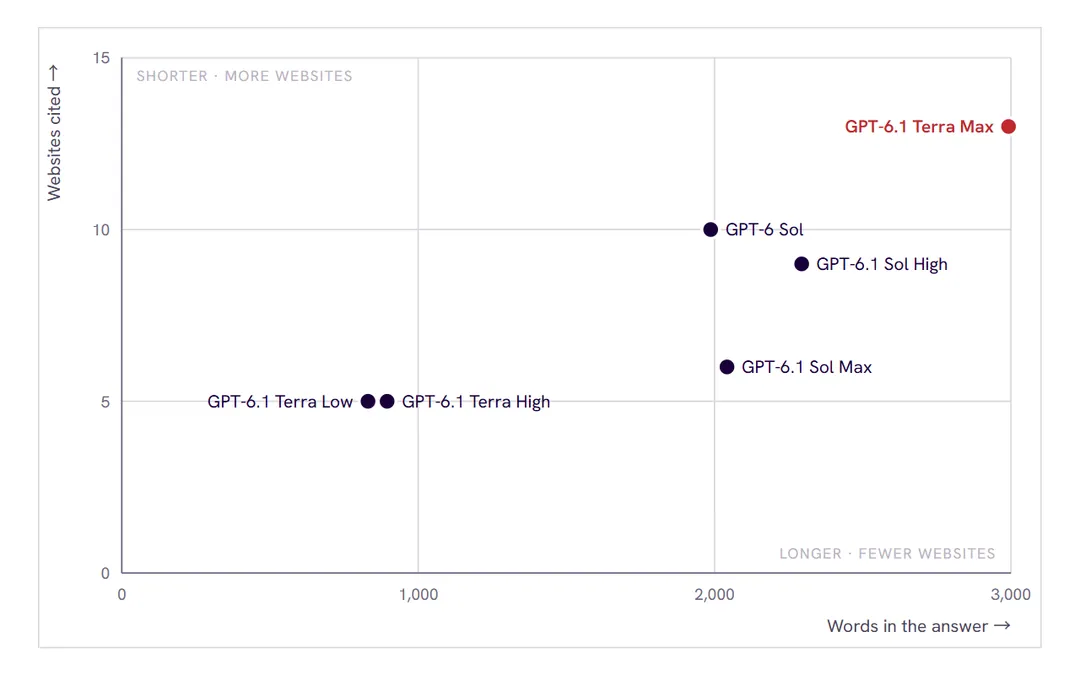
13 websites, 16 links.
The same count the comparison's density chart uses. A website is a distinct hostname.
| Website | Links |
|---|---|
| voicetra.nict.go.jp | 3 |
| jetro.go.jp | 2 |
| aclanthology.org | 1 |
| arxiv.org | 1 |
| benjamins.com | 1 |
| exb.jesa.or.jp | 1 |
| issnet.co.jp | 1 |
| jmir.org | 1 |
| jstage.jst.go.jp | 1 |
| nt.gov.au | 1 |
| scholars.lib.ntu.edu.tw | 1 |
| tenjikaieigyo.com | 1 |
| zenkyo.or.jp | 1 |
Read another answer.
| Model | Setting | Asked | Words | Websites |
|---|---|---|---|---|
| GPT-6.1 Sol | High | 28 Oct 2026 | 2,294 | 9 |
| GPT-6.1 Sol | Max | 28 Oct 2026 | 2,042 | 6 |
| GPT-6 Sol | Max | 28 Oct 2026 | 1,987 | 10 |
| GPT-6.1 Terra | Low | 28 Oct 2026 | 857 | 5 |
| GPT-6.1 Terra | High | 28 Oct 2026 | 869 | 5 |