Which AI model searches the web better on a trade-show interpreter question?
We gave three OpenAI models the same question with web search on, at different effort settings. This page measures how far each answer searched and whether the pages it cited back what it wrote. It compares the models, not their advice.
As asked, word for word.
research the effectiveness of the translators at a booth of a trade show in Japan. the goal is to understand how far we can go, and the limitation of the translation especially the below points to get smooth communication with visitors.
- language barrier
- product knowledge
Instruction
- $d-search
"$d-search" tells the model to follow Dorado's research instructions, which ask for primary sources and a check of every claim against its own link. The question needs sources that few people publish: trade-show interpreter terms, exhibitor guides in Japanese, and translation-tool documentation. It tests whether a model finds those pages and stays within what they say.
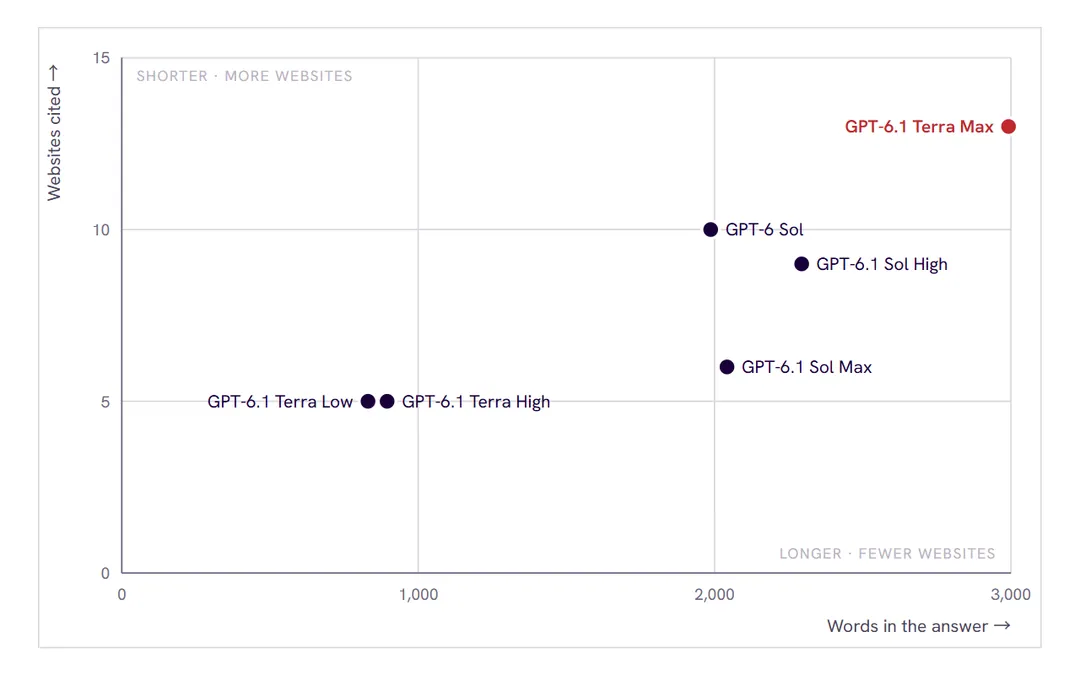
Which model researched further?
Show as a table
| Answer | Words | Websites cited |
|---|
More websites means the model looked further. It does not mean the answer is right. The next chart checks that.
Which answer holds up as written?
We opened every cited link and compared the page with the passage that cites it. A passage is backed when every figure, name, date, and condition in it is on the page.
What the check caught
- GPT-6.1 Terra at High: a dead link.Its source for a 2017 Toyama fair, where one interpreter served two booths, now redirects to an unrelated page. The same arrangement is in a JETRO rule that GPT-6.1 Terra at Low cites.
- GPT-6.1 Terra at Max: a blocked page.Two passages cite a JETRO seminar PDF that refuses every request. One of them, the advice to pitch the product in 30 seconds, has no other checked source.
- GPT-6.1 Sol at High: the wrong product.It calls a page the Pocketalk S support page. The page body describes the original Pocketalk, as of February 2019.
- GPT-6 Sol at Max: a tidied quote.It quotes the VoiceTra FAQ with a spelling mistake corrected and does not say so. The point it supports still stands.
What this means when you pick a model for research.
The instructions did most of the work.
Every answer ran with the same research instructions, which tell the model to check each claim against its own link. 102 of the 107 cited passages hold up in full, and no page contradicts its passage.
More effort bought breadth, not accuracy.
GPT-6.1 Terra at Low cited 5 websites in 857 words. At Max it cited 13 in 2,992 words. Both hold up almost in full. The longer answer covers more ground, such as translation apps, with the same care.
A backed passage is not strong evidence.
The answers say that no study measures interpreter accuracy or sales at Japanese booths. Their staffing tables and rehearsal plans are the models' own advice and carry no links. The check confirms what the pages say, not that the advice works at your booth.
Event pages vanish.
Exhibitor manuals and seminar handouts move or close after the show. Two of the 32 cited pages no longer opened for us. Keep a copy of any page you rely on.
Every answer, with its numbers.
| Model | Setting | Words | Websites | Passages checked | Backed | Partly | Not backed |
|---|---|---|---|---|---|---|---|
| GPT-6.1 Sol | High | 2,294 | 9 | 23 | 22 | 1 | 0 |
| GPT-6.1 Sol | Max | 2,042 | 6 | 14 | 14 | 0 | 0 |
| GPT-6 Sol | Max | 1,987 | 10 | 26 | 25 | 1 | 0 |
| GPT-6.1 Terra | Low | 857 | 5 | 7 | 7 | 0 | 0 |
| GPT-6.1 Terra | High | 869 | 5 | 6 | 5 | 0 | 1 |
| GPT-6.1 Terra | Max | 2,992 | 13 | 31 | 29 | 0 | 2 |
More model comparisons
- Model comparisonMaruto Mizutani: customer segments, strengths, weaknesses, and issues requiring outside help
- Model comparisonBuyer's journey in Japan's food retail and wholesale space
- Model comparisonFood quotations for Japanese retailers and wholesalers: business culture and competitive offers
- Model comparisonTaiwan-to-Japan alcohol export pricing: work backward from Japanese market prices to preserve profit