Validate the fit.
Not sure if your product fits the Japanese market? Start here to understand the buyers' needs, and how we can help. We research your product and its buyers in Japan, and change the research as your questions change. Every brief is checked in Tokyo. Up to 5 written questions. Cancel any month.

- $200a month, by card, after $50 for the first month. No setup fee.
- 1brief a month, checked in Tokyo
- 5written questions a month
- Soonafter the intake form, you get your first brief
What a month can cover.
Objectives drift over time. We expect that, so treat these lists as examples, not a fixed menu.
Consumer products
- Prices of comparable products on Amazon, Rakuten, and major retailers
- New competitors and new products
- Importers, distributors, or buyers that may fit
- Changes to labeling rules and regulations
- Grants and trade shows you can use
B2B IT
- Competitor moves: launches, pricing, partnerships
- Japanese companies worth approaching, with a reason for each
- Industry associations and events
- How Japanese companies run procurement
- Relevant regulations
The first months are your time to judge us.
Get in touch with us to discuss how we can help.Contact us →
- 01
Start
Ask us about the plan. We reply by email. Cancel any month.
- 02
Tell us your product
A one-time intake form: your product, the customers you want in Japan, and your first questions.
- 03
Read your first brief
Prices, competitors, buyers, and rules for your product, with every source linked. We check it in Tokyo before you see it.
- 04
Ask, and adjust
A good brief leaves you with new questions and assumptions to test. Send up to 5. The next brief follows them.
Every product gets its own research.
Most companies sell a range of products around one bestseller. Each product has a slightly different value proposition and a different buyer. Research built for the bestseller misses the rest.
So market entry can't run on a template. We set up the research product by product and target by target, and change it when your questions change. AI agents search Japanese sources in Japanese. We set up each workflow and check what comes back.
You can also prepare on your own. The library has manuals you can follow on your own product.
Snapshot
This is a starting structure for one consumer product. It changes as your questions change. The rows are placeholders until a customer brief is approved for public use.
| Section | What you get |
|---|---|
| 1 | Summary and what changed since last month |
| 2 | Prices in Japan: product, retailer, price in JPY, date checked |
| 3 | New competitors and products |
| 4 | Importers, distributors, or buyers, with a reason and a contact route |
| 5 | Labeling rules and regulations that changed |
| 6 | Grants and trade shows, with deadlines |
| 7 | Sources, each linked and dated |
Matcha powder, price per 30 g
Show as a table
| Product | Retailer | Price (JPY) | Checked |
|---|---|---|---|
| Brand A | Amazon | 780 | 2026-10-01 |
| Brand G | Rakuten | 980 | 2026-10-01 |
| Brand B | Amazon | 1,180 | 2026-10-01 |
| Brand H | Rakuten | 1,280 | 2026-10-01 |
| Brand C | Amazon | 1,480 | 2026-10-01 |
| Brand I | Rakuten | 1,540 | 2026-10-01 |
| Brand M | Department store | 1,620 | 2026-10-01 |
| Brand D | Amazon | 1,650 | 2026-10-01 |
| Brand J | Rakuten | 1,880 | 2026-10-01 |
| Brand N | Department store | 2,160 | 2026-10-01 |
| Brand E | Amazon | 2,200 | 2026-10-01 |
| Brand K | Rakuten | 2,380 | 2026-10-01 |
| Brand O | Department store | 2,700 | 2026-10-01 |
| Brand F | Amazon | 2,980 | 2026-10-01 |
| Brand L | Rakuten | 3,240 | 2026-10-01 |
| Brand P | Department store | 3,780 | 2026-10-01 |
Every brief goes through the same steps.
Each step has one job. When a check fails, the work goes back before it reaches you.
- 01
Set up for your product
We set up the research from your intake form: your product, the customers you want in Japan, and your first questions.
- 02
Search Japanese sources
Japanese retailers, importers, ministries, and trade press, searched with Japanese search terms.
- 03
Write the sections
Prices, competitors, buyers, rules, and trade shows. Each fact carries its source and the date it was checked.
- 04 Check
Check each fact against its page
Each fact is read against the page it cites.
If the page does not say it: the fact is corrected or removed. - 05 Check
Flag sentences a reader could misread
A fact about another company that reads as yours. Two facts placed side by side that imply a link no source states.
If a sentence is flagged: it is rewritten. - 06 Check
Track it against the rules
A tracker shows where each brief stands and flags any step that breaks a rule.
If a rule breaks: the brief waits until it is fixed. - 07 Review
We read it
We know which retailers and buyers matter, and read every brief before it is sent.
If it needs more work: back to step 02. - 08
Sent each month
Your first brief arrives after the intake form. After that, one brief each month.
Start with one brief.
Ask about the research plan first. We reply by email. When you start, you tell us your product, the customers you want in Japan, and your first questions. Your first brief arrives soon after. After that, one brief each month. Cancel any month, and keep the briefs you received.
- One brief each month
- Up to 5 written questions a month
- Spot work any time, $65 per 30 minutes or $400 a day, if you need one task done
- Research set up for your product and buyers, not a template
- Every source linked and dated
- We read every brief before it is sent
- Cancel any month. No setup fee, no minimum term.

Before working with us.
Who does the research?
We set up the research for your product and buyers. AI agents run it against Japanese sources: retailer listings, company sites, trade press, and public filings. We read every brief, correct what is wrong, and add what the AI missed before it reaches you.
Can I cancel?
Yes, any month. There is no setup fee and no minimum term.
What is not included?
The plan, $50 for the first month and then $200 a month, covers the brief and 5 written questions. Calls, translations, and buyer introductions are spot work, $65 per 30 minutes or $400 a day, any time. Meetings with buyers and sales on the ground are hands-on execution, from $1,500 a month.
Is the brief in English?
Yes. Sources are mostly Japanese, and each is linked so you can check it.
How do I pay?
In US dollars: $50 for the first month, then $200 a month. We agree the payment details by email before your first brief. Receipts are issued by Dorado LLC, Tokyo.
Check out our insights
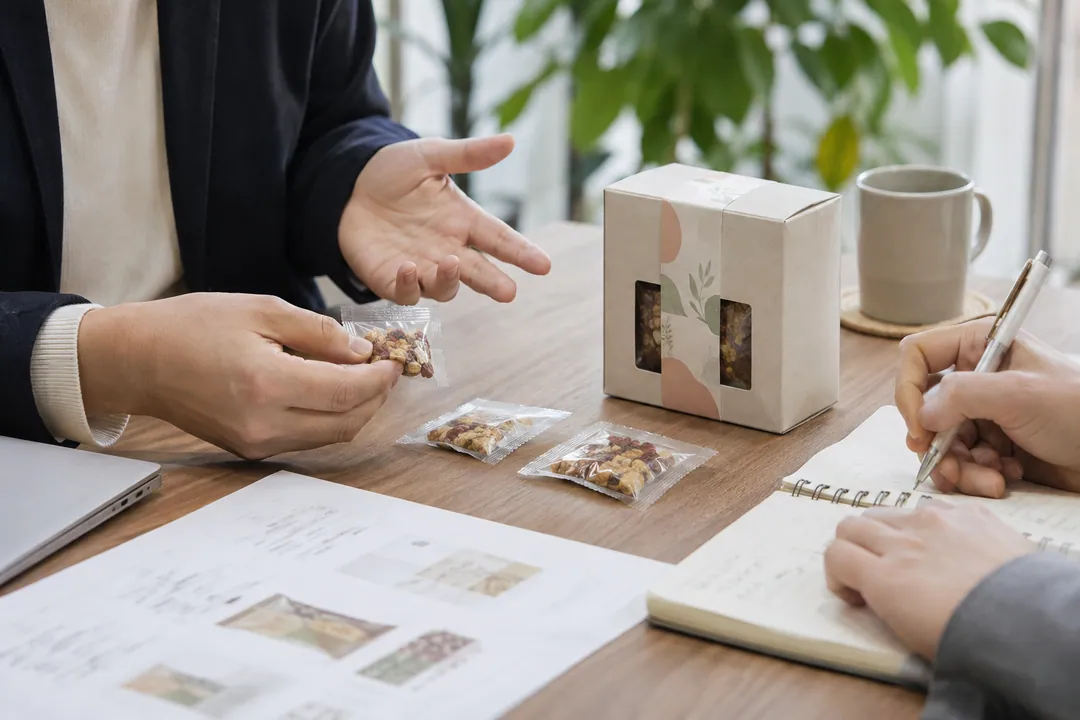
Hire a fractional team.
Sales, customer success, marketing, and partner management, in one engagement that follows the problem. The research continues inside it.
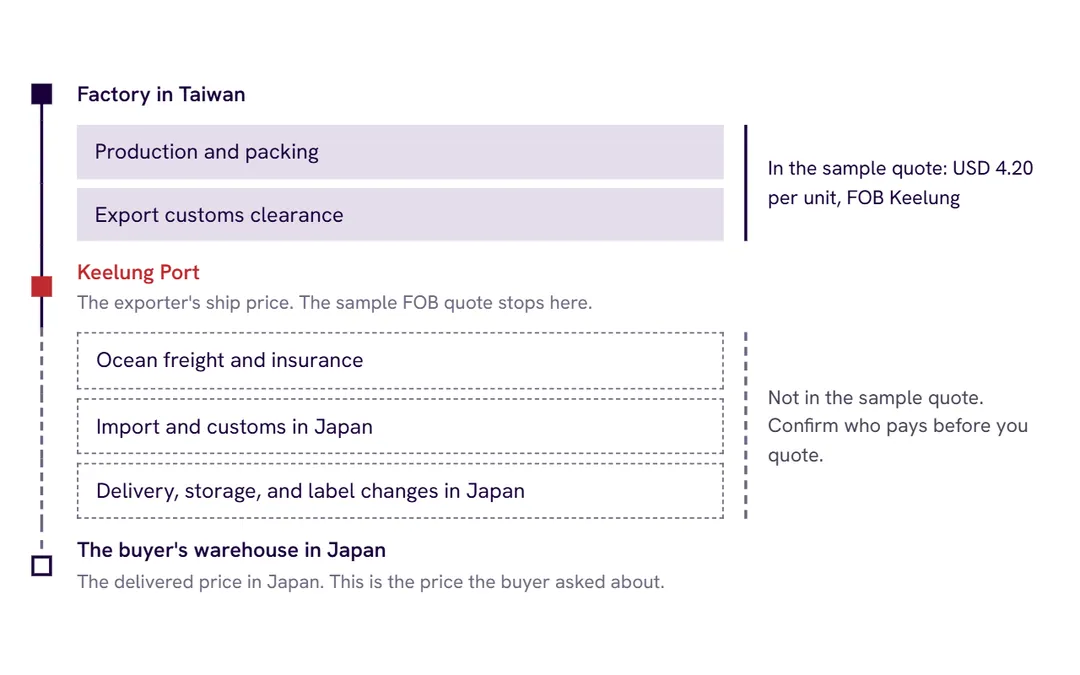
Practicality, documented.
Insights from our Japan market research, manuals you can follow on your own product, and comparisons of how AI models answer Japan market questions.
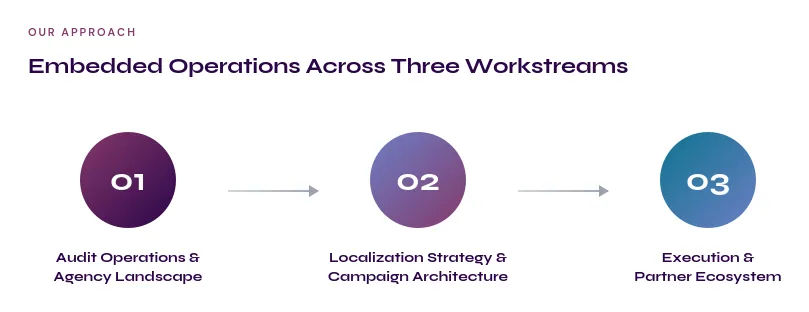
Our previous projects
The problem, what we did, and what changed. A Fortune 500 electronics manufacturer, and a SaaS company.