
Grok 4.7 at Fast, run 2, asked 7 Oct 2026
One answer from the comparison, shown in full as the model produced it on 7 October 2026. Nothing is edited. Its 9 cited links were opened and graded on 31 October 2026: 5 of 9 cited passages are fully backed. The comparison explains the check.
Top 5 Locations in Japan for Incorporating a Food Manufacturing Entity (Considering Government Subsidies)
As of 2026 data
This guide ranks locations based on local corporate location (企業立地) subsidies, preferential treatment for food manufacturing, raw material access, industry clusters, logistics, and combinability with national MAFF/METI support programs.
National-level support (available nationwide and often combinable with local incentives, subject to anti-double-funding rules) includes:
- MAFF labor-saving / automation investment support
- Export-oriented HACCP facility upgrades
- Regional food enterprise collaboration programs
- Large-scale growth investment subsidies (up to ¥50 billion under certain frameworks for productivity and wage increases)
Local prefecture + municipality subsidies are frequently the key differentiator for new factories or expansions.
1. Fukui Prefecture
Fukui explicitly designates food manufacturing as a “growth industry” under its location promotion subsidy scheme.
- Subsidy rates up to 20%
- Combined prefecture + municipality support: indicative ¥5–8 billion range (for ~¥20 billion investment scale, depending on employment, site, and conditions)
- Additional local funds support product development and regional resource utilization
- Logistics supported by Hokuriku Shinkansen; reasonable proximity to Kansai markets
Why top for food manufacturing incorporation: Highest preferential treatment specifically for the food sector among comparative guides.
2. Hokkaido
Japan’s clear leader in agricultural output and a dominant food manufacturing base (often >35–40% of local manufacturing shipment value).
- Abundant raw materials (dairy, seafood, vegetables, potatoes, etc.)
- Dedicated location subsidies for manufacturing including food-related industries and plant factories (typical rates 5–10%+, higher for priority categories)
- Strong alignment with MAFF export/HACCP and 6th industrialization support
- Main clusters: Sapporo/Ishikari, Tokachi, and other production areas
- Cold climate advantageous for certain processing and storage
Why strong: Best raw-material security and industry scale for food manufacturers.
3. Aichi Prefecture (especially greater Nagoya / surrounding industrial areas)
Japan’s largest overall manufacturing ecosystem; food/beverage is included among supported or targeted industries.
- Location subsidies (e.g., “New Aichi Creation” schemes): roughly 8–10% range
- Combined prefecture + municipality: indicative ¥5–8 billion scale
- Excellent infrastructure (ports, highways), talent pool from advanced manufacturing (transfers well to food automation)
- Strong domestic market access and supplier networks
Why strong: Superior logistics, ecosystem, and overall business environment balanced with competitive subsidies.
4. Ehime Prefecture
Preferential higher subsidy rates specifically for food-related companies (15% noted) under its attraction/incentive system.
- Combined prefecture + city support: typically ¥4–6 billion indicative range
- Access to regional agricultural and marine resources
- Solid Shikoku logistics positioning
Why included: Clear food-sector preferential rate that stands out in national comparative data.
5. Yamaguchi Prefecture
(Strong alternatives: certain Kyushu areas such as Kagoshima for livestock strength, or high-ceiling schemes in Miyazaki/Nagasaki; Fukuoka for Asia logistics hub)
- Among the higher combined subsidy potentials: indicative ¥6–10 billion range
- Large absolute upper limits on some schemes
- Solid manufacturing infrastructure and port access
Why included: High absolute subsidy ceilings make large-scale investments particularly attractive.
Practical Notes for Incorporation & Subsidy Application
- Apply before starting construction or major investment — most location subsidies require prior certification or plan approval.
- Employment creation usually boosts rates and ceilings.
- Combine local location subsidies with national MAFF/METI tools by carefully allocating expenses (e.g., buildings/land often local; machinery/automation often national).
- Additional tax incentives may apply under regional economic traction laws, green food system measures, or SME management enhancement plans.
- Always verify current details, thresholds, and municipal overlays with the prefecture, relevant municipality, and JETRO, as budgets and rules update annually.
- Site factors to weigh: industrial parks, water/power availability, labor force, and product-specific needs (cold chain, HACCP design, etc.).
Figures are indicative based on 2026 comparative summaries and can vary significantly with exact investment size, employment plans, and specific municipal support.
Sources and URLs
-
Nationwide Corporate Location Subsidies Guide (2026 edition) – Detailed prefecture-by-prefecture comparison including food-specific notes
https://food-hojo.jp/complete-guide-to-corporate-location-subsidies/
(Published/updated around July 2026) -
MAFF – Support measures for food businesses
https://www.maff.go.jp/j/shokusan/251224.html -
MAFF – New business & food industry subsidy/commissioned projects
https://www.maff.go.jp/j/shokusan/jigyo/yosan.html -
Hokkaido Corporate Location Promotion Subsidy
https://www.pref.hokkaido.lg.jp/kz/ssg/sgr/yugu/sinhojoseido.html -
Fukui Prefecture Growth Industry Location Promotion Subsidy
https://kigyoritti.pref.fukui.lg.jp/preferential/archives/1 -
Aichi Prefecture Industrial Location Support / Preferential Measures
https://www.pref.aichi.jp/soshiki/ricchitsusho/yuuguu-ken.html -
Agricultural Output by Prefecture (MAFF / related statistics)
https://www.maff.go.jp/j/tokei/kekka_gaiyou/seisan_shotoku/r6_betsu/index.html -
JETRO – Investing in Japan / Manufacturing government initiatives
https://www.jetro.go.jp/en/invest/attractive_sectors/manufacturing/government_initiatives.html -
Food industry productivity & related MAFF support overview
https://food-industry-productivity-forum.maff.go.jp/support-measures/
File created for reference. Always cross-check official prefectural and MAFF pages for the latest application windows, rates, and eligibility, as programs are subject to annual revision.
End of the answer. AI-generated, unverified. Asked 7 Oct 2026.
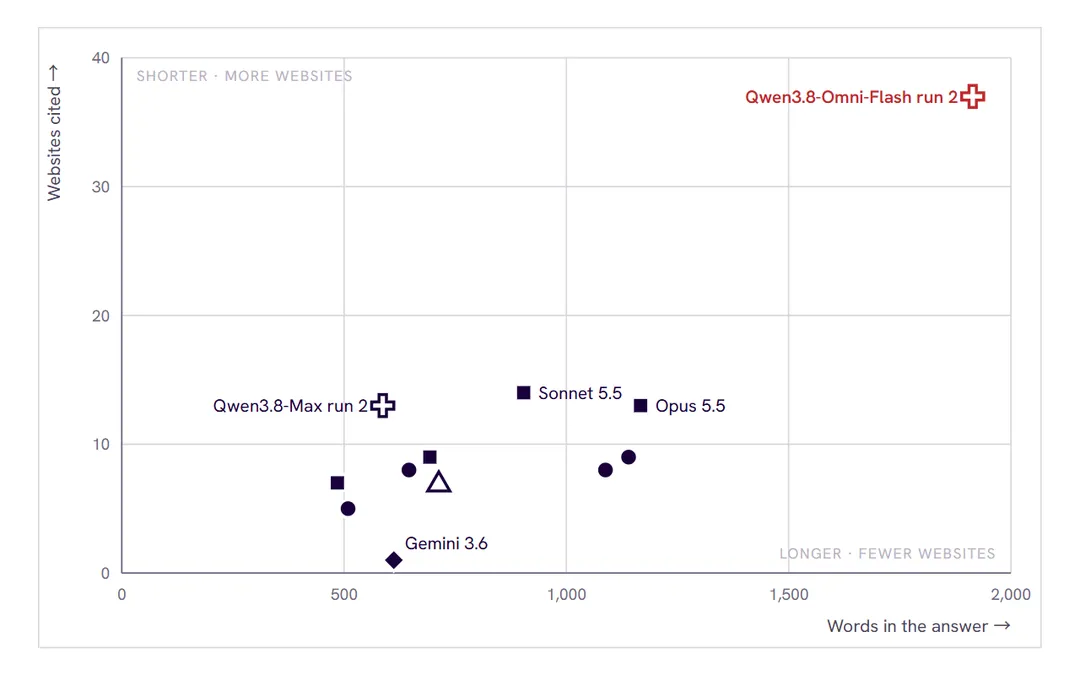
7 websites, 9 links.
The same count the comparison's density chart uses. A website is a distinct hostname.
| Website | Links |
|---|---|
| maff.go.jp | 3 |
| food-hojo.jp | 1 |
| food-industry-productivity-forum.maff.go.jp | 1 |
| jetro.go.jp | 1 |
| kigyoritti.pref.fukui.lg.jp | 1 |
| pref.aichi.jp | 1 |
| pref.hokkaido.lg.jp | 1 |
Read another answer.
| Model | Setting | Asked | Words | Websites |
|---|---|---|---|---|
| Opus 5.5 | Medium | 8 Oct 2026 | 1,167 | 13 |
| Sonnet 5.5 | Medium | 7 Oct 2026 | 904 | 14 |
| GPT-6 Luna | Max | 8 Oct 2026 | 509 | 5 |
| GPT-6.1 Sol | Max | 7 Oct 2026 | 1,140 | 9 |
| GPT-6 Astra | Max | 7 Oct 2026 | 1,088 | 8 |
| Gemini 3.6 | Thinking | 7 Oct 2026 | 612 | 1 |
| Grok 4.7 | Fast | 7 Oct 2026 | 744 | – |
| Qwen3.8-Max | Thinking | 7 Oct 2026 | 545 | – |
| Qwen3.8-Max | Thinking | 7 Oct 2026 | 587 | 13 |
| Qwen3.7-Plus | Fast | 7 Oct 2026 | 616 | – |
| Qwen3.7-Plus | Fast | 7 Oct 2026 | 985 | – |
| Qwen3.8-Omni-Flash | Thinking | 8 Oct 2026 | 1,174 | – |
| Qwen3.8-Omni-Flash | Thinking | 8 Oct 2026 | 1,914 | 37 |
| Haiku 5.5 | Medium | 8 Oct 2026 | 485 | 7 |
| Haiku 5.5 | Extra | 8 Oct 2026 | 693 | 9 |
| GPT-6 Sol | Max | 8 Oct 2026 | 646 | 8 |