
Qwen3.7-Plus at Fast, run 2, asked 7 Oct 2026
One answer from the comparison, shown in full as the model produced it on 7 October 2026. Nothing is edited. It has no links in the saved copy, so there was nothing to check.
I'll help you find the top 5 locations in Japan for incorporating a food manufacturing entity, considering government subsidies. Let me search for current information on this topic. Based on the current landscape of government incentives, regional industrial clusters, and subsidy programs in Japan, here are the top 5 locations to incorporate a food manufacturing entity.
1. Gifu Prefecture (Central Japan)
Gifu is arguably the most aggressive prefecture in offering direct financial support specifically for food-related industries. The region has enhanced its subsidy programs to attract food manufacturers, leveraging its abundance of clean groundwater and agricultural products . The "Gifu Business Promotion Program Subsidy" offers up to 500 million yen for investments in land, buildings, and equipment for manufacturing businesses . This location is ideal for companies looking for substantial capital grants rather than just tax breaks, with major industry players like Calbee and Ajinomoto already established there .
2. Osaka / Kansai Region (West Japan)
Osaka is known as the "nation's kitchen" and serves as the economic powerhouse of West Japan, accounting for 16.2% of Japan’s total GDP . The region offers a robust ecosystem for food tech, supported by the "KANSAI FoodTech Open Platform" which connects companies with universities and research institutions . Local governments in West Japan, including Osaka, offer various incentives such as tax breaks and grants to encourage business growth in advanced manufacturing and biotechnology . The region’s strong logistical networks and proximity to Kansai International Airport make it optimal for export-oriented food manufacturers .
3. Fukuoka / Kyushu Region (Southwest Japan)
Fukuoka is the fastest-growing city in Japan and offers a unique "Startup Package" that includes corporate tax reductions for up to five years for innovative businesses . Specifically for food, Munakata City in Fukuoka offers the "Food Town Munakata Promotion Grant," which subsidizes up to 200,000 JPY for developing regional specialty products using local resources . The broader Kyushu region accounts for 19.5% of Japan’s national agricultural output, providing easy access to raw materials . Additionally, Fukuoka’s Global Business Support (GBS) provides one-stop assistance for foreign entrepreneurs, including help with subsidies and office space .
4. Hokkaido (Northern Japan)
Hokkaido is Japan’s foremost food production base, particularly the Tokachi region, which has large-scale farm crops and advanced agricultural research facilities . The Tokachi Foundation offers a subsidy program that covers 100% of expenses for founders strengthening local brands, along with startup support spaces like "LAND" . Sapporo City has been designated as a "Special Zone for Financial and Asset Management Businesses," offering up to 100% exemption from municipal taxes for up to 10 years for eligible GX (Green Transformation) and fintech businesses, which can include sustainable food tech . The region is also receiving significant investment in renewable energy, which can lower operational costs for energy-intensive food processing .
5. Tokyo Metropolis (Kanto Region)
While operating costs are higher, Tokyo offers access to the largest consumer market and significant national-level subsidies. The Tokyo Metropolitan Government provides subsidies that partially cover certification and ratings costs, which are crucial for food safety compliance . National programs accessible from Tokyo include the "Manufacturing Subsidy" and "Small Business Sustainability Subsidy," which support capital investment for productivity improvement and new product development . Tokyo is also a hub for the "Green Innovation Fund," a ¥2 trillion pool administered by METI/NEDO that supports long-term R&D in food technology and decarbonization . Incorporating in Tokyo provides easier access to these national ministries and venture capital firms.
Downloadable Markdown File
You can download the detailed report with sources and links below:
# Top 5 Locations for Food Manufacturing Incorporation in Japan

## 1. Gifu Prefecture
**Key Incentives:**
- **Gifu Business Promotion Program Subsidy:** Up to 500 million yen for investments in land, buildings, and equipment.
- **Enhanced Food Industry Support:** Specific subsidies for food-related industries due to abundant clean water and agriculture.

**Why Choose Gifu:**
High direct financial grants and an existing cluster of major food companies (Calbee, Ajinomoto).

**Sources:**
- [Gifu Regional Information - Investing in Japan](https://www.jetro.go.jp/en/invest/region/data/gifu.html) (Source, 2024-2026)

## 2. Osaka / Kansai Region
**Key Incentives:**
- **Regional Tax Breaks and Grants:** Local governments offer incentives for advanced manufacturing and biotech.
- **KANSAI FoodTech Open Platform:** Collaborative initiative connecting companies with research institutions.

**Why Choose Osaka:**
Known as the "nation's kitchen," it has strong logistics, export infrastructure (Kansai Airport), and a vibrant food culture.

**Sources:**
- [Why West Japan Matters](https://exporttojapan.co.uk/guide/getting-started/why-west-japan-matters/) (Source, 2023-2025)
- [INVEST JAPAN, INVEST KANSAI - For Food Tech](https://www.kansai.meti.go.jp/3-1toukou/invest_in_kansai/e_foodtech_kansai.html) (Source, 2026)

## 3. Fukuoka / Kyushu Region
**Key Incentives:**
- **Startup Corporate Tax Reduction:** Exemption from corporate and municipal tax for up to 5 years for innovative startups.
- **Food Town Munakata Promotion Grant:** Subsidies for developing local specialty food products (up to 200,000 JPY).
- **Startup Visa:** First city in Japan to offer a dedicated startup visa.

**Why Choose Fukuoka:**
Fastest growing population, lower cost of living, strong agricultural base in Kyushu, and excellent support for foreign entrepreneurs.

**Sources:**
- [Startup City Fukuoka](https://fukuoka.startup-city.jp/) (Source, 2024-2026)
- [Munakata City Food Town Grant](https://japan-incentive-insights.deloitte.jp/article/S-00009549) (Source, 2026)

## 4. Hokkaido (Sapporo & Tokachi)
**Key Incentives:**
- **Tokachi Foundation Subsidy:** Covers 100% of expenses for strengthening local brands.
- **Sapporo GX Promotional Tax Incentive:** Up to 100% exemption from municipal taxes for up to 10 years for GX-related businesses.
- **LAND Startup Support:** Dedicated space and scholarships for food/agri-tech startups.

**Why Choose Hokkaido:**
Japan’s primary food production base with vast agricultural land, renewable energy potential, and specific support for food branding.

**Sources:**
- [FoodTech Hub — Hokkaido](https://startuphokkaido.com/en/blog/161/) (Source, 2024)
- [Sapporo STEP - Finance](https://sapporo-step.global/strategic-industries/finance/) (Source, 2025-2026)

## 5. Tokyo Metropolis
**Key Incentives:**
- **National Subsidies:** Access to Manufacturing Subsidies and Small Business Sustainability Subsidies (up to 5 million yen for certain investments).
- **Certification Support:** Subsidies partially covering food safety certification costs.
- **Green Innovation Fund:** Access to ¥2 trillion R&D fund for sustainable food tech.

**Why Choose Tokyo:**
Largest consumer market, proximity to national ministries (MAFF, METI), and highest concentration of venture capital.

**Sources:**
- [Government Incentives - Investing in Japan](https://www.jetro.go.jp/en/invest/support_programs/incentive/) (Source, 2024-2026)
- [Japan Government Grants for Sustainable Food SMEs](https://daishomediapartners.jp/japan-government-grants-funding-sustainable-food-sme-2025-2026-directory/) (Source, 2026)
- [2025 Latest Edition of Subsidy Summary](https://shigyo.co.jp/en/post_topics/%E3%80%90%E6%B3%A8%E7%9B%AE%EF%BC%81%E3%80%912025%E5%B9%B4%E6%9C%80%E6%96%B0%E7%89%88%E3%80%80%E8%A3%9C%E5%8A%A9%E9%87%91%E3%81%BE%E3%81%A8%E3%82%81/) (Source, 2025)
End of the answer. AI-generated, unverified. Asked 7 Oct 2026.
Read another answer.
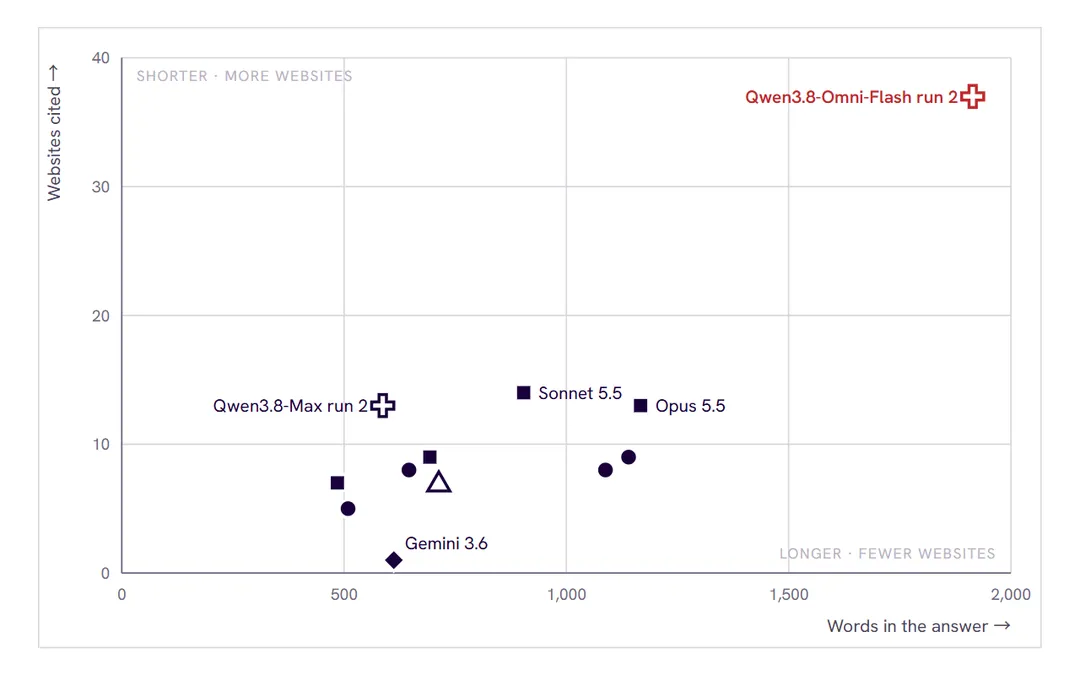
| Model | Setting | Asked | Words | Websites |
|---|---|---|---|---|
| Opus 5.5 | Medium | 8 Oct 2026 | 1,167 | 13 |
| Sonnet 5.5 | Medium | 7 Oct 2026 | 904 | 14 |
| GPT-6 Luna | Max | 8 Oct 2026 | 509 | 5 |
| GPT-6.1 Sol | Max | 7 Oct 2026 | 1,140 | 9 |
| GPT-6 Astra | Max | 7 Oct 2026 | 1,088 | 8 |
| Gemini 3.6 | Thinking | 7 Oct 2026 | 612 | 1 |
| Grok 4.7 | Fast | 7 Oct 2026 | 744 | – |
| Grok 4.7 | Fast | 7 Oct 2026 | 713 | 7 |
| Qwen3.8-Max | Thinking | 7 Oct 2026 | 545 | – |
| Qwen3.8-Max | Thinking | 7 Oct 2026 | 587 | 13 |
| Qwen3.7-Plus | Fast | 7 Oct 2026 | 616 | – |
| Qwen3.8-Omni-Flash | Thinking | 8 Oct 2026 | 1,174 | – |
| Qwen3.8-Omni-Flash | Thinking | 8 Oct 2026 | 1,914 | 37 |
| Haiku 5.5 | Medium | 8 Oct 2026 | 485 | 7 |
| Haiku 5.5 | Extra | 8 Oct 2026 | 693 | 9 |
| GPT-6 Sol | Max | 8 Oct 2026 | 646 | 8 |