Qwen3.8-Omni-Flash at Thinking, run 1, asked 8 Oct 2026
One answer from the comparison, shown in full as the model produced it on 8 October 2026. Nothing is edited. It has no links in the saved copy, so there was nothing to check.
Top 5 Locations to Incorporate a Food‑Manufacturing Entity in Japan (with Subsidy Analysis)
Below is a ranking built on three criteria: (a) strength of the local food/agricultural supply base, (b) size and accessibility of prefectural/city location subsidies for new factories and legal entities, and (c) stackable national subsidies and tax incentives. Note that Japan allows company registration with as little as ¥1 in capital, so the differentiator is really the regional incentive package .
1. Hokkaido (Sapporo) — Best for Raw‑Material‑Driven & Export‑Oriented Food Manufacturers
Hokkaido is Japan's top food‑producing region with the country's highest food self‑sufficiency rate, making Sapporo a prime spot for food manufacturing companies . Sapporo explicitly designates food‑related industries as a "priority growth sector," and companies establishing a business entity in that sector can apply for a dedicated Subsidy for Foreign Companies Establishing a Business . On top of that, Sapporo City runs separate subsidies supporting food‑related businesses with product development and hygiene‑management certification costs (e.g., HACCP/JFS) . At the prefectural level, Hokkaido's Industry Promotion Ordinance covers food‑related industry and plant‑factory establishment/expansion . For larger capital projects, Hokkaido has offered a startup capital‑investment subsidy of up to ¥1 billion for land, buildings and depreciable assets .
Why #1: ingredient proximity (dairy, seafood, grains, potatoes) + the only city in Japan that pairs a formation subsidy for foreign entities with a food‑specific certification subsidy.
2. Miyagi Prefecture (Sendai Area) — Best Value in Tohoku
Miyagi's manufacturing base around Sendai is dominated by electronics, appliances and food processing . Sendai alone accounts for roughly 53.6% of all food manufacturers in the prefecture, giving immediate access to a skilled food‑production labour pool . The Miyagi Business Establishment Subsidy covers factories and research laboratories, plus headquarters and training facilities . Miyagi also subsidises part of the rent for offices and laboratories for companies starting or developing a new business inside the prefecture . As the gateway to Tohoku with an extensive expressway network and a government‑designated city core, logistics into the Tokyo metro area are straightforward .
3. Shizuoka Prefecture — Best for Mid‑Scale Food Processing Clusters
Shizuoka is described as a "Department Store of Industry" hosting more than 3,000 food businesses, giving an unusually dense local supplier and OEM network . The prefecture positions itself as sitting between Tokyo and Osaka with competitive land prices and easy access to Japan's two largest consumer markets, and it maintains a dedicated foreign‑company attraction desk . Its raw‑material base is deep: green tea, mandarin oranges, hothouse melons, wasabi and bonito are among Japan's best . Multinational flavour and food‑additive manufacturers already operate plants here (e.g., Takasago's powder‑flavour and fruit‑juice facility), which validates the industrial‑zone and utility readiness for food plants .
4. Mie Prefecture — Best Capex Subsidy Rate for a "Mother Factory"
Mie offers a subsidy of 15% of depreciable assets invested, up to ¥500 million, for investments leading to the establishment of so‑called "mother factories" (advanced/automated production bases) . Its broader growth‑industry location subsidy pays around 10% of depreciable assets under current terms . Mie's prefectural programme is explicitly aimed at enhancing competitiveness through transformation and strengthening of manufacturing . Over 40% of the prefecture's manufacturing is already in high‑value‑added fields, and Mie is a national hub for food processing and agriculture . Mie also ranks 3rd nationally in tea production, a strong anchor for beverage and extract manufacturers .
5. Chiba Prefecture — Best for Large‑Scale Plants Serving Greater Tokyo
Chiba's headline numbers are the largest of any prefecture on this list: a Factory Establishment subsidy capped at ¥1 billion, and a Large‑Scale Investment Establishment subsidy capped at ¥7 billion . Chiba City specifically names the "Food and Health Lifestyle‑Oriented Industry (Food Manufacturing)" as a target sector and pays up to ¥600,000 per employee who lives in or moves into the city . Companies establishing head offices or qualifying facilities can also receive subsidies equivalent to half of the rent, up to ¥10 million . Being adjacent to Tokyo and home to Narita and major cold‑chain ports, it is the natural pick for ready‑to‑eat and chilled/frozen food manufacturers.
National Subsidies You Can Stack on Any of the Five Locations
These are location‑agnostic and are usually combined with the prefectural grants above:
| Programme | What it gives a food manufacturer |
|---|---|
| New Business Entry / Monozukuri Commerce & Services Subsidy (merged from FY2026) | Minimum grant ¥7.5 million; SME subsidy rate 1/2, rising under wage‑raise exceptions |
| Global Framework of the same subsidy | Up to ¥90 million at a flat 2/3 rate for export/overseas channel development — highly relevant for Japanese food exporters |
| MAFF Facility Development Project for HACCP & Export Standards | Funds drying/processing facilities and equipment compliant with HACCP, FSSC, JFS‑C for export |
| Labour‑Saving Investment Subsidy | Covers automatic fillers, packaging machines, foreign‑matter inspectors, AGVs — core food‑plant equipment |
| 2025 "Super Tax" regime (Regional Revitalization areas) | 50% special depreciation or 5% tax credit for large‑scale investment in designated regions |
| FY2026 Tax Reform | Immediate depreciation and a 7% tax credit for large‑scale, high value‑added capital investment (threshold ¥3.5 bn large corp / ¥500 m SME) |
| National Strategic Special Zones | Investment tax credits and income‑tax deductions of up to 40% for qualifying companies ; also shortened Business Manager visa residence period to 6 months in Tokyo's zone |
| JETRO / J‑Startup | Registration, funding and export support for selected high‑growth ventures |
Honourable Mentions (worth a look before you decide)
- Fukuoka – Subsidy covering 50% of company registration expenses when setting up a business in the prefecture, up to ¥150,000, plus a large‑scale foreign‑entry location incentive . It is also a designated Startup City and National Strategic Special Zone .
- Kagoshima – Runs a prefectural subsidy for the promotion of establishment of new production/business facilities, and its food‑manufacturing shipment value is a stated regional strength (notably beef/pork processing) .
- Niigata – Industrial location subsidy of 5% of investment in production equipment plus half of production‑facility rent for one year .
- Osaka – Export‑logistics subsidy for companies using Osaka Port (relevant for refrigerated/frozen food export) and HACCP facility‑maintenance support under the amended food‑safety regime .
Practical Recommendation
- Ingredient‑led brand (dairy, seafood, produce, plant‑factory): → Hokkaido/Sapporo (raw material + entity‑formation subsidy + certification subsidy).
- Automation‑heavy, medium‑capex plant: → Mie (15% / ¥500 m mother‑factory grant) or Shizuoka (3,000‑firm supplier cluster).
- Large flagship plant for the Tokyo market: → Chiba (up to ¥7 bn) or Miyagi/Sendai (lower land + labour cost, still 300 km from Tokyo) .
- Foreign founder needing visa speed: → register inside a National Strategic Special Zone (Tokyo, Fukuoka, Osaka‑Kansai, Chiba, etc.) to halve the Business Manager residency requirement to 6 months .
⚠️ Timing note: Several national windows close fast — the Labour‑Saving subsidy and the Monozukuri/New‑Business‑Entry subsidy both had October 2026 deadlines (16 Oct and 30 Oct respectively), so confirm the next public round before committing capex . Always verify the current kōbo yōkō (application guidelines) on the official prefectural or METI/MAFF page, because subsidy rates and caps change every fiscal year .
End of the answer. AI-generated, unverified. Asked 8 Oct 2026.
Read another answer.
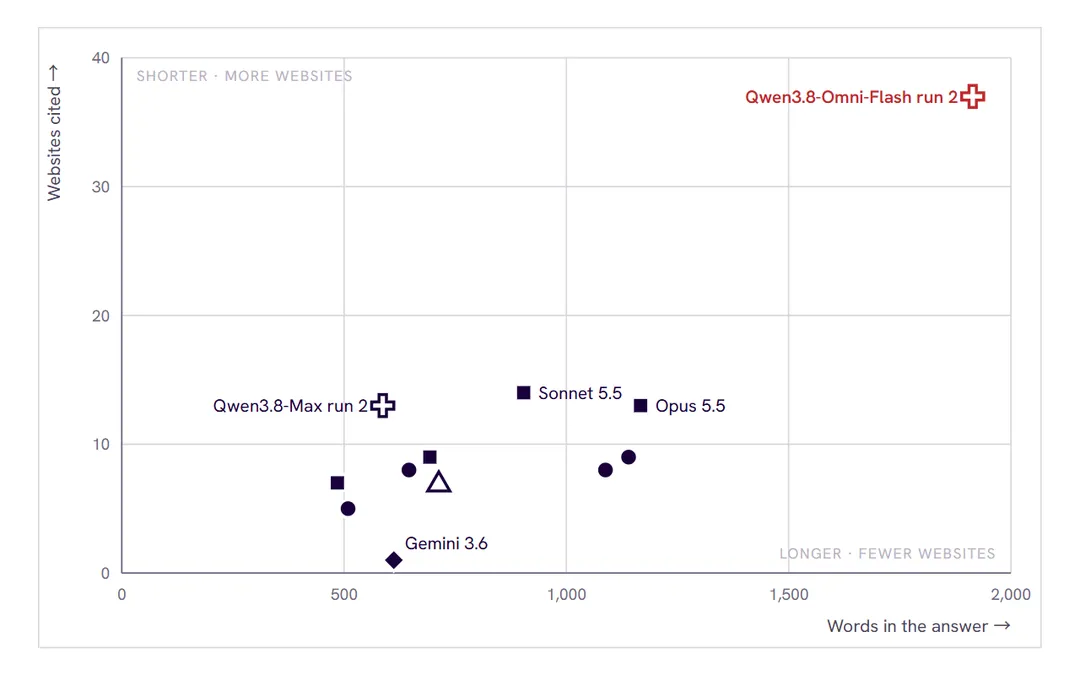
| Model | Setting | Asked | Words | Websites |
|---|---|---|---|---|
| Opus 5.5 | Medium | 8 Oct 2026 | 1,167 | 13 |
| Sonnet 5.5 | Medium | 7 Oct 2026 | 904 | 14 |
| GPT-6 Luna | Max | 8 Oct 2026 | 509 | 5 |
| GPT-6.1 Sol | Max | 7 Oct 2026 | 1,140 | 9 |
| GPT-6 Astra | Max | 7 Oct 2026 | 1,088 | 8 |
| Gemini 3.6 | Thinking | 7 Oct 2026 | 612 | 1 |
| Grok 4.7 | Fast | 7 Oct 2026 | 744 | – |
| Grok 4.7 | Fast | 7 Oct 2026 | 713 | 7 |
| Qwen3.8-Max | Thinking | 7 Oct 2026 | 545 | – |
| Qwen3.8-Max | Thinking | 7 Oct 2026 | 587 | 13 |
| Qwen3.7-Plus | Fast | 7 Oct 2026 | 616 | – |
| Qwen3.7-Plus | Fast | 7 Oct 2026 | 985 | – |
| Qwen3.8-Omni-Flash | Thinking | 8 Oct 2026 | 1,914 | 37 |
| Haiku 5.5 | Medium | 8 Oct 2026 | 485 | 7 |
| Haiku 5.5 | Extra | 8 Oct 2026 | 693 | 9 |
| GPT-6 Sol | Max | 8 Oct 2026 | 646 | 8 |