
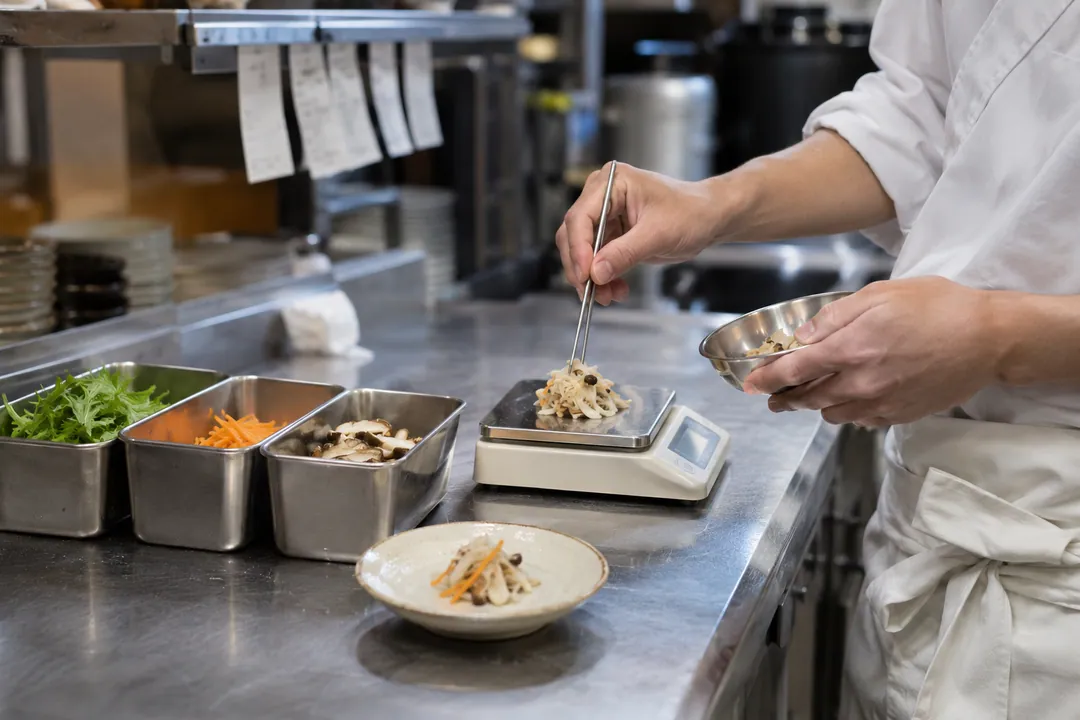
The three things restaurants check before taste when considering a new ingredient
A new ingredient does not always get rejected because it tastes bad. In foodservice, taste is only one part of the decision.
A new ingredient does not always get rejected because it tastes bad. In foodservice, taste is only one part of the decision. Before a product gets a fair evaluation, operators generally look at whether it can actually work in the store, how it can enter the business, and whether there is a realistic path to repeat use.
That’s because the adoption decision is not really made in a tasting room. It is made under operating pressure. Even a strong product becomes hard to introduce if it adds prep time, depends on individual skill, or makes service less stable. So the first question is not whether the ingredient is appealing. It is more about whether the shop can keep using it without making daily operations harder.
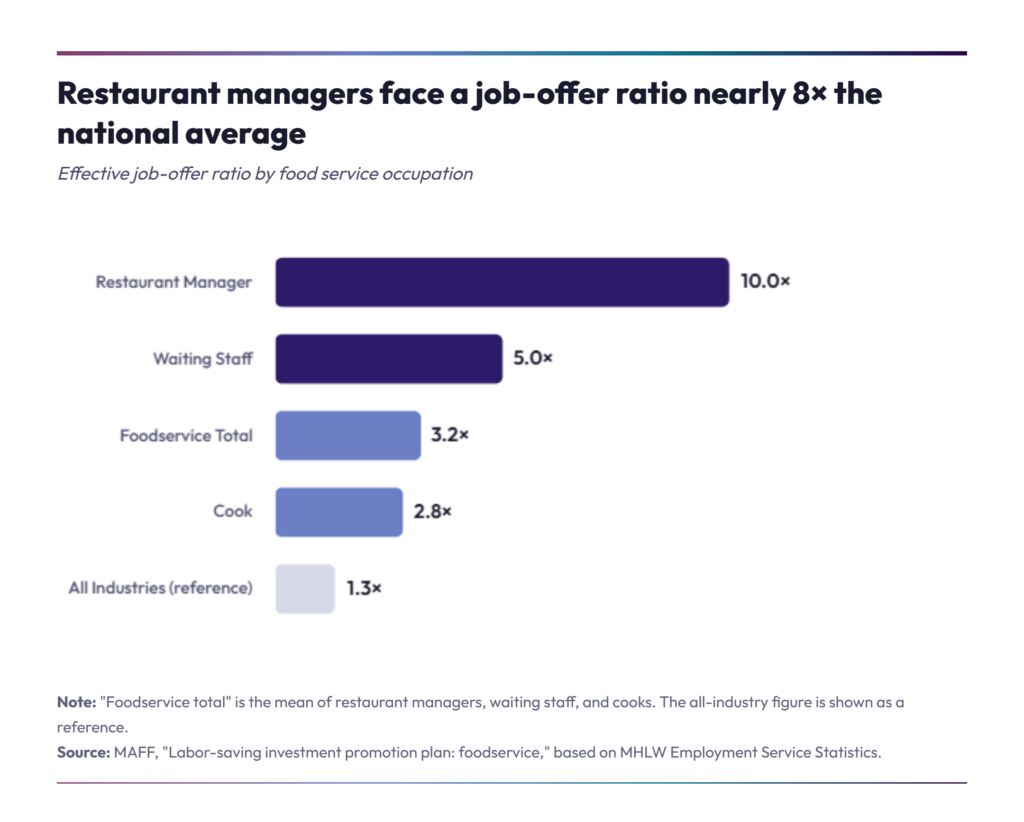
And the labor pressure side makes it even harder. In a sector where staffing is already tight, products that require extra training, extra handling, or unstable execution are more difficult to absorb. That’s kind of the reason why many new ingredients are screened first for operational fit, route-to-market fit, and continuity. The flavor part comes after that.
Good taste only gets you halfway
Taste matters. But taste is a necessary condition, not the condition for adoption. In foodservice, a new ingredient does not pass just because it tastes good.
The real decision is made under operating constraints. Buyers are not judging the product on its own. They are judging whether it can work inside an actual store, with real staff, real prep limits, and real service pressure.
So the question is not only whether the ingredient is good. It is also whether the ingredient can hold up in daily operations. If it adds complexity, depends on staff skill, or creates inconsistency, strong taste alone will not carry it through.
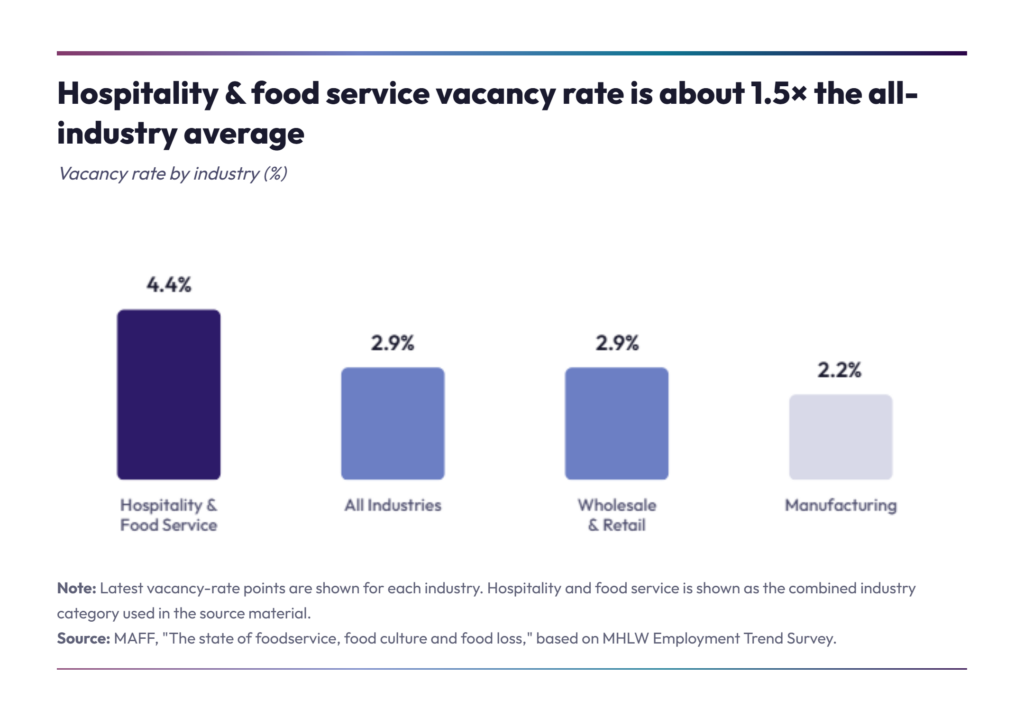
And this matters even more in restaurant roles where hiring is already tight. When stores are short on people, anything that adds training burden or execution risk becomes harder to adopt. So in practice, the judgment is not only about flavor. It is also about whether ingredients can actually work at store level.
Condition 1: It has to work on the floor. Before taste, it has to fit the operation.
What restaurants tend to avoid is not only a weak product. It is also a menu item that tastes good but is still too heavy to run. In day-to-day operations, that kind of item gets in the way. It slows prep, makes execution less stable, and makes things harder during busy hours.
What gets adopted more easily is generally something that can be served quickly with stable quality. That does not mean restaurants value shortcuts over quality. It means they need a format that can hold up across shifts, staff levels, and service peaks.
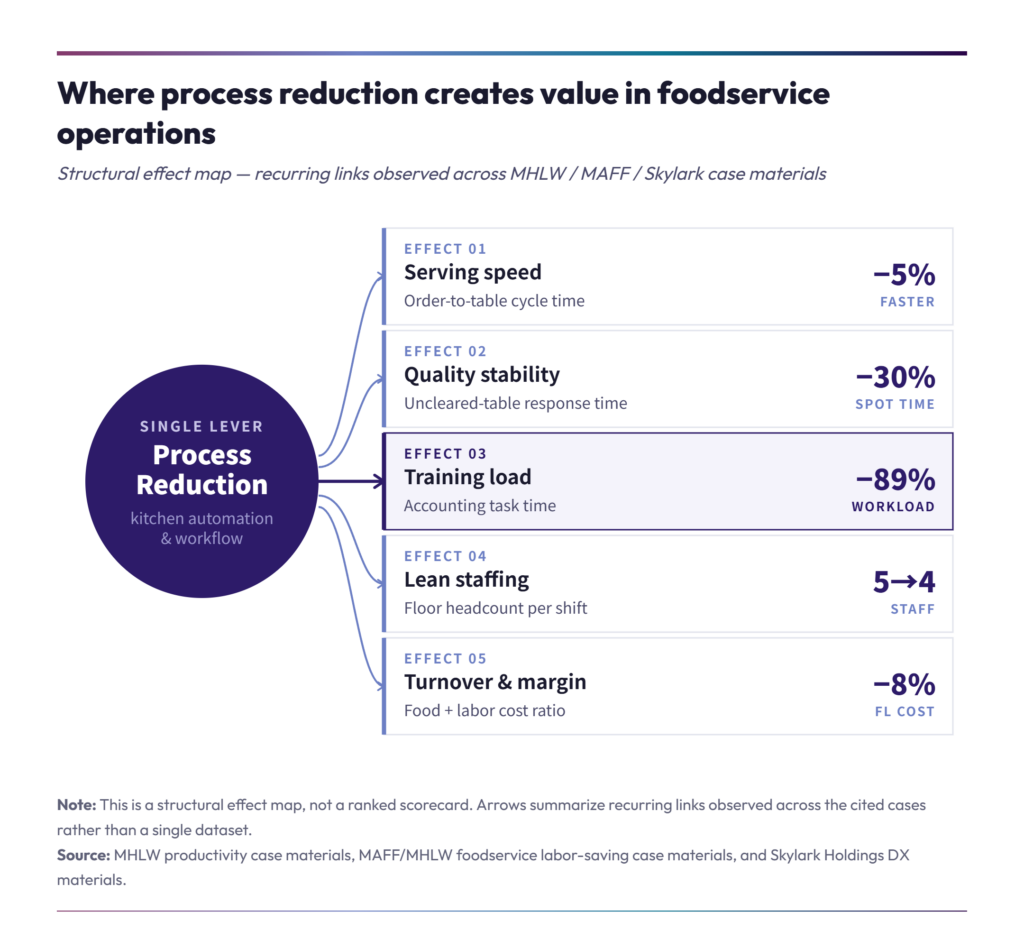
And process reduction is part of that. Cutting steps is not really about lowering standards. It is more about what makes consistency, speed, and margin possible at the same time. If a product cannot be delivered with repeatable quality under real store conditions, taste alone will rarely be enough. That’s kind of the reason why operational fit comes first.
So before a restaurant asks whether a new ingredient is attractive, the first question is usually whether the ingredient can be built into a workflow that staff can actually sustain.
Speed of service is part of the customer experience
Delays turn into dissatisfaction pretty directly. In foodservice, speed is not only an internal operations thing. It also shapes how the customer experiences the meal.
So fast and stable delivery has value on its own. Even if the product is good, the experience gets weaker when service is slow or inconsistent. Restaurants are not only trying to serve food quickly. They are also trying to protect the overall experience at the table.
That’s one of the reasons why operational improvement matters before a new ingredient is adopted at scale. If a product helps the store serve more quickly and more consistently, it supports both sides: execution on the floor, and customer satisfaction.
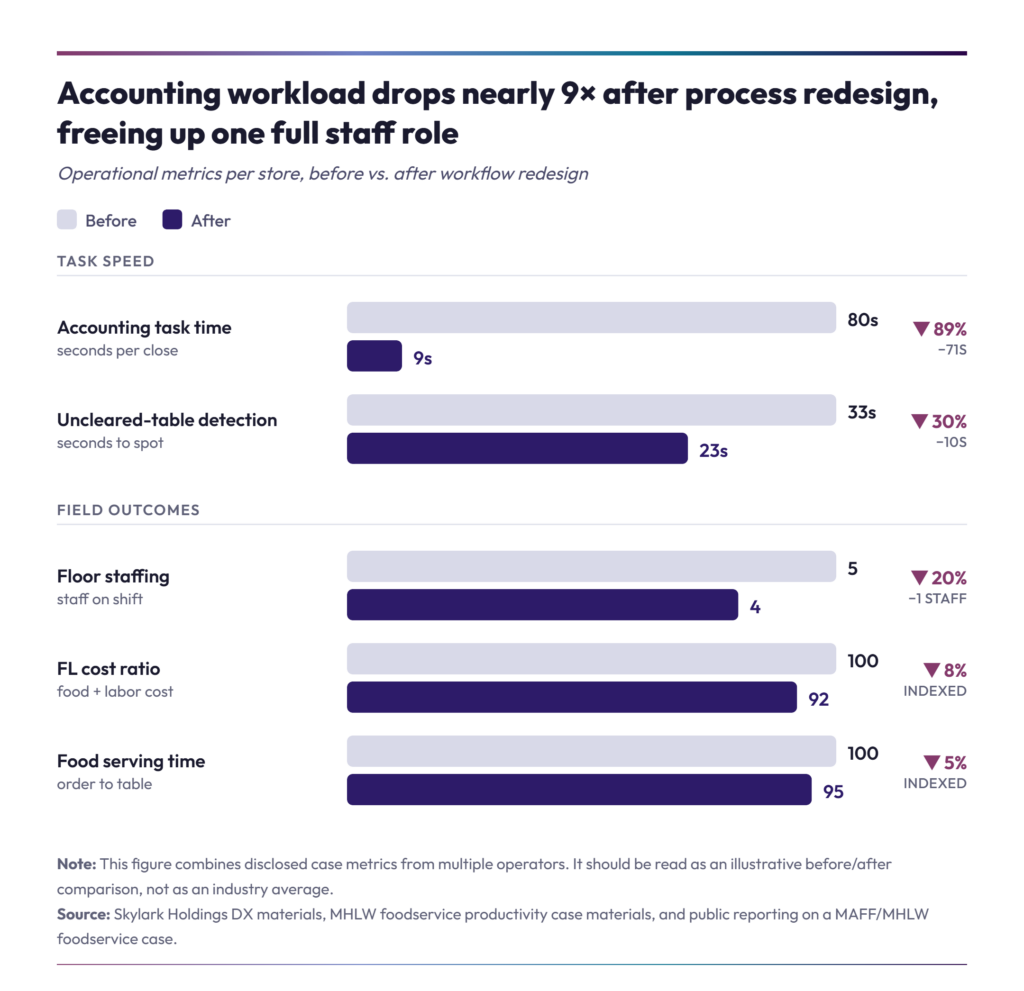
Speed of service also affects store economics
Delays do not only hurt the customer experience. They also affect table turnover, peak-hour capacity, staffing efficiency, and training burden.
So ingredients that fit the operation are generally easier for stores to keep using. When a product can be prepared and served smoothly, the store can handle busy periods with less strain and more consistent output. That makes the ingredient easier to manage, not only on the floor, but also in the business model behind the store.
Ingredients that reduce steps have proposal value on their own
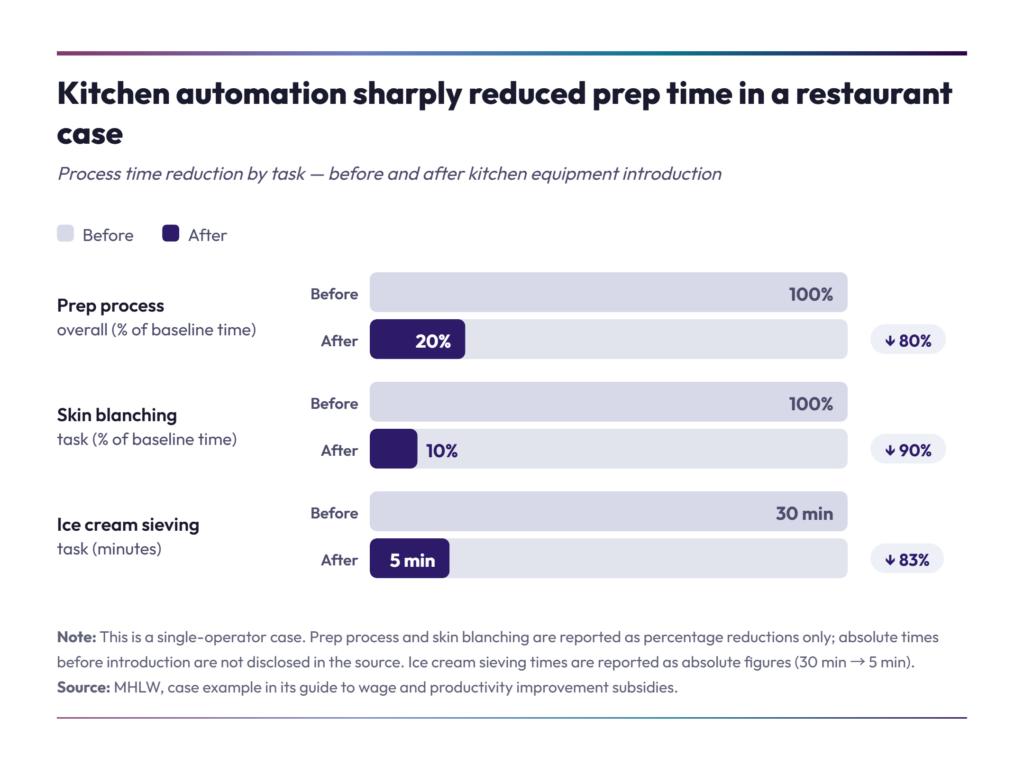
When presenting a new ingredient, taste is not the only thing that matters. What matters just as much is how much it can reduce the burden on the floor, across prep, plating, cooking, and service.
That is where the proposal value becomes more concrete. If an ingredient helps cut even one step from the workflow, it can reduce labor strain, improve consistency, and make service easier to sustain during busy periods. For operators, that is not really a secondary benefit. It is more of the reason the product becomes viable in the first place.
So an ingredient that makes store-level execution lighter is already solving a business problem, even before flavor is discussed in full. That makes operational ease part of the product’s value proposition, not just a supporting point.
Condition 2: Do not localize for Japan by default. Decide what to adapt and what to preserve.
This is not just a matter of changing the flavor for Japan. If you localize too much, the product can lose the very reason it was interesting as an imported ingredient in the first place.
At the same time, leaving every sharp edge untouched does not always create demand either. A product that feels distinctive in one market can become too narrow if the entry point is unclear, or if the usage context is limited.
So the question is not really whether the ingredient is foreign or familiar. It is more about whether its distinctive traits match a realistic point of entry. In some cases, the value is authenticity. In other cases, it is novelty, menu differentiation, or fit with a specific format, channel, or customer occasion.
That’s kind of why the key decision is not how far to localize. It is more about where to localize. The stronger approach is to decide which elements need to be adjusted for acceptance, and which elements should stay as they are. That is where the value comes from. Products are easier to adopt when that line is clear from the start.
Condition 3: Getting in through a fair is not the same as staying on the menu
A fair can be a practical entry point. It gives restaurants a low-risk way to test a new ingredient, see customer reaction, and check whether the product can work in an actual menu setting.
But getting in through a fair is not the same as becoming a standard item. A limited-time promotion can create initial interest without proving that the product deserves a long-term place in the business.
So the exit matters as much as the entry. If there is no clear path from trial to repeat use, the product is more likely to end as a one-off. Early adoption on its own does not tell you whether the ingredient can stay after the promotional window closes.
For suppliers, the real question is not only how to get the first listing. It is also about what has to be true for the product to stay. Unless that part is considered from the start, even a successful test can fail to turn into ongoing business.
A fair is a practical entry point
A limited-time promotion is an easy way to test a new ingredient. It is easier for stores to try, and it is usually easier to get approved internally than a full-scale rollout from the start.
So it becomes a natural first entry point for a new product. It lowers the commitment, creates room to see the real-world response, and gives both the supplier and the operator a manageable way to test fit before making a bigger decision.
But becoming a regular item depends on a different set of conditions
Long-term adoption depends on more than an initial sale. Repeat orders, standardization, margin fit, and operational fit all have to be in place before a product can stay on the menu.
So one successful run does not guarantee regular placement. A product may perform well once and still fail to become a standard item if it is hard to reorder, difficult to run consistently, or weak on store-level economics.
Initial traction and ongoing viability are not the same thing. To become a regular item, the ingredient has to work not only in a limited campaign. It also has to work in the store’s repeatable operating model.
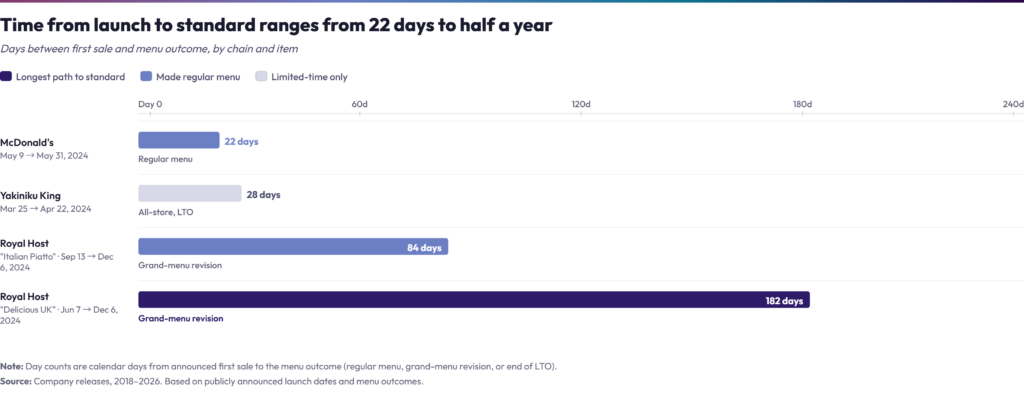
The time it takes to become a regular item varies widely
Some products become regular items quickly. Others stay in trial use for longer and only get accepted after a slower evaluation process.
And that variation matters. If a supplier judges the result too quickly, it can miss products that need more time to prove repeat demand, operational fit, or reorder potential.
Early results are useful, but they do not tell the whole story. The real question is not only whether the product sold in the short term. It is whether it can stay in the business over time.
Conclusion
Whether a new ingredient gets adopted in foodservice is not decided by taste alone. What operators look at is whether it can work on the floor, which entry point gives it a realistic chance, and whether there is a path from trial to continued use.
So improving flavor alone is not enough. A stronger proposal takes the full adoption process into account, from operational fit to entry design to repeatability after launch. Products are more likely to stay when the pitch is built not only around what tastes good. It also has to be built around what the business can keep running.
None yet. When we correct this insight, the date and the change appear here.