
Which AI model searches the web better on a Taiwan-to-Japan alcohol pricing question?
We gave four AI models the same question about pricing alcohol for export from Taiwan to Japan. This page measures how far each answer searched. Its cited links are not checked yet, so it does not say whether the pages back what the models wrote. It compares the models, not their advice.
As asked, word for word.
we sell alcohol which has $30 wholesale price with 30% gross profit margin in Taiwan. it's from Taiwan to Japan bound export.
we have to keep more or less the similar range of profit, so research and calculate by working backward from the acceptable selling price in the Japanese market
be precise, I want no surprises after we actually started.
Output condition
- Include fact links after the paragraph or sentence
The question needs figures from three places: Japanese duty and liquor-tax rules, Taiwanese rules, and shelf prices in Japanese shops. It asks for precision. It tests whether a model finds each kind of page and keeps its calculation within what the pages say.
Which model researched further?
Show as a table
| Answer | Words | Websites cited |
|---|
More websites means the model looked further. It does not mean the answer is right. That needs the link check below, which has not run for this question.
Do the cited pages back what the models wrote? Not checked yet.
In a checked comparison, we open every cited link and compare the page with the passage that cites it. For this question that has not happened. The numbers below say how much there is to check.
Cited links · one square per link, none opened yet
Until then, treat every figure in these answers as a lead, not a fact. Open the page before a number goes into your plan. To see what a finished check looks like, read the comparison How effective are interpreters and translation tools at trade-show booths in Japan?.
What this means when you pick a model for research.
All three counted answers cite Japanese customs and tax pages.
GPT-6 Luna, GPT-6.1 Sol and Grok 4.7 each cite customs.go.jp and nta.go.jp. Each also cites at least one Taiwanese government website.
The Japanese shelf price comes from shop listings.
GPT-6 Luna cites an online liquor shop. GPT-6.1 Sol cites three shops, including Takashimaya. Grok 4.7 cites a Yahoo Shopping listing. GPT-6 Luna and Grok 4.7 each write that the prices they found are not a market average.
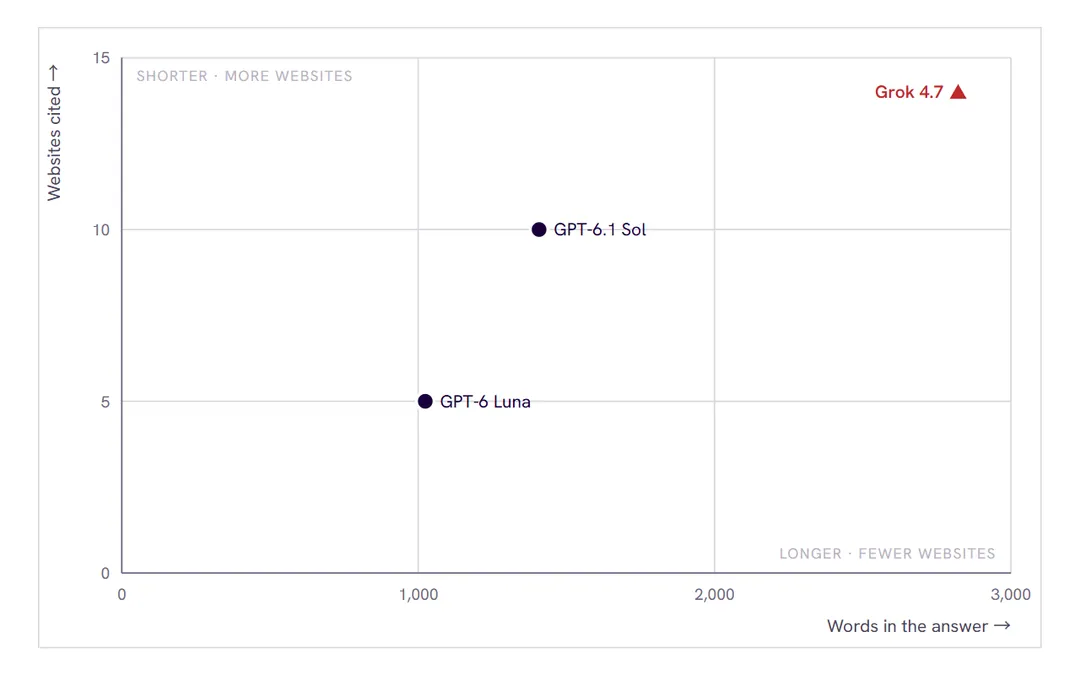
Grok 4.7 searched widest and wrote most.
It cited 14 websites in 2,822 words. The other three answers wrote 1,024 to 1,408 words.
Every answer, with its numbers.
| Model | Setting | Asked | Words | Websites | Links |
|---|---|---|---|---|---|
| GPT-6 Luna | Max | 9 Oct 2026 | 1,024 | 5 | 9 |
| GPT-6.1 Sol | Max | 9 Oct 2026 | 1,408 | 10 | 18 |
| Grok 4.7 | Fast | 9 Oct 2026 | 2,822 | 14 | 24 |
| Qwen3.7-Plus | Thinking | 9 Oct 2026 | 1,216 | – |
More model comparisons
- Model comparisonTop 10 e-commerce channels in Japan for overseas food providers: 6–12 month total project costs
- Model comparisonTop 5 locations in Japan for food manufacturing, including subsidies
- Model comparisonWhich companies in Japan are most similar to KALDI Coffee Farm?
- Model comparisonTop 5 crowdfunding channels in Japan for overseas food providers: 6–12 month total project costs