
Gemini 3.6 at Thinking, asked 9 Oct 2026
One answer from the comparison, shown in full as the model produced it on 9 October 2026. Nothing is edited. Its 5 cited links were opened and graded on 31 October 2026: 0 of 4 cited passages are fully backed. The comparison explains the check.
When responding to RFQs from both a retailer and a wholesaler (tonya) in Japan, navigating the unique distribution dynamics and commercial nuances of the Japanese food industry is critical to winning the contract.
Particular Nuances & Business Culture in Japanese Food RFQs
1. The Dual-Channel Pricing Hierarchy
In Japan, retailers rarely buy direct; they rely on designated primary or secondary wholesalers (tonya) for logistics, inventory buffer, and store-level merchandising.
- Avoid Channel Conflict: Never offer the retailer a wholesale price lower than what you quote the wholesaler.
- Structure the Price Breakdown: Explicitly state the Wholesale Purchase Price (Shiire Kakaku), Suggested Retail Price / Open Price (Kibou Kouri Kakaku / Open Price), expected wholesale margin (typically 8–15%), and retail gross margin (typically 20–30%).
2. Hidden Logistics Fees & Rebate Customs (Shō-kanshū)
Standard Japanese commercial practice involves secondary logistics charges and performance rebates that must be factored into your margin calculations.
- Center Fees (Center-hi): Retailers and mega-wholesalers charge manufacturers a distribution center usage fee (typically 3% to 7% of the delivery invoice value) to cover sorting and warehouse operations. Clarify whether your price is F.O.B. OEM Factory, Delivered Wholesaler DC, or Store-Delivered.
- Rebates (Ribeito) & Listing Allowances (Kyōsanken): Buyers expect promotional support fees, end-of-period sales target rebates, or store opening allowances (Shinki Shuppin Kyōsanken). Define these rebate tiers clearly in the proposal.
3. Strict Freshness & Delivery Rules (The 1/3 Rule)
The Japanese food sector strictly observes commercial rules regarding product age upon delivery.
- The 1/3 Rule (Sanbun-no-ichi Rūru): The period from production to expiration is split into three equal parts. If products do not reach the wholesaler/retailer within the first third of their total shelf life, they are routinely rejected or returned.
- Quotation Clause: State exact total shelf life (in days/months), minimum guaranteed shelf life upon delivery, order lead times, and Minimum Order Quantity (MOQ / Rotto) per SKU/case.
4. Standard Digital Specification Sheets (Shōhin Kikakusho)
A price quote in Japan is considered incomplete without formal technical documentation.
- Infomart / Standard Format: Japanese buyers require standardized B2B product specification sheets detailing all ingredients, sub-ingredients, allergen trace declarations, manufacturing plant certifications, JAN/EAN barcodes, and outer case packaging specifications (ITF barcode, case dimensions, pallet stacking capacity).
- Reference: Infomart BtoB Platform Specification Standards | Travesia Guide to Japanese Wholesalers
Domestic OEM Advantage Matrix
Having an OEM facility in Japan provides a structural advantage over imported brands and rigid domestic legacy manufacturers.
| Feature / Criteria | Overseas Importers | Standard Domestic OEM | Your Strategic Proposal |
|---|---|---|---|
| Lead Times & Supply Stability | 6–12 weeks (High risk) | 1–2 weeks | 3–5 Days (Agile JIT Delivery) |
| Shelf-Life Consumption | 20–40% lost during transit | 5–10% lost | < 5% lost (Maximized shelf life) |
| Tariff & FX Risk | Exposed to JPY swings | Domestic pricing | Fixed JPY long-term pricing |
| MOQ Flexibility | High container-load MOQs | High batch MOQs | Tiered micro-batch options |
High-Value & Wacky Strategies to Outsmart Competitors
To stand out against competing proposals, integrate these unconventional, value-centric proposals directly into your quotation packages:
Option 1: The "PB/NB Hybrid" Agile Production Tier
- Concept: Traditional Japanese manufacturers refuse small-run customization due to rigid factory schedules. Offer a tiered pricing schedule where the retailer or wholesaler can request localized, limited-edition, or seasonal flavor variations under their private label (PB) using your standard national brand (NB) base product lines from your local OEM plant.
- Value to Buyer: Retailers get exclusive seasonal SKUs without committing to massive inventory runs; wholesalers gain an exclusive product line that locks in retail client loyalty.
Option 2: The "Zero-Loss / Near-Expiry Buyback Guarantee"
- Concept: Address the retailer’s biggest operational risk—discarding inventory past the 2/3 sales deadline. Include an agreement where unsold stock reaching 80% of its shelf life can be bought back or subsidized by 30–50% via a co-funded markdown allowance, with returned inventory re-routed to secondary foodservice or corporate cafeteria channels.
- Value to Buyer: Eliminates inventory write-offs, aligns directly with Japan's Food Loss Reduction Act (Shokuhin Loss削減推進法), and boosts ESG compliance ratings.
- Reference: Bluehub Guide on the One-Third Rule & Food Loss
Option 3: "Smart Display Packaging" (SRP) with Staff Training QR Kits
- Concept: Deliver goods in pre-perforated Shelf-Ready Packaging (SRP) boxes that store clerks can place directly on shelves in under 5 seconds. On the outer packaging, print store-facing QR codes linking to 15-second product training videos and promotional shelf talkers (POP) for store staff.
- Value to Buyer: Japan suffers from severe retail labor shortages. Reducing shelf-stocking labor saves real operational costs for retailers, giving your brand preferential placement on prime eye-level shelves.
- Reference: Mordor Intelligence Japan Food Industry Report
Option 4: The "Forecast-Accuracy Center Fee Offset Swap"
- Concept: Center fees are usually viewed as an unavoidable tax by suppliers. Propose a dynamic center fee mechanism: offer the wholesaler a 2% rebate bonus or center fee subsidy if their rolling 90-day demand forecast accuracy exceeds 95%.
- Value to Buyer: Incentivizes the wholesaler's demand planning team to prioritize your SKUs while reducing bullwhip inventory swings at your Japanese OEM factory.
Option 5: The "Scope 3 Carbon Footprint Decarbonization Scorecard"
- Concept: Attach an environmental impact statement to the quotation calculating the specific $CO_2$ emissions saved per unit by sourcing locally from your domestic OEM factory versus overseas competitors or long-distance shipping routes.
- Value to Buyer: Major Japanese retail groups (e.g., Seven & i, Aeon) have strict corporate sustainability targets. This data can be directly cited in their annual sustainability reports.
- Reference: Mind Melt Guide to Finding a Distributor in Japan
Recommended Structure for Your Quotation Submission
Present your quotation as a comprehensive 3-part commercial proposal:
- Standard Commercial Quote (Mitsumorisho): Unit price breakdown, case pack dimensions, barcode specifications, delivery terms (F.O.B. or DC Delivered), lead times, and payment terms (standard Japanese 30/60-day monthly closing terms Sime-harai).
- Technical Specification Dossier (Shōhin Kikakusho): Full ingredient, allergen, and factory QA standard documentation compliant with Japanese food safety standards.
- Strategic Value Addendum: Present Options 1–5 above as customizable add-on modules, demonstrating that your company acts as an operational partner rather than just a commodity supplier.
End of the answer. AI-generated, unverified. Asked 9 Oct 2026.
5 websites, 5 links.
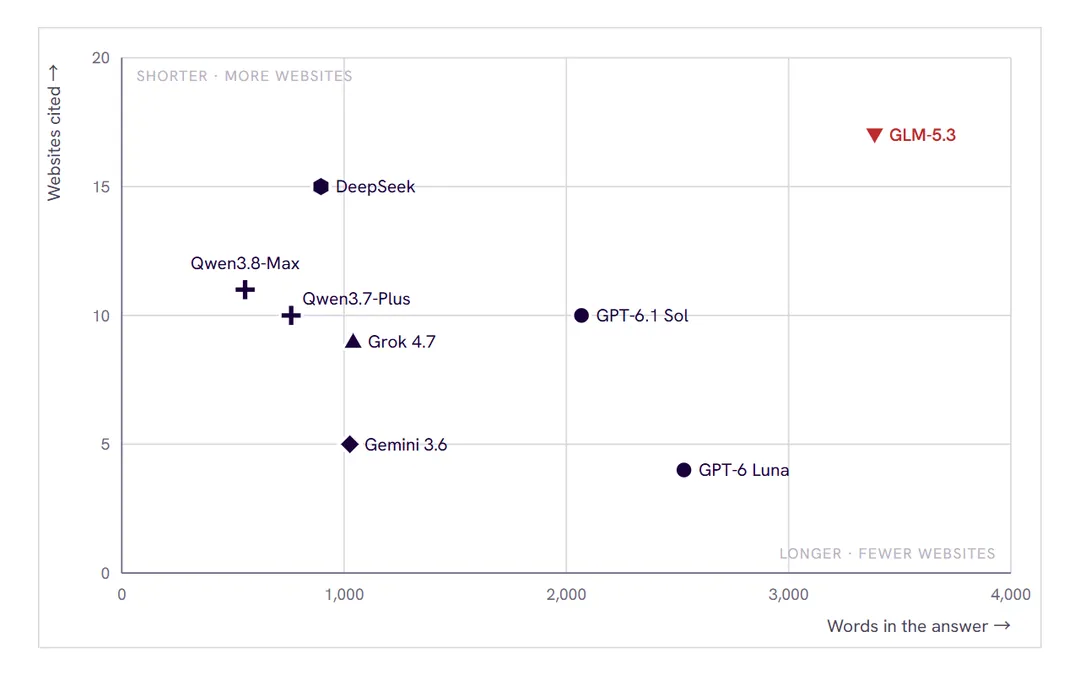
The same count the comparison's density chart uses. A website is a distinct hostname.
| Website | Links |
|---|---|
| corp.infomart.co.jp | 1 |
| lab.bluehub.jp | 1 |
| mindmelt.jp | 1 |
| mordorintelligence.com | 1 |
| travesia.jp | 1 |
Read another answer.
| Model | Setting | Asked | Words | Websites |
|---|---|---|---|---|
| GPT-6 Luna | High | 9 Oct 2026 | 2,529 | 4 |
| GPT-6.1 Sol | High | 9 Oct 2026 | 2,068 | 10 |
| Grok 4.7 | Fast | 9 Oct 2026 | 1,041 | 9 |
| Qwen3.8-Max | Thinking | 9 Oct 2026 | 555 | 11 |
| Qwen3.7-Plus | Thinking | 9 Oct 2026 | 762 | 10 |
| DeepSeek | DeepThink | 9 Oct 2026 | 896 | 15 |
| GLM-5.3 | Not selected | 9 Oct 2026 | 3,387 | 17 |